

It’s not easy being a young person today. I see it when I talk to my children and their friends. Many of them submit hundreds of job applications, only to be rejected by an algorithm. The cost of buying a home is insurmountable – and the cost of having a child seems even higher.
Recently, I’ve been thinking back to my time as a young adult. I graduated from university in 1988 and went straight into a well-paying job. By the next year, I saved enough money for a down payment on my first home. Before I turned 30, I already had my first child. When I look at the experiences of today’s young people, I sometimes feel like I grew up on a different planet, rather than in a different generation.
So, whose fault is it that affording a life has gotten so much harder? I find myself asking that question a lot. I called Kyla Scanlon for some answers.
Scanlon is a 27-year-old American economics writer, founder of personal financial education company Bread and content creator who has amassed a huge social media presence. In 2022, she coined the term “vibecession” to describe the state of the American economy during President Joe Biden’s time in office. Many of her followers are young people looking for answers about their finances. Her latest book is In this Economy? How Money & Markets Really Work.
Our conversation dove right into the question of how life got so unaffordable for young people in the US, especially – and whether there’s a clear answer on where the blame should lie and what can be done to fix it.
If you are a young person, or have one in your life, you should definitely read our conversation below.
Below is an excerpt from our conversation, which has been edited for length and clarity.
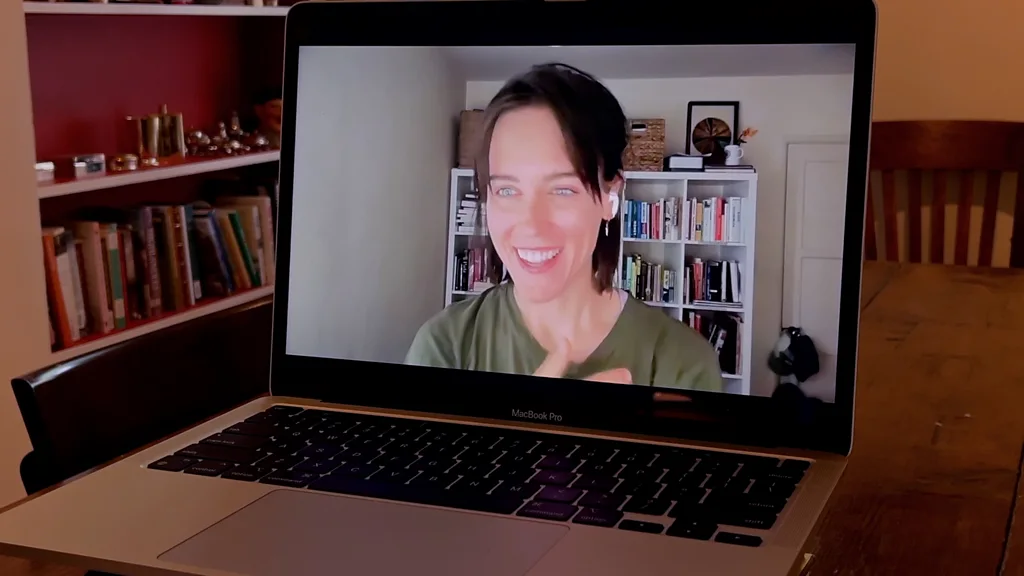
Katty Kay: Let’s start with what seems like a sort of tension between people of how the economy is working for them. Full disclosure: I’m 60. You’re not 60. I graduated from university in 1988. I went straight from university into a reasonably well-paid job in the British civil service. At 29, I had my first child, and that was not something where I thought, ‘My God, I’m never going to be able to afford this.’ When I look at my kids and their friends, it’s almost a different planet.
Kyla Scanlon: I’m 27 and I graduated, basically, into the pandemic. What you’re talking about feels very foreign to me, and it feels very foreign to the people that I know. For the older population, there was somewhat of an equation to follow. Homes were a lot cheaper. Education had a more predictable return. Things were not as expensive.
Of course, every generation has their own challenges, but the younger generation right now, the under-30s, is facing an uphill battle in terms of home ownership, in terms of saving, in terms of the labour market, in terms of inflation, in terms of a global pandemic disrupting a lot of young adulthood. So, I think it’s been challenging.
KK: Do you look at what I had and think, ‘What the hell? Did you guys just take everything?’ Were we the “take generation” and we kind of left you guys with nothing? Did we do something deliberately to screw you guys over?
KS: It’s a generalisation: 43% of boomers have no retirement savings, right? And so, if I come out and I’m like, ‘Oh all the boomers, they took all the money.’ No! A certain number of them did. They were handed a really nice bull run in the stock market, housing prices that have probably quadrupled, if not quintupled, over the past couple of decades, and [there’s been] a refusal to sell those homes. The number of baby boomers that own three bedrooms is more than the number of millennials that own three bedrooms. And you’d imagine the millennials would be having those homes because they need to have families and children and space.
You all faced a lot of uphill battles, too, but you were entering the world at basically a perfect time that we might never see again in history. You just got very, very lucky. So, I think we have to reset our expectations and realise that might not be the future. We can’t blame the boomers for taking advantage of that.
KK: So, my generation is the anomaly? Is it just this post-war period that produced extraordinary growth, and we were the beneficiaries of it – whether it was my parents’ generation or my generation?
KS: Yeah, it’s upward mobility, too. Stefanie Stantcheva over at Harvard has a great research paper out about upward mobility and it just does not exist in the way that it used to.
And that is the American dream: buy a house, have kids, have a job and live – and I think that has disappeared primarily because the economy is now having some real repercussions from the post-war boom that the boomers were able to benefit from.
KK: Was there a moment, Kyla, where things started to get worse? Was there something that policymakers did or didn’t do to exacerbate that change?
KS: What has happened from a policy side is because the boomers vote, and because they’re highly represented in politics, they end up designing policy that benefits them. It’s just been this decades-long cycle where those who are in power want to stay in power – and those are the incentives that are placed before them.
They’re going to design things to make it as such. They’re going to fight back against [building affordable] housing, because they don’t want their homes to somehow devalue. They’re maybe not going to retire at the age that we would expect them to and not give up leadership positions. They’re just going to stay. That creates an element of stagnation for those that are trying to inherit what comes after. Baby boomers own like 73 to 75% of all wealth in the US. There just has not been a passing of the torch yet.
There’s also been a lot of regulation and a lot of bureaucratic red tape that we can’t place blame purely on the boomers for a lot of things. But when you look at the US and you really zoom out [to GDP], it’s the richest country in the world and there’s a refusal to support its citizens, sometimes. We did see a lot of support during the pandemic in terms of helping people with rent forbearance, and student loan payments being paused.
But, in the US, it’s fight or die in terms of how citizens have to live. And part of that is definitely policies that have been created by the older population. It doesn’t start with just the boomers, but it has a big impact on how people move throughout the economy.
KK: Does it make you and your generation want to check out of the system? Does it produce a level of cynicism that you think risks becoming permanent?
KS: There’s a word called financial nihilism: it’s basically that idea that people are totally checked out of saving for retirement. They’re checked out of advancing their career, because they don’t think there’s a future for them. That’s something I really worry a lot about. If we lose hope, what comes after that? How do you reinstate it in people? What can you give them to hope in if the system isn’t providing them the opportunities they expected?
David Brooks has a great article in the New York Times about the rejection economy, and the endless rejection from dating apps to colleges to jobs – just constant rejection and the cognitive load that plays and how it really can just stamp out any sense of hope in people. So, I really do worry about that.
KK: Is there a country in the world that is getting this right – or at least is doing this better – that we could look to for examples?
KS: We can learn from all sorts of countries. I think the US really has to reconsider a social safety net, and Europe is a relatively good example there. A lot of countries are having trouble figuring out what to do with their young people, because everybody’s living so long in developed countries at this point.
Austria has done a pretty good job at building housing. They have social housing, but just stuff like that. Can we just help people get their foot in the door?
KK: When you look at things that could change in terms of policy, what would be the things that you would point to?
KS: It’s a simple answer, but fixing zoning and housing. Housing has to be built. It’s just one of the only ways out of this.
Another thing is childcare costs. Those have really skyrocketed in the US. It’s very difficult to figure out how to pay for that, but that’s something that if we want to encourage people to have children and continue building out their lives in the US, we have to figure out childcare costs. The other thing is eldercare costs. I think, on average, it’s like $10,000 a month (£7,300) to care for an ageing person. That’s also really difficult to figure out how to finance.
If we think about just sort of stabilising the population: giving them somewhere to live, helping them have children, and then taking care of our ageing population as they move toward whatever comes after this – that’d be the three things that I’d focus on.