
The Bank of Ghana (BoG) has reiterated that the country’s ongoing economic rebound, relative currency stability, and declining fuel prices are largely as a result of the launch of the Domestic Gold Purchase Programme (DGPP) and the introduction of the Gold-for-Oil (G4O) policy by the Akufo-Addo-Bawumia government.
The DGPP and G4O, major initiatives spearheaded by former Vice President Dr Mahamudu Bawumia, were launched to stabilise and transform Ghana’s economy following the devastation of global economies by COVID-19 pandemic and the Russia-Ukraine war.
However, the National Democratic Congress (NDC) and some elements within the previous governing New Patriotic Party (NPP) like presidential hopeful Kennedy Ohene Agyapong described the G4O policy as a “worthless” enterprise.
“Does it make sense to you that you said you have gold and you are using it to buy oil? Why don’t you sell the gold, make your money and go and buy the oil and go through a middleman? I didn’t go to school but my head is full of economics,” Mr Kennedy Agyapong criticised the G4O initiative in the lead up to the NPP 2023 presidential primaries.
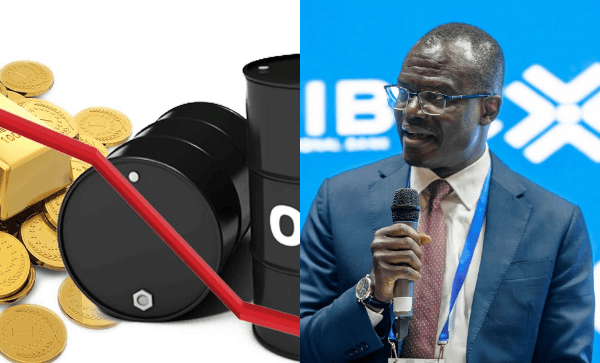
But speaking at Converge ’25, Africa’s premier trade banking event in London, the First Deputy Governor of the BoG, Dr. Zakari Mumuni, described the DGPP as a lifeline during one of Ghana’s most difficult economic periods in decades.
“In the face of external shocks and restricted access to capital markets, the DGPP provided a reliable, home-grown source of foreign exchange liquidity, enabling us to build reserves, stabilise the currency, and restore investor confidence,” he emphasised.
Dr. Mumuni pointed out that the programme’s success has been reflected in the country’s upgraded sovereign credit rating from “restrictive default” to B- with a stable outlook in June 2025, signalling renewed optimism among international investors.
DGPP initiative
Introduced in June 2021 by the BoG as a strategic reserve-building and currency-protection measure, the DGPP has quietly evolved into one of the cornerstones of the country’s economic turnaround.
It has helped to restore investor confidence and strengthen macroeconomic stability.
As of the end of June 2025, the BoG had purchased 145.95 tonnes of gold under the programme.
A total of 86.77 tonnes has been sold to raise foreign exchange for bolstering reserves and supporting the cedi, the local currency.
According to Dr. Mumuni, this initiative, combined with the deployment of 27.63 tonnes of gold for the importation of 1.95 million metric tonnes of petroleum products under the complementary Gold for Oil (G4O) programme, has had far-reaching effects, from moderating fuel prices to curbing inflationary pressures.
Gold for Oil
Shaming the critics of the two major policy initiatives, Dr. Mumuni called the Gold for Oil programme “a clear example of how commodities can serve not just as export earners, but as instruments of liquidity and trade facilitation in the Ghanaian economy.”
Launched in 2022, the G4O initiative extended the DGPP’s model into the petroleum sector.
With ex-pump prices having soared by as much as 230% in one year due to global crude price hikes, the G4O policy allowed Ghana to pay for petroleum imports using gold, reducing demand for scarce foreign currency.
The arrangement, executed through government-to-government deals, secured petroleum products at competitive prices, easing the volatility of fuel costs.
This, in turn, helped to slow the pass-through effects of high fuel prices on transport fares, food prices, and general inflation.
34.40 physical gold holdings
As of the end of July 2025, the BoG’s physical gold holdings had surged to 34.40 tonnes, up from just 8.74 tonnes in mid-1960s.
Rethinking reserves management
When the DGPP was conceived, Ghana’s gold reserves were only 8.74 tonnes, despite the country being Africa’s top gold producer and the seventh-largest in the world.
Historically, central banks worldwide, from Turkey to the Philippines, have used gold to diversify reserves and provide a hedge against currency volatility.
Until 2021, BoG largely relied on cocoa syndicated loans, Eurobond issuances, remittances and donor inflows to build its foreign exchange stockpile.
Impacts of COVID-19, Russia–Ukraine
Ghana’s economy was dangerously exposed when, in 2020 and 2022, the COVID-19 pandemic and the Russia–Ukraine war disrupted global markets, triggered sovereign credit downgrades, and cut off Ghana’s access to international capital.
With reserves dwindling, the cedi weakening sharply, and inflation accelerating, the BoG recognised that a more self-reliant, commodity-backed reserve strategy was needed.
The mechanics of the gold programme
Under the DGPP, the BoG buys unrefined “dore” gold from licenced aggregators, with each batch assayed, tested for purity by the Precious Minerals Marketing Company (PMMC) now Ghana Gold Board (GoldBod).
The value is determined using agreed international pricing sources and the prevailing cedi–dollar exchange rate, and payment is made within 48 hours.
The assayed gold is stored in BoG vaults and periodically sent to a London Bullion Market Association (LBMA)-certified refinery to achieve the “good delivery” standard of 99.99% purity.
Historical perspective
Ghana’s use of gold in its reserves dates back to the early 1960s when, in the 1960–61 financial year, the government decided to increase gold’s share in the reserve mix.
At the time, the Bank of Ghana purchased refined gold worth about US$3.7 million to strengthen the cedi’s backing.
However, falling gold prices in the late 1960s and early 1970s shifted policy toward holding more foreign currency and securities instead.
For decades, the gold share of reserves stagnated at around 8.77 tonnes, representing just over six per cent of gross international reserves.
The DGPP has broken that long-standing pattern, marking a decisive return to gold as a strategic reserve asset.
Building resilience
For the BoG, the DGPP is more than a reserve accumulation exercise, it’s an economic resilience strategy.
By leveraging Ghana’s vast gold resources, the programme diversifies the reserve portfolio, creates a buffer against currency shocks, and supports trade in critical imports like petroleum products.
With global commodity prices remaining volatile and geopolitical risks still clouding the economic horizon, the DGPP is expected to remain a key tool in Ghana’s economic policy arsenal.
BoG officials say continued implementation will not only keep the cedi stable but also help maintain manageable fuel prices and contain inflation, creating a more predictable environment for businesses and households alike.
To further protect the gains made, BoG is preparing to roll out a gold hedging programme to manage price risks associated with its gold reserves.
The Central Bank is considering starting with a fraction of the current stockpile and scaling it up to a maximum of a third of the total gold reserves.
The move comes as part of broader efforts to cushion Ghana’s economy from commodity price shocks and reinforce monetary stability.