
President John Dramani Mahama has announced plans to amend Ghana’s Public Procurement Act following mounting concerns over sole-sourcing practices linked to the government’s Big Push infrastructure programme.
The decision comes on the back of a recent exposé by The Fourth Estate, which scrutinised procurement processes surrounding the award of major road contracts. The report has sparked widespread public debate about transparency, accountability, and value for money in government spending.
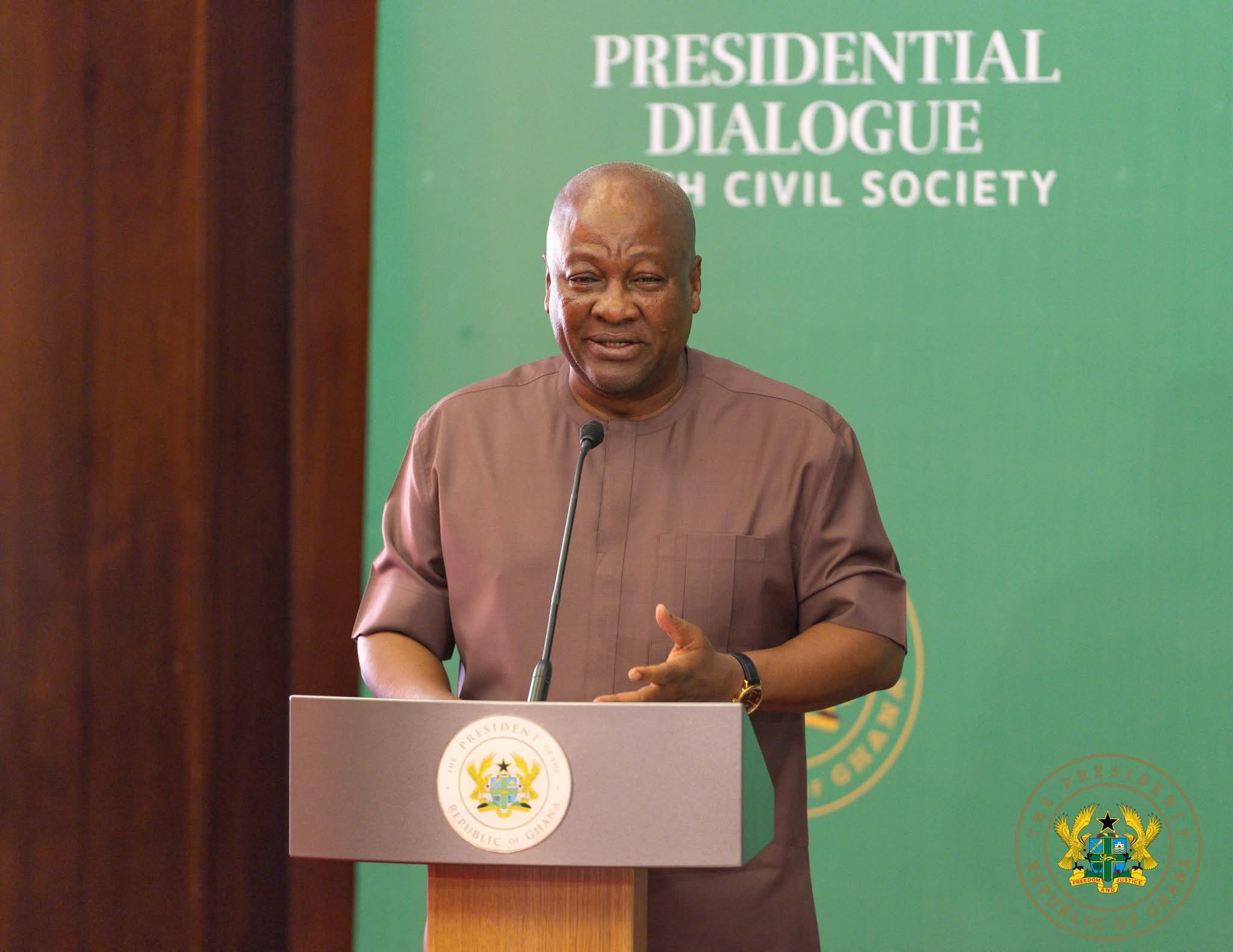
Addressing the issue, President Mahama acknowledged that while sole sourcing is permitted under the law in specific circumstances, it must not become the default option. He stressed that open and competitive tendering remains the most reliable way to secure fair pricing and ensure the efficient use of public funds.
He disclosed that his office has requested the full report from The Fourth Estate for a comprehensive review of the allegations. Additionally, the Ministry of Roads and Highways has been directed to provide a detailed response to guide government action.
As part of efforts to tighten oversight, Mahama announced that amendments will be introduced to the Public Procurement Act to limit the use of single sourcing. The reforms, he noted, are intended to promote transparency and guarantee value for money in public expenditure.
The President also tasked the Ministry of Finance with fast-tracking the establishment of an Independent Value for Money Office. This body will conduct rigorous assessments of all sole-sourced contracts to ensure strict compliance with accountability standards.
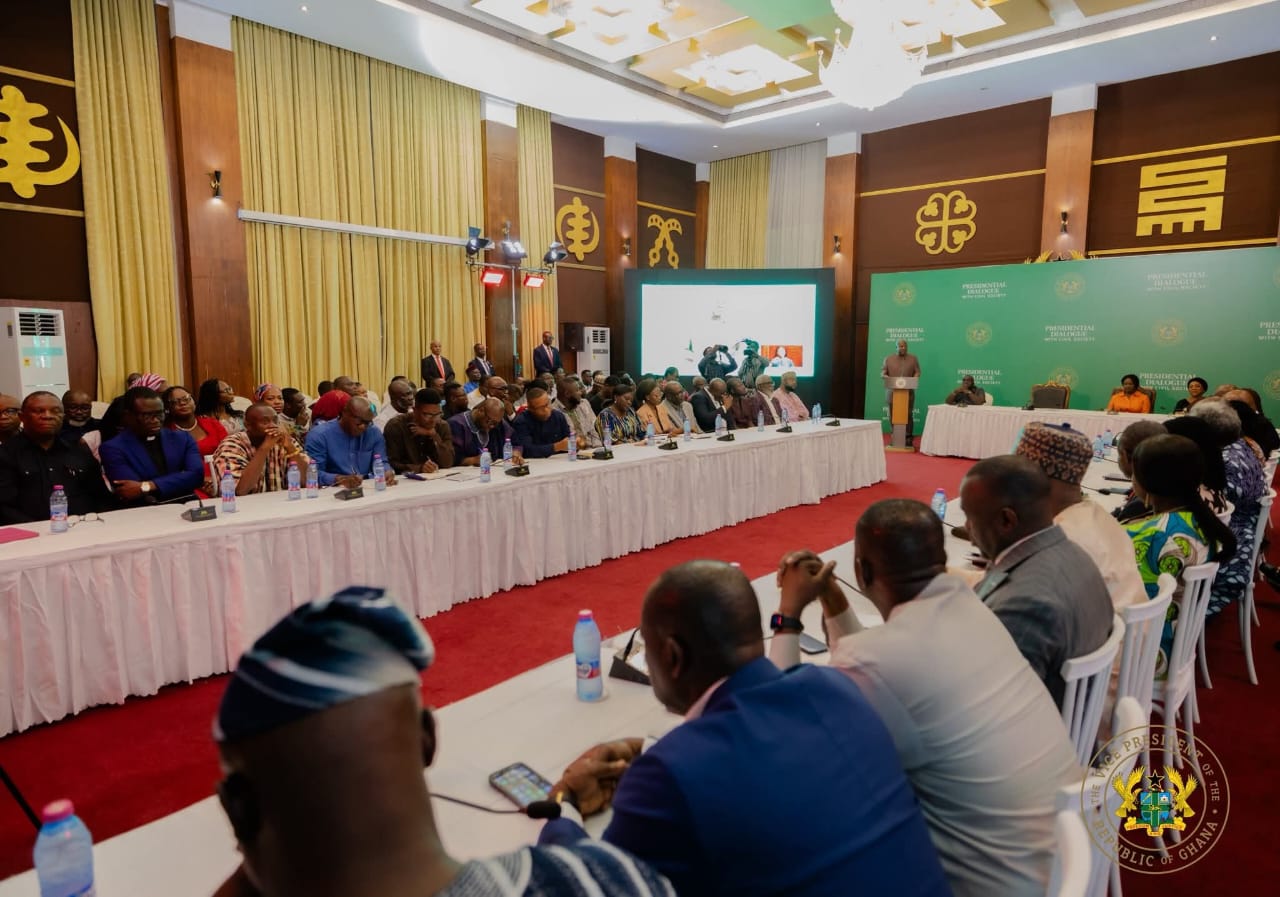
Reaffirming his position, Mahama said sole sourcing should be applied sparingly and assured that civil society organisations will be consulted in shaping the proposed legal reforms. He further called on stakeholders to actively monitor public projects and budget implementation to strengthen social accountability.
Meanwhile, the revelations by The Fourth Estate have intensified scrutiny of the Big Push programme. According to the report, 81 out of 107 road contracts—worth more than GH¢73 billion—were awarded through sole sourcing, with the remaining 26 contracts, valued at about GH¢8 billion, procured through selective tendering.
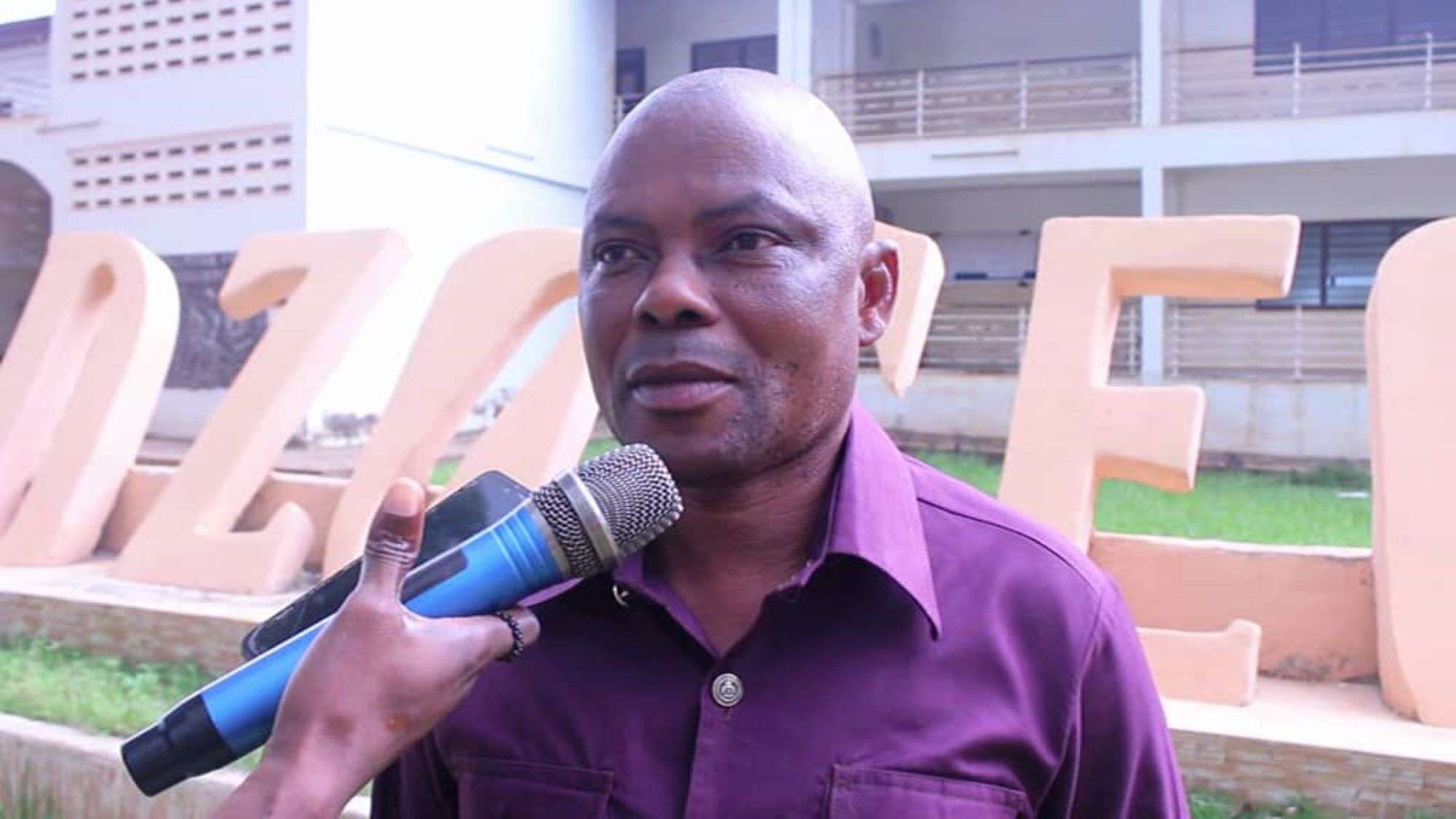
Sulemana Braimah, Executive Director of the Media Foundation for West Africa, disclosed that this means over 90% of the funds allocated to road projects under the programme have so far been committed through non-competitive procurement methods.
Speaking on JoyNews’ Newsfile programme, he cited the rehabilitation of the Dodo Pepesu–Nkwanta road as a case in point. The road, originally constructed in 2016 by a Burkinabe contractor through a competitive international tender at a cost of €25.9 million with funding support from the European Union, has now been re-awarded for rehabilitation at a cost of GH¢804 million—equivalent to over €63 million.
The sharp increase in cost has raised serious concerns about value for money and procurement integrity, fuelling calls from civil society organisations for greater transparency in the award of public contracts.
The planned amendments to the procurement law signal a significant policy shift by the government as it seeks to address these concerns, restore public confidence, and strengthen accountability in the management of national infrastructure projects.