
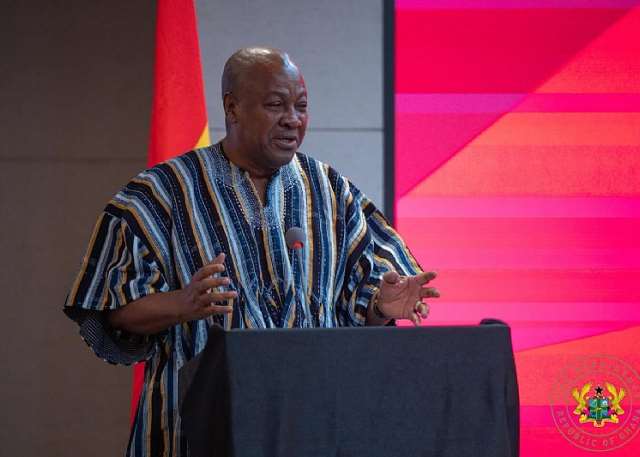
President John Dramani Mahama has expressed deep regret over the killing of Ghanaian tomato traders in northern Burkina Faso, describing the incident as a troubling indicator of rising insecurity in the subregion.
At least seven Ghanaian traders were killed in a terrorist attack on Saturday, February 14. The bodies of the deceased have since been buried by Burkina Faso authorities with approval from the Government of Ghana. DNA samples were taken before burial to ensure proper identification and to notify families.
Speaking at the Ghana Tree Crop Investment Summit in Accra on Tuesday, February 17, 2026, Mahama highlighted the dangers faced by cross-border traders and the wider threats regional instability poses to economic and social integration.
“And unfortunately, we lost a number of our compatriots. Thankfully, there are a few survivors. The Ghana Army is arranging to medevac them from Burkina Faso so that those who are injured can continue to receive treatment here in Ghana.
“On behalf of the government and the people, we express our condolences to the families of those who were either killed or injured,” he said, extending sympathy and support to the affected families.
Minister for the Interior, Muntaka Mohammed Mubarak, confirmed the traders were travelling in a truck that came under attack over the weekend. At least four others were injured in the assault.
According to the minister, the vehicle carried 18 passengers — 10 men and eight women — when armed fighters stormed the town on February 14, 2026.
Speaking on Joy FM on Monday, February 16, 2026, Mubarak described the violence as targeted and brutal.
“The jihadists ran into the town and started rounding up almost everybody, especially the males, targeting to kill every male just on sight,” he said.
“They separated the males from the females and went on the street and sprayed, killing almost all the males.”
Seven men died, three were injured, and one woman suffered severe injuries, while seven women escaped without serious physical harm.
Mubarak said Ghanaian authorities are coordinating closely with Burkina Faso officials. Due to the dangerous security situation in Titao, Ghana’s embassy could not travel there for the burial.
He explained the condition of the bodies required immediate burial, but Burkinabè authorities agreed to take DNA samples beforehand to assist with formal identification.
The surviving women, who knew the victims personally, have already provided names to Ghanaian officials and will help document the burial process.