

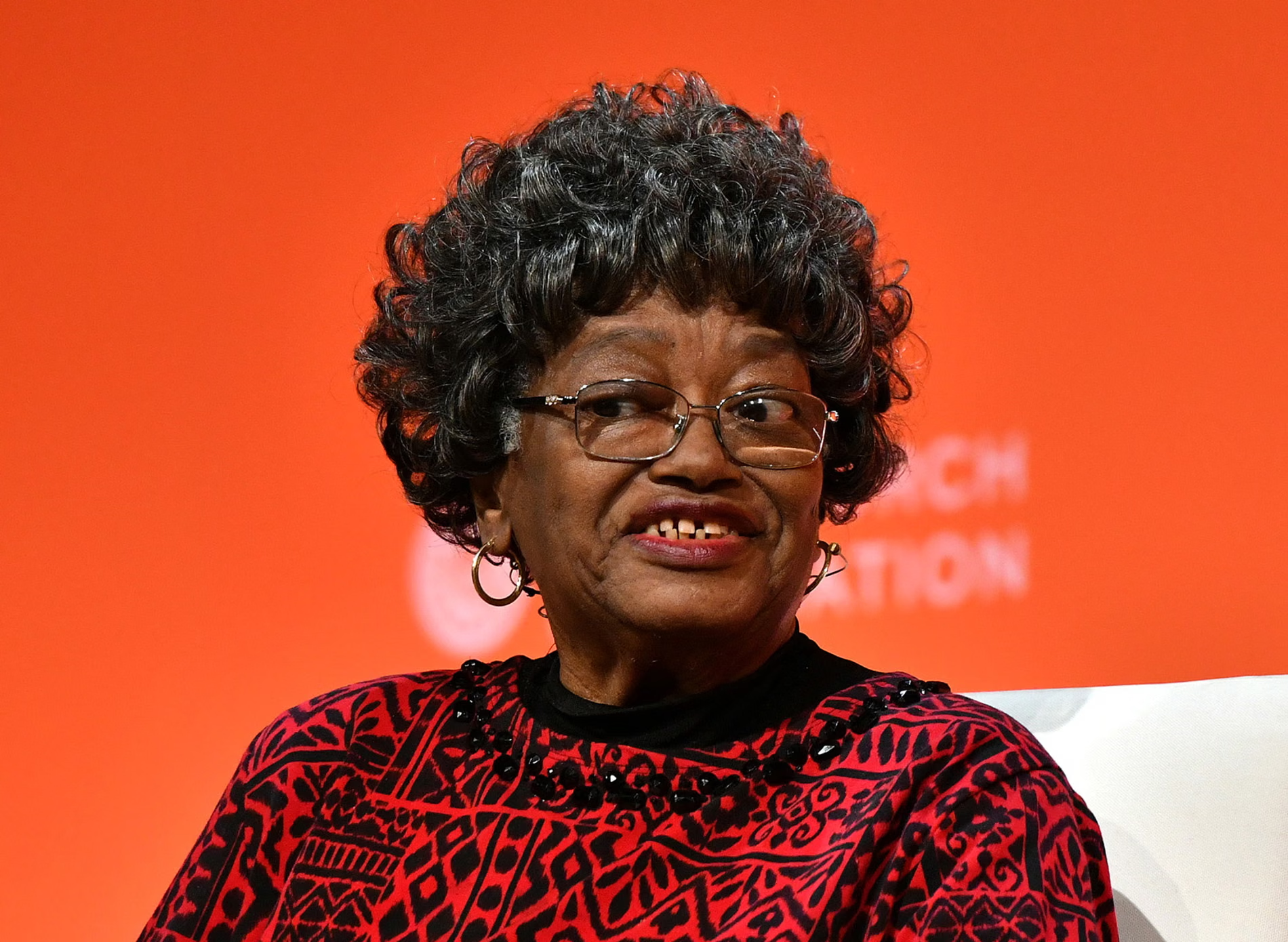
Claudette Colvin, a United States civil rights pioneer who boldly challenged racial discrimination as a teenager, has died at the age of 86.
Colvin was just 15 years old in 1955 when she was arrested in Montgomery, Alabama, for refusing to give up her seat on a public bus to a white woman. Her act of defiance came nine months before the more widely known protest by Rosa Parks, which later sparked a nationwide civil rights movement.
Although her name was not well known for many years, Colvin’s courage played a crucial role in the fight against racial segregation in the United States. Her action helped inspire Rosa Parks and others and formed part of the legal battle that eventually ended segregation on public buses.
Her death was confirmed by her family through a spokesperson, Ashley Roseboro. She passed away under hospice care in Texas.
At the time of her arrest, Colvin was a student who had been learning about the history of slavery and resistance. In later court testimony, she recalled thinking of abolitionist heroes like Harriet Tubman and Sojourner Truth, saying “history had me glued to the seat” as she refused to move. She was forcefully removed from the bus by police and taken into custody.
Despite her bravery, civil rights leaders later chose Rosa Parks — an older, respected seamstress and local NAACP official — as the public face of the movement. According to family representatives, factors such as Colvin’s young age, poor background and darker complexion influenced that decision. Parks’ arrest in December 1955 led to the famous year-long Montgomery Bus Boycott, which brought national attention to the struggle and launched the leadership of Reverend Martin Luther King Jr.
About a year after her arrest, Colvin became pregnant following an encounter she later described as statutory rape, a development that further pushed her out of the spotlight.
Even so, Colvin played a key role in the landmark court case Browder v. Gayle, serving as one of the plaintiffs and a main witness. The case resulted in a 1956 US Supreme Court ruling that declared racial segregation on public transportation unconstitutional.
After the legal victory, Colvin lived a quiet life, working as a nurse’s aide and caregiver while raising her children as a single mother. For many years, her contribution went largely unrecognised, though historians later highlighted her importance in the early civil rights struggle.
Fred Gray, the lawyer who led the Browder v. Gayle case, once said Colvin’s action gave the movement the courage it needed to challenge segregation. “I don’t mean to take anything away from Mrs Parks, but Claudette gave all of us the moral courage to do what we did,” he said.
In her later years, Colvin succeeded in having her juvenile arrest record cleared, a symbolic moment of justice for a woman whose bravery helped change American history.