


The crisis in Ghana’s cocoa sector has taken a dangerous turn as cocoa purchasing clerks are in total distress following the massive reduction in the producer price of cocoa by the governing National Democratic Congress (NDC).
The government reduced the cocoa producer price from GH¢3,625 to GH¢2,587 per 64kg bag, throwing the entire purchasing system into confusion.
Clerks who had already bought cocoa at the old price, and in many cases transported it to depots, have found themselves trapped in a financial nightmare.
They are now expected to account for cocoa purchased under a higher price regime while operating under a lower official price, leaving them exposed to heavy losses.
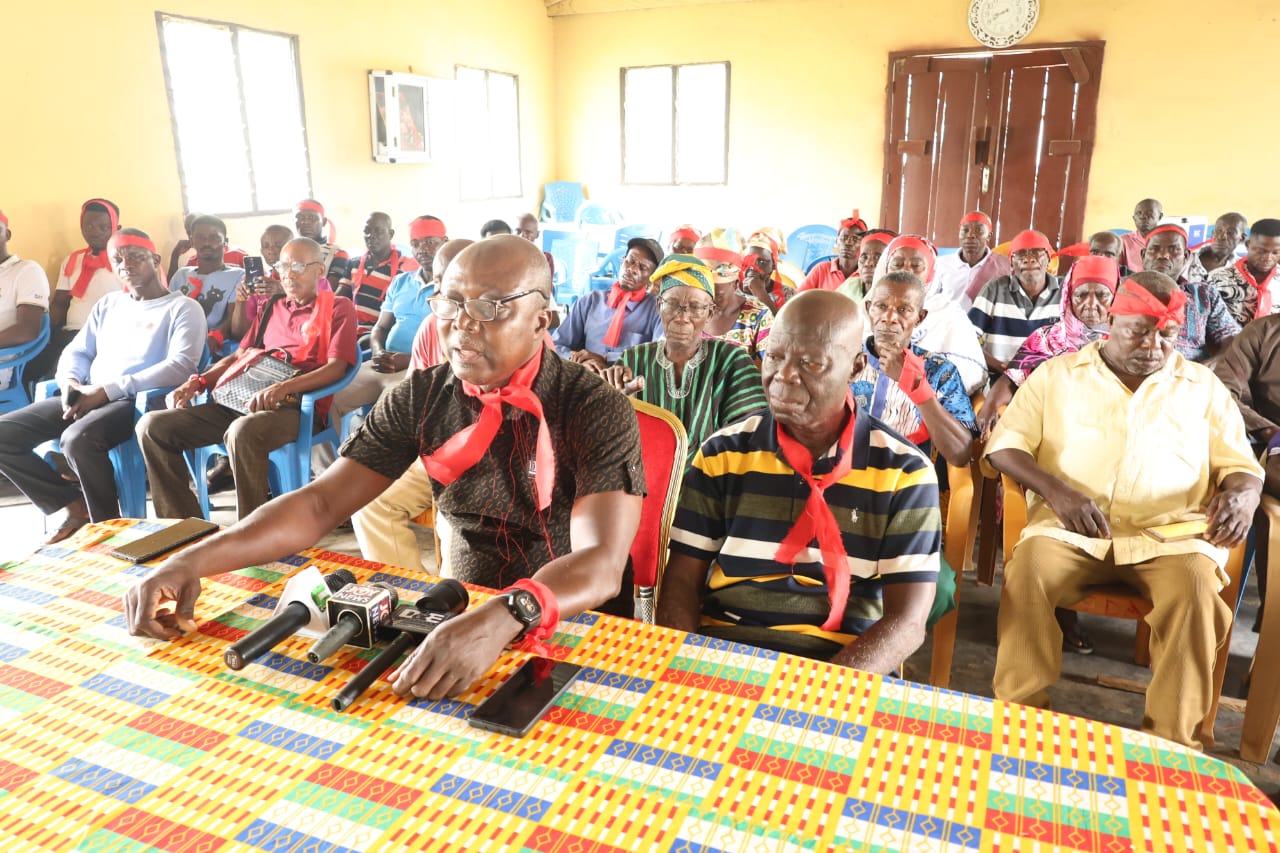
The visibly distressed group of clerks held a news conference at Asuokaw in the Lower West Akim Municipality on Tuesday, February 24, 2026, laying bare the human cost of the government’s decision to slash the cocoa producer price.
What is emerging is a multi-layered crisis that began months before the price cut itself.
According to the clerks, the problems started around November, when delays in the release of funds made it extremely difficult for them to raise capital to purchase cocoa from farmers.
Despite the lack of government funding, farmers continued to bring their produce to them, demanding payment.
Under pressure, many clerks resorted to personal borrowing and loans to keep buying cocoa, hoping that normal financing arrangements and stable pricing would soon be restored.
At the news conference, clerks spoke openly about fear, threats, and social tension.
Some admitted they could no longer safely stay in their homes because farmers, aware of the funding delays and price cut, are demanding payment and explanations that the clerks themselves cannot provide.
“The pressure is too much,” one clerk said. “Even though the government has not released funding, the farmers don’t understand that. They are coming every day. Some of us can’t even stay in our houses. This is serious. We can’t handle it anymore.”
The price cut, they explained, has turned daily transactions into daily conflict.
Demand for old price
Cocoa already bought and sent to depots before the new price announcement has become a source of constant disputes.
Farmers insist on being paid at the old rate, while clerks — now operating under the new price — have no financial room to meet those demands.
The result has been daily confrontations, quarrels, and near-violent disputes at buying points.
Clerks describe the situation as “confusion,” “chaos,” and “a trap,” where neither side — farmer nor clerk — has real control over events.
One example given during the press conference illustrated the depth of the losses: a farmer who sold about 45kg of cocoa reportedly lost a huge portion of its value overnight due to the price difference, creating anger, suspicion, and accusations against the clerk involved.
The clerk explained that such incidents are now happening repeatedly across communities.
For the clerks, the financial damage is only one side of the crisis.
The emotional and psychological pressure is equally severe.
Many insist that cocoa buying is their only livelihood, just like farming is for the farmers.
They have no alternative businesses, no safety nets, and no buffers against sudden policy shocks.
“We are all the same people,” one clerk said.
“The farmers and the clerks — we don’t do any other work. This system has trapped all of us.”
Several clerks accused authorities of failing to communicate early and clearly.
They argue that if they had been informed ahead of time about the price cut, they could have slowed purchases, avoided loans, and reduced exposure to losses.
Instead, they continued buying cocoa under the old assumptions, only to be blindsided by a new pricing structure.
Some went further, describing the situation as feeling like a deliberate deception, where official policies are announced without regard for the people who operate at the grassroots level of the cocoa economy.
Cry of cocoa farmers
Parallel to the clerks’ news conference, concerned cocoa farmers in the Eastern Region also addressed the media, confirming that the crisis is systemic and not isolated.
In a formal statement, they condemned the reduction of the producer price and described it as a direct attack on their survival.
They reminded the nation that cocoa farming is not just an occupation but the foundation of rural life — paying school fees, hospital bills, food costs, and sustaining entire communities.
They stressed that the cocoa industry is regulated by the Ghana Cocoa Board, and that any pricing policy must protect producers rather than push them deeper into poverty.
The farmers also highlighted the contradiction between political promises and present reality.
They recalled earlier assurances that cocoa prices would be improved significantly, including pledges of GH¢6,500 per bag, promises that raised hope across cocoa-growing regions.
Instead, they now face a steep reduction, which they describe as betrayal and broken trust.
Firm demand by Clerks
Immediate reinstatement of the GH¢3,625 per bag price, urgent consultations to reform cocoa pricing in a way that protects farmers and the entire value chain, they warned that failure to act would lead to peaceful mass demonstrations across the region and beyond.
What is now unfolding is not just a pricing dispute but a collapse of trust across the cocoa system.
Farmers feel betrayed by the state and the Clerks believe they have been abandoned by policymakers.
Both groups feel trapped inside a system they do not control but are forced to operate.
By Collins Adu-Gyamfi