
The Minister for Energy and Green Transition, Mr John Abdulai Jinapor, has revealed that the total electricity coverage in Ghana is about 90 per cent.
However, he said the government remains committed to achieving a universal coverage of 99 per cent.
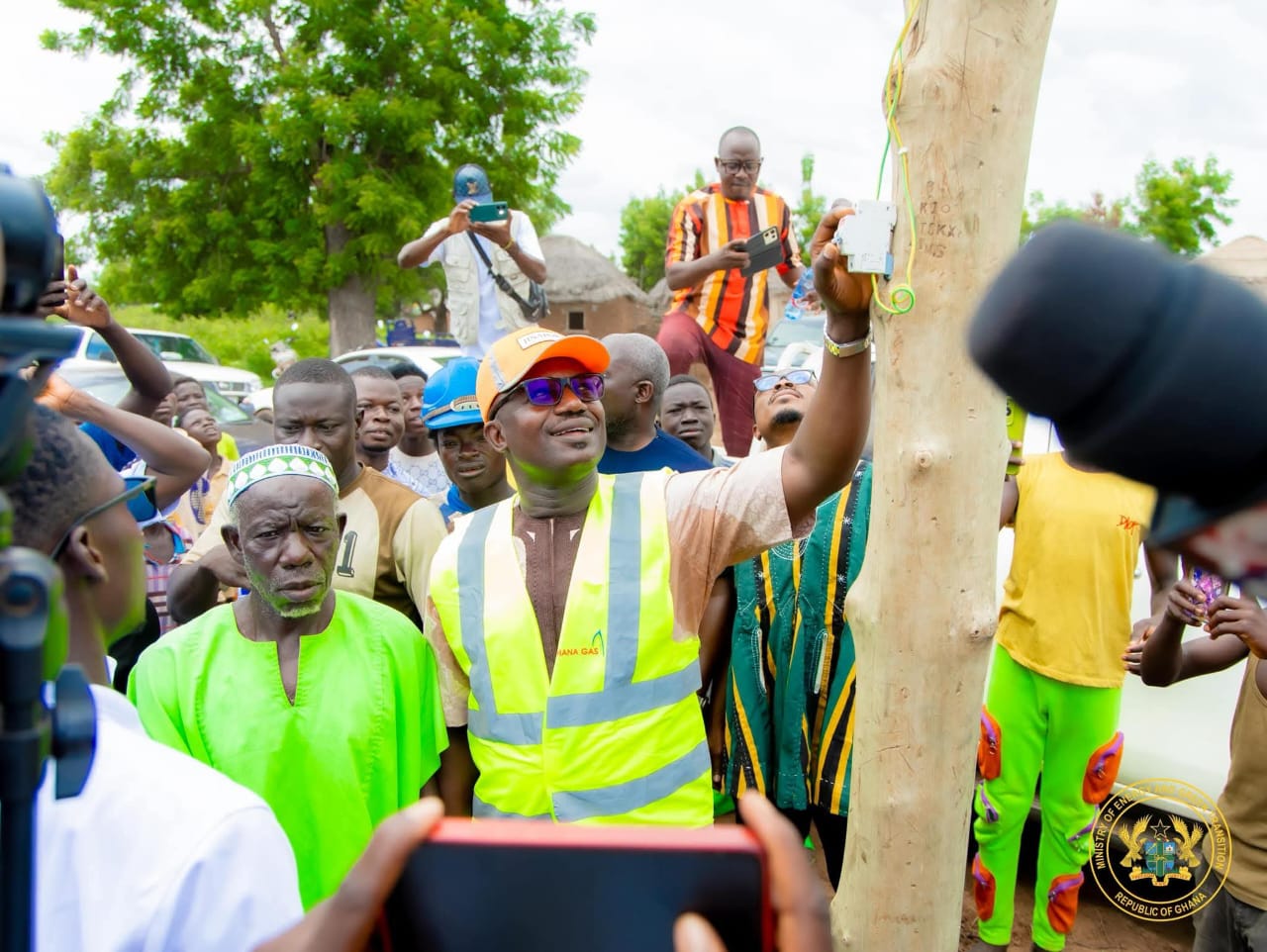
The Yapei/Kusawgu Member of Parliament (MP) in the Savannah Region made this disclosure over the weekend while extending electricity to 13 new communities out of 20 in his constituency as part of the rural electrification project.
The aim of the lawmaker under the first phase of the intervention is to connect a total of 100 communities in the Central Gonja district to the national grid.
“Today, Ghana has almost 90 per cent access to electricity. It is one of the highest in Africa, but our target is to achieve universal access to electricity; that is, we want to achieve about 99% access to electricity in Ghana,” Mr Jinapor emphasised.
The Minister, however, lamented that the Savannah region is among the lowest in the country, with about 68 percent access to electricity.
Accordingly, he promised that the government would have to work very hard to ensure that there is equity and bring the region up to the national average.
He further announced that the John Mahama-led government will be launching an ambitious 10k project next year using local contractors to undertake an expansion of the electricity network nationwide.
Mr Jinapor went on to underscore the importance of electricity, asserting that it is not just a social project but a commodity that brings about development and productivity.
“So let me assure you that under His Excellency President Mahama that we would extend electrification to almost every corner of this country,” the Minister pledged.
However, he posited that this cannot be sustained when consumers fail to pay for the electricity they consume.
“But, let me emphasise this, once we commission the electrification project, we need to generate that electricity, we need to transmit it, we need to distribute so that you can have the electricity in your house.
“These days we have a lot of Independent Power Producers, when they produce the power, we have to pay for the power – we have to pay for the fuel, and we have to pay for the gas from Nigeria. The only way we can pay for that is when you pay your electricity bills,” Mr. Jinapor stressed.
The Managing Director for the Northern Electricity Distribution Company (NEDCo), Ing John Okine Yamoah, for his part, said bringing electricity to a community goes beyond just lighting the place, but it brings development and improves the socioeconomic livelihood of the people.
He noted that electricity extension comes at a huge cost to the government, and for that matter, consumers must pay their bills so that NEDCo will be able to operate and properly maintain the network to serve the communities.
Ing. Yamoah further cautioned the residents against illegal connections and tampering with the service lines and meters.
“You have the transformers, you have the fuses, you have the meters; they are all part of the network. When there’s a problem with the transformer, when your light is off, it is your responsibility (the Assemblyman or any opinion leader) to report the challenge to NEDCo,” he advised.
Ing Yamoah warned that it is unlawful for anyone to contract the services of a local electrician to fiddle with the transformers and other equipment.
The NEDCo Managing Director emphasised that unauthorised persons are not allowed to tamper with any part of the network.