

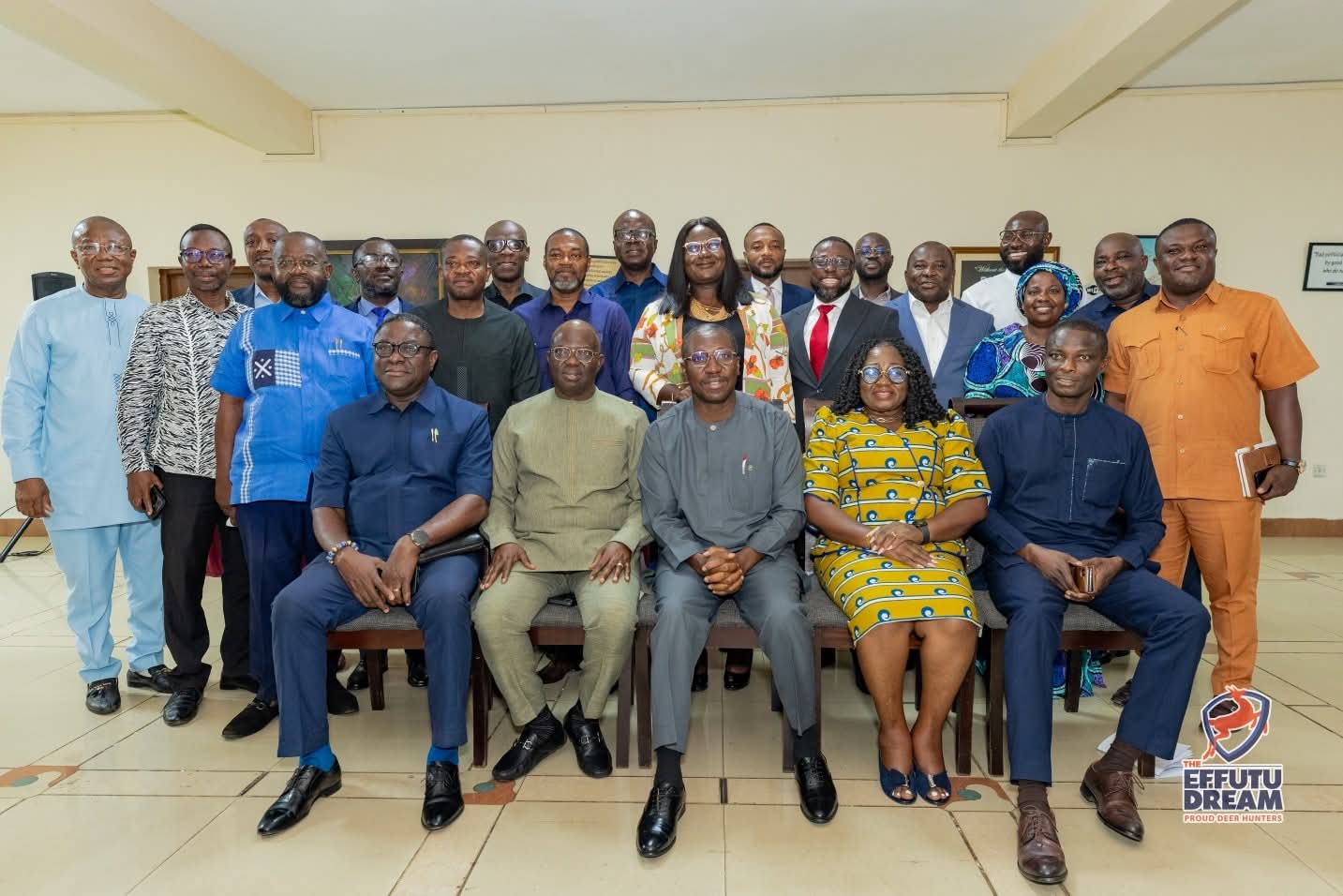
The Minority Caucus in Parliament has raised alarm over what it describes as a rapidly deteriorating environment for Ghana’s industrial sector, following a high-level engagement with the Association of Ghana Industries (AGI).
Leading the delegation, Minority Leader Osaheen Alexander Kwamena Afenyo-Markin said the meeting revealed “a detailed, evidence-grounded account of an industrial sector that is being made progressively unviable by the weight of avoidable policy failures.”
The meeting, held on Wednesday, brought together key members of the Minority Caucus and leadership of the AGI, including President Pharm Kofi Nsia-Poku and Chief Executive Officer Seth Twum-Akwaboah.
A sector under pressure
According to the Minority, industry players painted a troubling picture of rising costs, policy uncertainty, and what they described as a lack of urgency from the government in addressing critical constraints.
Manufacturers indicated that the current business climate is pushing many firms toward importation rather than local production. One participant reportedly noted that “it is easier, today, to shut down a factory and import than to keep it running.”
The Caucus said this trend is evident in the growing dominance of imported goods, with as much as 70 to 80 percent of beverage products on the Ghanaian market now sourced from abroad.
Energy costs a major concern
Energy pricing emerged as the most pressing issue during the discussions. Industrialists argued that electricity tariffs have become excessively high due to the accumulation of multiple levies over time.
“These are not abstract line items. Each one adds directly to the cost of running a factory,” the statement noted.
As a result, some companies are scaling down operations, absorbing losses, or investing in alternative energy sources such as solar power—moves that the Minority described as driven more by necessity than sustainability goals.
Concerns were also raised about tariff calculations by the Public Utilities Regulatory Commission (PURC), including exchange rate applications and inconsistencies in smart meter systems.
Tax and port challenges
The Caucus also highlighted frustrations with an AI-driven excise duty assessment system at Ghana’s ports, which industry players say is producing inflated and inconsistent charges.
According to the statement, businesses have received duty assessments that “bear no rational relationship to the actual values of the consignments,” with no effective appeal system currently in place.
In addition, the planned change in supplier for digital tax stamps by the Ghana Revenue Authority (GRA) has sparked concern among manufacturers, who say they were not consulted and lack clarity on the implications for their operations.
VAT and financing constraints
On taxation, AGI members criticised recent changes to the VAT regime, arguing that the removal of the flat rate system has made compliance more complex, particularly for smaller and informal sector operators.
The Minority warned that while revenue targets may be improving, aggressive enforcement without adequate reforms could undermine long-term growth and formalisation of the economy.
Access to finance was another key issue, with industrialists pointing out that most commercial loans in Ghana have a maximum tenure of just two years—far shorter than the investment cycles required for manufacturing and agro-processing.
Policy consistency and skills gap
The Caucus also expressed concern over the discontinuation of the One District One Factory (1D1F) programme, noting that several projects remain uncompleted and some facilities have been abandoned.
Industry players reportedly questioned the shift to the government’s 24-hour economy policy, saying there is little clarity on how it will support manufacturers in practical terms.
On workforce development, AGI members highlighted a persistent skills gap, citing an education system that remains overly theoretical and inadequate for the needs of modern industry.
Minority promises action
The Minority Caucus said it will escalate the issues raised through parliamentary processes, including committee engagements and formal questions to relevant state agencies.
“We will carry what we heard into every relevant parliamentary forum,” the statement said, adding that it would push for sustained dialogue between government and industry.
The Caucus further called for greater collaboration and policy consistency to restore confidence in Ghana’s industrial sector.
“Ghana’s industrialists have shown remarkable resilience in the face of a policy environment that has too often worked against them. They deserve better from their government,” the statement concluded.