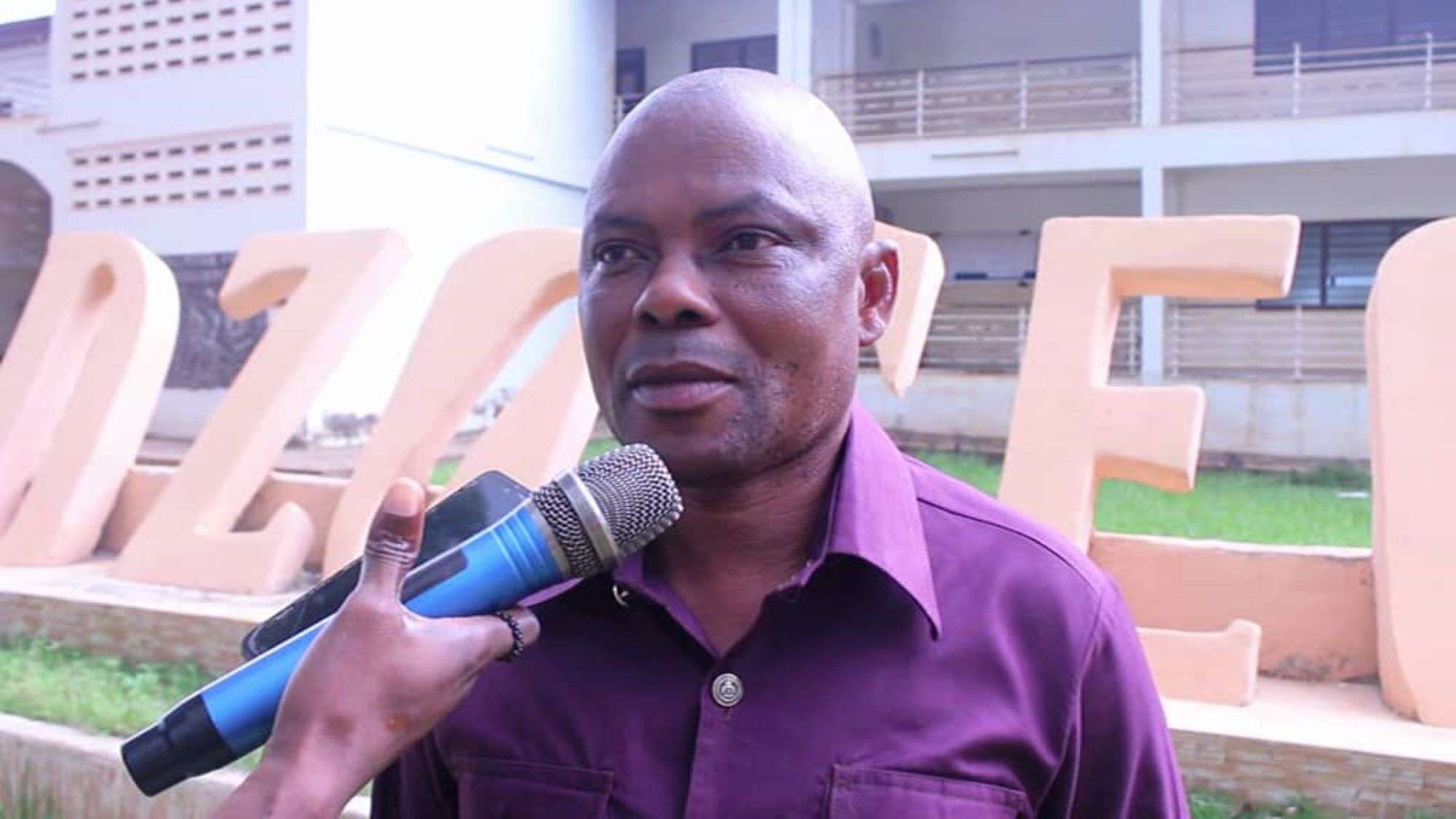


Security analyst Emmanuel Kotin has expressed deep concern over the current condition of Ghana’s presidential aircraft, warning that continued reliance on the malfunctioning jet poses a serious national security risk.
In an interview with TV3, Kotin stressed that the deteriorating state of the presidential jet not only endangers the life of the President but also presents a worrying image to international observers.
“This is a national security issue. Let’s have a national conversation about this issue because I won’t advise the President to use this jet due to the level of damage,” he said.
Kotin argued that the jet’s compromised condition constitutes a threat to anyone who boards it.
“Six years ago, I described it as a flying coffin. Let’s put politics aside, let’s treat this as a national emergency,” he added.
Ghana’s presidential aircraft, a Dassault Falcon 900 EX, has faced persistent technical issues in recent years, leading to frequent disruptions in presidential travel plans.
There have been multiple instances where former President Nana Addo Dankwa Akufo-Addo was forced to charter private aircraft for official international trips — a decision that sparked public backlash and debate over cost, accountability, and necessity.
While government representatives have cited maintenance schedules and safety considerations for these alternative arrangements, critics argue that the practice is unsustainable and imposes an undue financial burden on the state.
Kotin further cautioned that delays in addressing the issue could expose the presidency to critical operational vulnerabilities.
His comments follow a recent update in Parliament, where Defence Minister Dr. Edward Omane Boamah revealed that the Falcon 900 has been grounded in France since March 11, 2025.
According to Dr. Boamah, the aircraft is undergoing comprehensive maintenance due to extensive corrosion in key systems, rendering it unfit for use.
“Let’s not reduce this important conversation to NDC versus NPP. This is a matter of national security, sovereignty, and responsible maintenance of state assets,” the minister said.
Back in 2021, the government signaled its intention to procure a new presidential aircraft, citing the ageing jet’s limited capacity and rising maintenance costs. However, those plans have since stalled amid economic constraints and public criticism over high government spending.
Civil society groups and opposition leaders continue to demand transparency and accountability in matters concerning the presidential fleet. Many insist that national resources should not be committed to costly purchases without clear justification.
As the debate persists, Kotin called for a nonpartisan and forward-thinking approach to resolving the matter.