

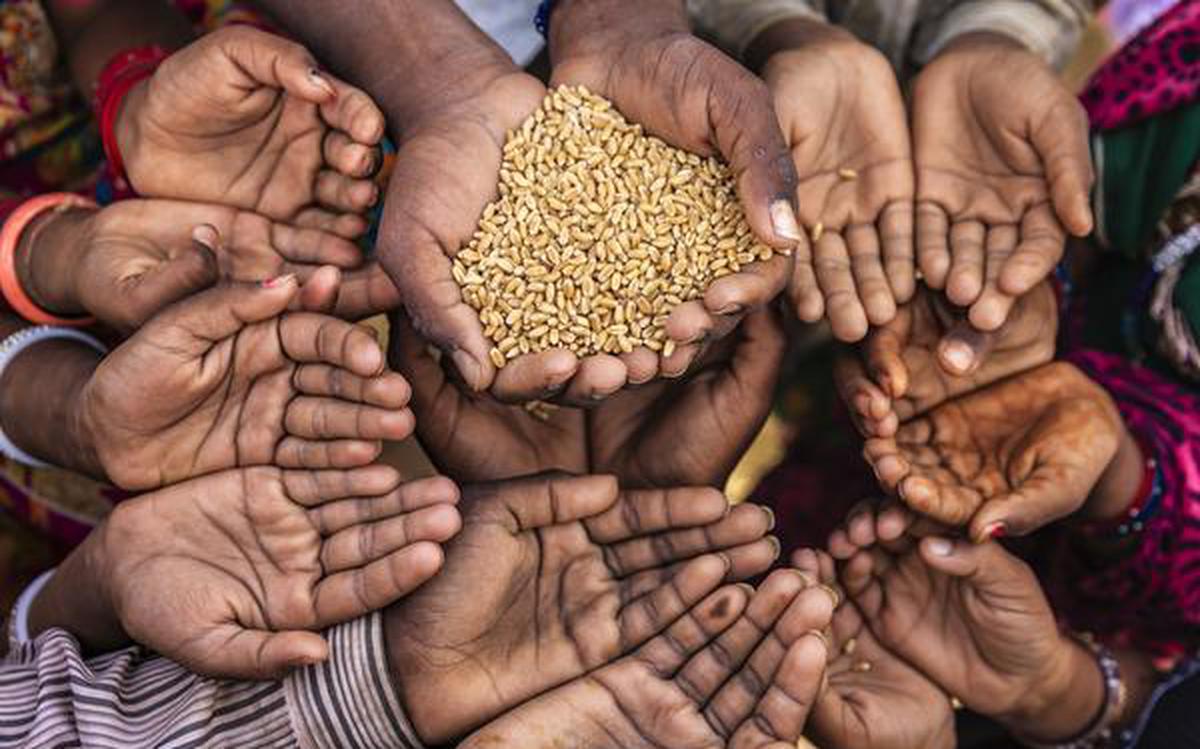
Ghana recorded 12.5 million food-insecure people in the third quarter of 2025, according to the latest Quarterly Food Insecurity Report released in Accra by the Ghana Statistical Service (GSS).
Government Statistician Professor Alhassan Iddrisu said the issue threatens national development and human capital.
“This release is important because food insecurity is not just a social issue,” he said. “It affects household welfare. It affects child health, labour productivity, business confidence, and national development.”
The report, based on the Quarterly Labour Force Survey, supports Sustainable Development Goal Two on ending hunger.
“Our goal for this release is very simple: to provide clear, timely, and credible evidence that helps stakeholders, including governments, businesses, communities and development partners, make better decisions in the food security space,” he noted.
Food insecurity prevalence rose from 35.3% in early 2024 to 38.1% in late 2025.
“This tells us something very important: that food insecurity in Ghana is volatile, and that it responds quickly to economic conditions and seasonal patterns as well as surprise movements,” Prof Iddrisu explained, adding that “despite the recent easing we have seen in food insecurity, the overall trend since the 2024 quarter one is upward, indicating rising vulnerability.”
The number of affected people increased from 11.2 million to a peak of 13.4 million, before declining.
“Just within one quarter, the number of food-insecure persons reduced by 900,723 persons from 13.4 million in quarter two to 12.5 million in quarter three,” he said.
Still, he warned: “Given that in the third quarter of 2025 the number of people who are food insecure is 12.5 million people, that number is still very, very significant, and as a country, we have to do everything possible to ensure that that number is reduced to the very minimum.”
“This approach asks households eight simple questions about their experiences over the last three months,” Prof Iddrisu said. “These questions include, ‘Did you worry about having enough food? Did you eat less than you should have? Did you skip meals? And did anyone go a whole day without eating?’”
“From 2024 quarter one to 2025 quarter three, moderate food insecurity was consistently higher in female-headed households,” he said.
“This possibly reflects structural factors such as income differences between males and females, employment opportunities and also caregiving responsibilities,” he added.
Regional gaps were wide, with Upper West at 55.9% and Oti at 18.4%.
“This tells us that food insecurity in Ghana is deeply spatial, not evenly spread,” he said.
“Nationally, about 53 per cent of households reported worrying about food in the third quarter of 2025,” he said. “The problem is more severe in rural areas… about 60 per cent compared to 48 per cent in urban areas.”
“Nationally, households with malnourished children recorded food insecurity rates of around 44 per cent,” he said.
“This is not just a food issue, it is a human capital issue with long-term implications for learning, productivity and health,” he warned.
“Food insecurity declined steadily as educational attainment increased,” he said.
“Education matters a lot in addressing food insecurity issues,” he emphasised.
The report recommends targeted interventions, social protection and job-linked policies.
“Although the number is modest, it represents deep structural vulnerability,” the Government Statistician said.