
The New Patriotic Party (NPP) Minority in Parliament has challenged the government to publish full details of all road contracts under its flagship ‘Big Push’ infrastructure programme.
Citing figures presented in the 2026 State of the Nation Address (SONA), the group noted that the programme is expected to cost taxpayers approximately GH¢50 billion.
Transparency, the Minority pointed out, is essential to safeguarding public trust in the use of the GH¢50 billion allocated to the project.
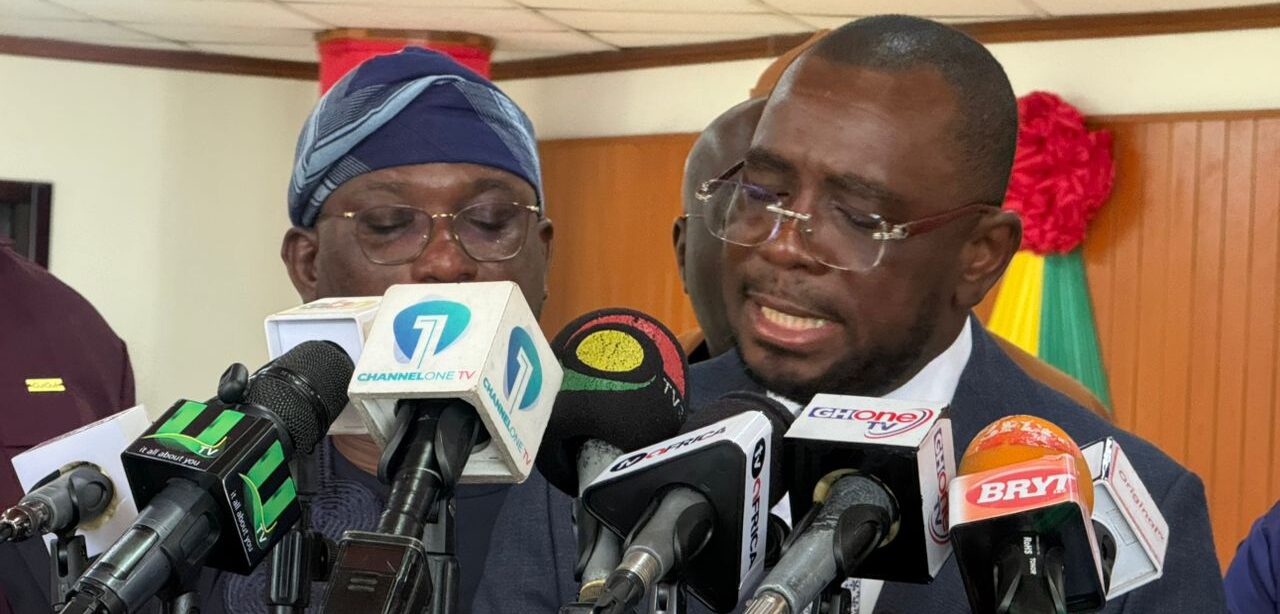
Addressing a news conference in Parliament on Tuesday, March 24, 2026, on a series of issues on roads and transport sector, the Minority caucus said full disclosure was necessary due to concerns emerging over the process used in awarding some initial 50 road projects.
The Ranking Member on the Roads and Transport Committee of Parliament, Mr Kennedy Nyarko Osei, who read a statement on behalf of the Minority, maintained that full disclosure was necessary to allow Ghanaians to independently assess the value and fairness of the contracts.
Government, he demanded, must urgently publish key details of all awarded contracts, including the names of contractors, the scope of works assigned under each contract, and the unit cost per kilometre for the various projects.
According to him, this level of disclosure will also help eliminate suspicion and promote accountability.
Mr Osei Nyarko argued that such a significant public investment demands stronger transparency safeguards, especially given past political criticisms of procurement practices.
“These are issues the current government spoke vehemently against while in opposition. There is therefore a legitimate expectation that, once in government, higher standards of transparency would be upheld,” he noted.
Cost of road projects
Mr Osei Nyarko outlined estimated industry benchmarks for road construction costs, which he said should guide public evaluation of the contracts once details are released.
According to him, bitumen surface roads typically range between USD 400,000 and USD 650,000 per kilometre, surface dressing roads between USD 600,000 and USD 800,000 per kilometre, single carriageway asphaltic overlays between USD 1.2 million and USD 1.8 million per kilometre, and dual carriageway overlays between USD 2.5 million and USD 4 million per kilometre.
These benchmarks, he said, should help Ghanaians determine whether project pricing under the Big Push programme is within acceptable limits.
He argued that transparency should not end at contract award.
“Even after the award of these contracts, they should be advertised. Ghanaians have the right to know how these funds are being allocated given the scale and significance of the programme,” he said.
The Fourth Estate Report
Questions are being asked about the transparency of the contracts awarded, possible inflated costs as well as sole-sourcing and selective tendering of the contracts to alleged governing party cronies.
The Fourth Estate, a public interest and accountability investigative journalism project of the Media Foundation for West Africa (MFWA) issued a report on Tuesday, March 24, 2026, indicating that a whopping 81 out of the 107 road contracts worth over GH¢73 billion were awarded through sole-sourcing.
It said the remaining 26 contracts worth about GH¢8 billion were awarded through selective tendering, meaning over 90% of the amount of money expected to be spent on roads under the ‘Big Push’ programme so far was given out through sole-sourcing.
Minority’s take on ‘Big Push’
The Minority stressed that while it supports the ‘Big Push’ policy in principle, there are more questions than answers on the policy.
“The Big Push programme is in principle a commendable initiative. If adequately resourced and efficiently implemented, it has the potential to significantly improve connectivity and open up key economic corridors.
“We on the Minority side are not opposed to the policy itself. Our concern, however, lies with the process through which the initial 50 projects have been awarded,” the Minority explained.
The Minority has therefore reiterated its call on the government to immediately publish all relevant details of the 50 Big Push road contracts as part of efforts to strengthen accountability and public confidence in infrastructure delivery.
Abandoned projects and missed opportunities
The Minority also expressed concerns over the abandonment of over 80% of ongoing road projects inherited from the previous NPP administration, including eight bypasses along the Accra–Kumasi corridor.
Mr Osei Nyarko warned that such discontinuity leads to inefficiencies, additional costs, and lost socio-economic benefits.
Railway development at a standstill
The Minority criticised the apparent decline in government commitment to railway infrastructure.
Key projects, including the Tema–Mpakadan and Kojokrom–Manso lines, remain idle despite substantial prior investments exceeding USD 1.1 billion.
Complementary facilities essential for full operational value have also been neglected, undermining Ghana’s long-term rail modernization goals.
Road maintenance financing crisis
The Minority highlighted a financing shortfall at the Ghana Road Maintenance Trust Fund, with approximately GH¢20 billion in arrears and only GH¢1 billion released out of a GH¢5.8 billion allocation.
The caucus called for urgent action to clear arrears, restore contractor confidence, and explore innovative financing mechanisms such as road infrastructure bonds.
Suame interchange under scrutiny
The proposed Accra–Kumasi Expressway and the Suame Interchange were cited as projects needing transparency and adherence to original plans.
Mr Osei Nyarko questioned the lack of disclosed costs, compensation plans, and budgetary allocations, stressing that public funds must be used efficiently and in the national interest.
Aviation and maritime concerns
In aviation, delays in implementing Ho Airport’s pilot training academy, the Prempeh I runway extension, and Tamale International Airport’s Phase 3 development were flagged as missed opportunities to maximise existing infrastructure.
Similarly, the Minority raised concerns over disputes between Ghana Airports Company Limited and McDan Aviation, urging constructive resolution to safeguard indigenous investment.
In the maritime sector, failure to operationalise the Ghana Shippers’ Authority Act, 2024, the Minority noted, has led to additional surcharges on importers and exporters, undermining regulatory objectives.