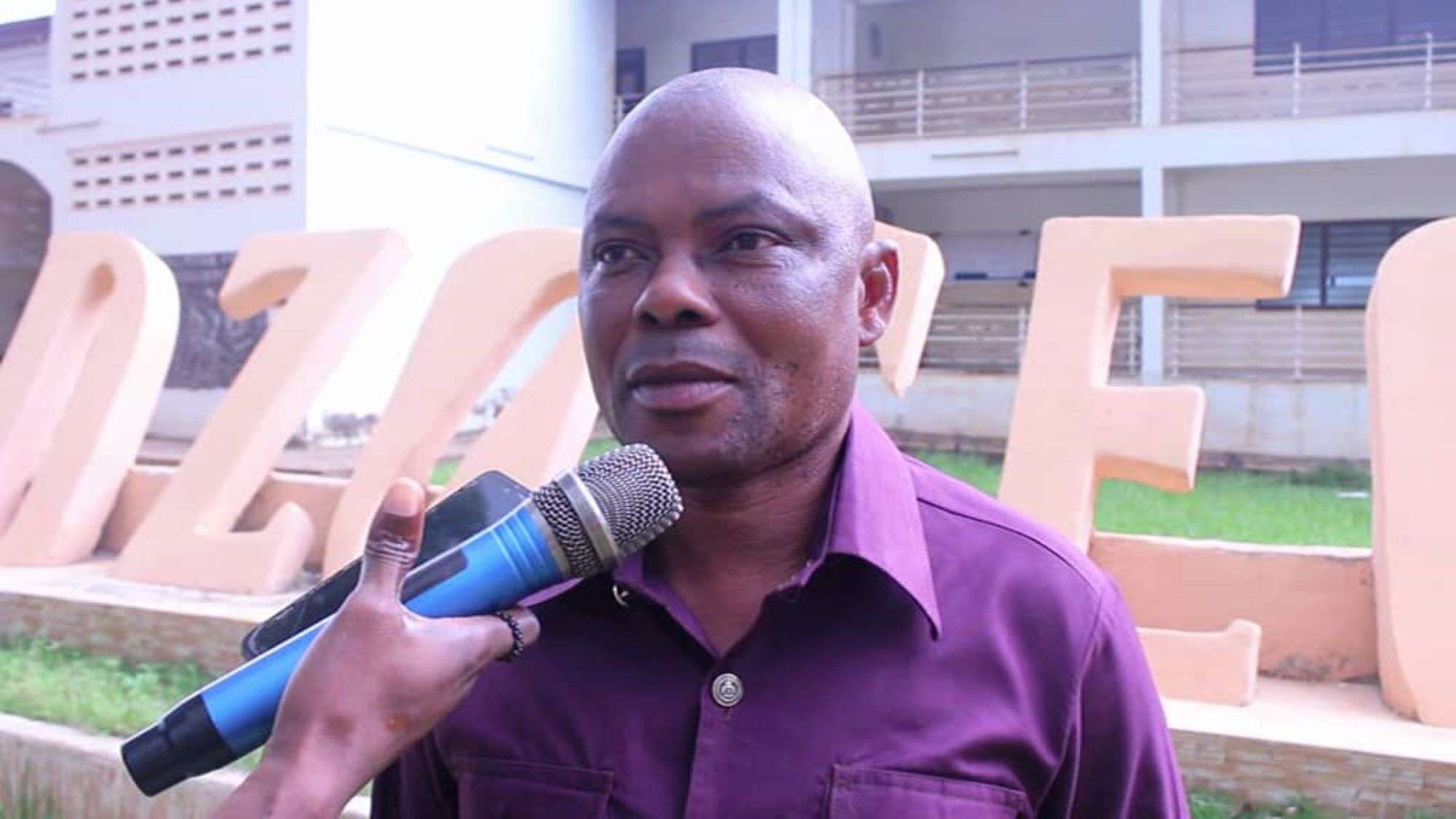

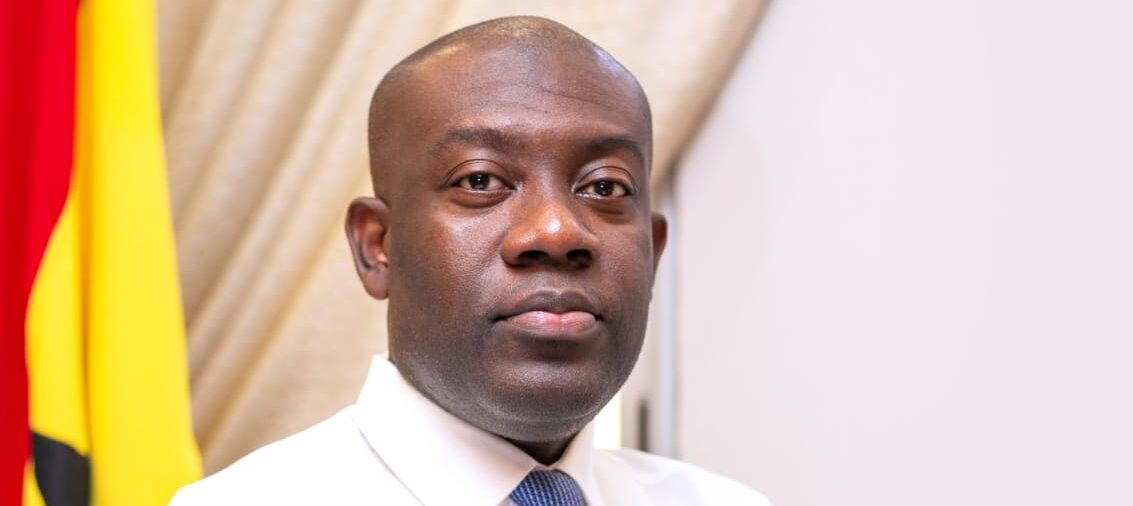
Minority Spokesperson on Parliament’s Economy and Development Committee, Mr Kojo Oppong Nkrumah, has launched a broad critique of the governing National Democratic Congress (NDC), accusing the Mahama administration of prioritising political messaging over real economic reform and structural problem-solving.
Speaking on TV3’s political programme ‘Hot Issues,’ on February 22, 2026, Mr Oppong Nkrumah argued that the national conversation on the economy, the 2026 Budget, and the cocoa sector had become deeply polarised, with the governing party more focused on political confrontation than policy learning.
“Due to the partisan nature of politics, the NDC is more interested in debating us than listening to our confessed mistakes,” he said.
Mr OppongNkrumah who is also the Member of Parliament (MP) for Ofoase-Ayirebi added that the opposition New Patriotic Party (NPP) had openly acknowledged some of its governance failures as part of a broader effort to prevent the current government from repeating similar errors.
From Power to opposition
Following the 2024 general elections and the return of the NDC to power, the political balance in Parliament shifted, placing the NPP in opposition.
As part of this transition, Oppong Nkrumah assumed the role of Ranking Member (Minority Spokesperson) on Parliament’s Economy and Development Committee, giving him a central role in scrutinising government economic policy.
Since taking up the position, he has consistently framed the NPP’s current posture as one of “constructive opposition,” arguing that the party’s electoral defeat was a reflection of unmet public expectations and governance shortcomings that must now be acknowledged openly.
According to him, the opposition’s strategy is not simply to criticise, but to share lessons from past mistakes so that Ghana does not repeat cycles of economic mismanagement, debt accumulation, and policy inconsistency.
24-Hour economy under fire
A major pillar of Oppong Nkrumah’s critique has focused on the NDC’s flagship 24-hour economy policy.
He has repeatedly questioned the credibility and feasibility of the programme, particularly after Parliament passed the 24-Hour Economy Authority Bill, 2025, which established a statutory body to coordinate implementation.
Mr Oppong Nkrumah argue that the law does not contain enforceable provisions that mandate either public institutions or private enterprises to operate on a 24-hour basis, nor does it provide a clear operational framework for the much-publicised “1-3-3” shift model that was central to the government’s campaign messaging.
According to him, the Authority risks becoming a symbolic institution that creates the appearance of progress without delivering structural economic transformation, particularly for young people who were promised mass job creation through round-the-clock economic activity.
Cocoa Sector crisis and fiscal pressure
Beyond the 24-hour economy, Oppong Nkrumah has also placed the cocoa sector at the centre of his critique, describing it as a symbol of deeper fiscal and governance problems within the current administration.
He revealed that Ghana Cocoa Board (COCOBOD) owes Licensed Buying Companies (LBCs) an estimated GH¢10 billion for cocoa beans supplied between November 2025 and February 2026.
According to him, the debt affects cocoa purchased from about one million farmers nationwide, at an average price of GH¢3,625 per bag.
Although COCOBOD has announced payments totalling about GH¢1.091 billion—including GH¢237 million for 50,000 metric tonnes of cocoa and a subsequent GH¢854 million disbursement—Oppong Nkrumah described this as “a drop in the ocean” compared to the scale of the debt.
He argued that the government focuses on long-term reforms and new policy announcements ring hollow while existing financial obligations to farmers and buying companies remain largely unpaid.
Accusations of public relations politics
In his broader assessment, Mr Oppong Nkrumah accused the NDC administration of relying heavily on public relations campaigns and political symbolism rather than addressing core structural challenges such as liquidity shortages, public debt, agricultural financing, youth unemployment, and production capacity.
He claimed that major government initiatives are often announced with strong publicity but weak implementation frameworks, leaving ordinary Ghanaians with policy slogans instead of tangible improvements in livelihoods.
This, he said, risks deepening public frustration, especially among young people and rural communities who were mobilised by campaign promises of economic transformation, job creation, and sectoral reform.