
Parliament has passed the 24-Hour Economy Authority Bill, paving the way for the creation of a national body to coordinate Ghana’s transition to a round-the-clock economy.
The legislation establishes the 24-Hour Economy Authority, which will oversee policy implementation, regulate participating sectors, and collaborate with both public and private stakeholders to extend business activity beyond traditional working hours.
The initiative forms a key component of the government’s broader economic transformation agenda aimed at boosting productivity, creating jobs and increasing national output. Authorities say the policy will encourage businesses, factories, logistics firms and service providers to operate in shifts, enabling economic activity to continue day and night.
If assented to by the President, the law is expected to address long-standing structural weaknesses in the country’s productive sector.
It is also intended to reduce Ghana’s dependence on exporting relatively low-value raw materials while importing costly finished and intermediate goods. Analysts believe the policy could help retain more value within the economy during each production cycle and ultimately reduce the recurring economic crises that have slowed national development.
The bill, which received bipartisan support, was laid before Parliament by the Deputy Attorney General and Minister of Justice, Dr Justice Srem-Sai, on December 3, 2025, and was subsequently referred to the Committee on Constitution and Legal Affairs for consideration.
Shortly after the House approved the legislation, Majority Leader Mahama Ayariga told the parliamentary press corps that its passage fulfilled a pledge to transform the economy into a major employer capable of providing jobs and livelihoods for millions of young people.
He explained that the transformation would partly depend on implementing the 24-hour economy model — an economic framework under which the country would operate around the clock.
He said if the country was working 24 hours, more labour would be needed to work the 24 hours based on several shifts.
“There will be a shift that will be during the daytime, and there will be a shift that will work during the nighttime.
“The idea behind it is to create jobs and opportunities for our youthful population, many of whom have graduated from universities, and because the economy has been bad for the past eight years, jobs were not being created,” he said.
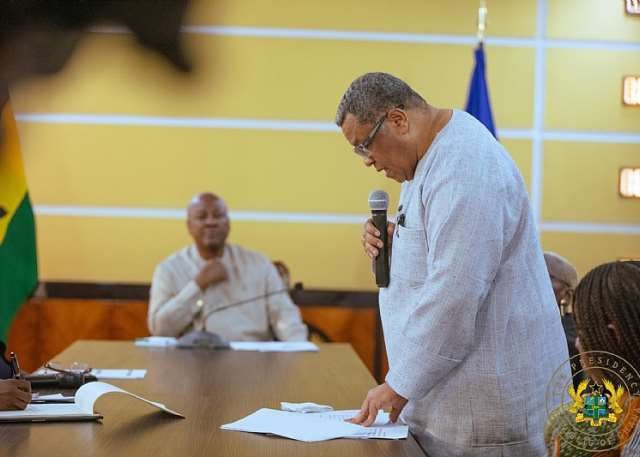
The Tamale Central MP added that employment opportunities had been leaving the country due to excessive taxation, financial crises, high inflation, the financial sector clean-up and currency instability, which pushed many factories to relocate to more stable environments.
“And so many people were unemployed, and you recall the implementation of the financial sector cleanup, which led to the collapse of financial institutions. Hundreds of thousands of people, directly and indirectly, lost their jobs, and we took over on the back of such an economic mess. And so unemployment is a major issue, and the National Democratic Congress admits that we have a problem of unemployment.
Mr Ayariga said the government had injected capital into the financial sector, with banks such as ADB, National Investment Bank and all the government banks having received major capital injection, running into billions of Ghana cedis.
“These financial institutions are going to make money available for the private sector,” he said.