
A delegation of 12 officers is said to have been dispatched by the National Democratic Congress (NDC) government to inspect what has been suspected to be pre-ordered Airbus luxury aircraft even before parliamentary approval.
Government sources have indicated that the deal was sealed before the budget was even presented to Parliament, naming Airbus as the selected manufacturer for the undisclosed luxury presidential and military jets.
The debate over the transparency of the purchase has been virtually overshadowed by the highly troubling notion that the ongoing parliamentary debate on the deal is merely a formality, as sources within the presidency have indicated that the aircraft have already been ordered.
An Airbus scandal involving the previous NDC administration’s acquisition of aircraft, in which now President John Dramani Mahama was the Vice President is still a troubling episode in the minds of anti-corruption crusaders.
However, the current Mahama administration has labelled the acquisition as the retooling of the Ghana Armed Forces (GAF) for the next four years in a deal worth a staggering amount of GH¢13 billion (approximately $1.2 billion).
Presenting the 2026 budget statement and economic policy of the government to Parliament on 13th November, 2025, the Minister for Finance, Dr Casiel Ato Forson, officially requested parliamentary approval to begin procurement for a total of six new aircraft for GAF, beginning from 2026.
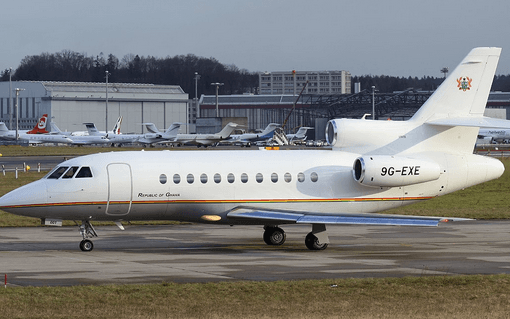
He specified the fleet as four modern helicopters, one long-range aircraft (big luxurious presidential jet), and one medium-range aircraft (small presidential jet).
This ignited a major political firestorm, bordering on the ambitious and costly plan to retool the GAF aircraft fleet.
The New Patriotic Party (NPP) Minority in Parliament described the intended acquisition as extravagant, particularly when the NDC, while in opposition, rejected a similar move by the previous government as costly for the state.
The Minority led by Osahen Alexander Afenyo-Markin, pointed out that the total budget earmarked for the GAF retooling over four years, amounting to a staggering GH¢13 billion (approximately $1.2 billion), was a “smokescreen.”
According to members of the minority, including the Ranking Member on the Foreign Affairs Committee of Parliament, Samuel A. Jinapor; former Minister for Defence Dominic Nitiwul, and Minority Chief Whip Frank Annoh-Dompreh, the substantial cost was being used to mask the acquisition of two new luxury presidential jets, hidden within the one long-range and one medium-range aircraft specified for the Air Force.
This became a subject of heated debate as members of the NDC Majority disputed the amount until they were taken through pages of their own budget in which various sums of allocations were made for the deal up to 2028.
Order before approval
It is now emerging that while the government officially seeks parliamentary approval to commence procurement, the aircraft have already been ordered, palpably bypassing the legislative process.
This move, proponents of democratic accountability believe, demonstrates a lack of respect for the legislative processes, reducing the ongoing budget debate on the acquisition to a hollow ‘precursor’ for a deal already sealed.
Glaring case of double standard
The ongoing controversy over the acquisition of the aircraft highlights a striking political inconsistency.
The erstwhile NPP government faced intense scrutiny over its plans to replace the aging presidential jet fleet, primarily due to the high cost of expensive chartered flights used by the President.
NDC, in opposition at that time, vehemently opposed a similar request by the NPP government, describing it as extravagant spending and a lack of fiscal prudence.
Now in government, the same party is pushing a massive spending package, apparently seeking parliamentary approval for the aircraft parliamentary approval and ignoring the transparency it once championed.
This has sparked accusations of a major double standard and a deliberate attempt to circumvent democratic scrutiny.
The coming days will prove critical as Parliament votes on the 2026 budget.
Even though the Minority NPP is demanding full disclosure and transparency, with the claim of a pre-existing order now in the public domain, many are wondering if the legislative process can truly halt a deal that may already be flying.
This is particularly troubling, as the NDC has an overwhelming majority in Parliament to approve any deal, no matter how costly it is to the Ghanaian people.