
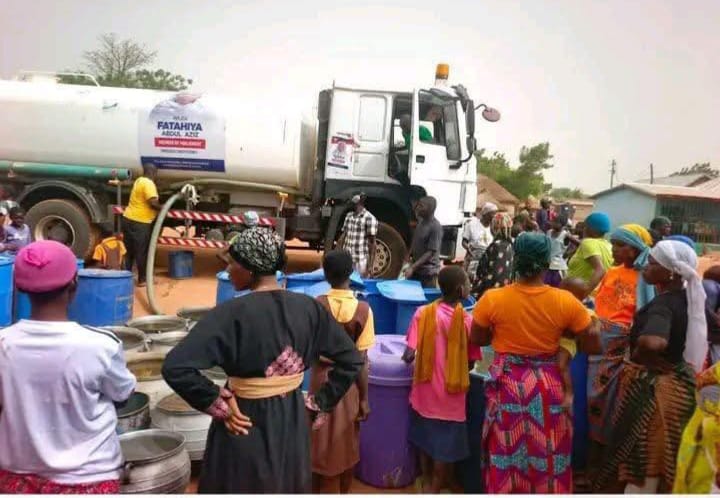
The Member of Parliament for the Savelugu constituency in the Northern Region, Hajia Fatahiya Abdul Aziz, has resumed her free water supply to households in the constituency.
The New Patriotic Party (NPP) lawmaker, prior to the 2024 general elections, procured two brand new water tankers to initiate the free water program to support families that spend productive hours daily in search of water.
The initiative was aimed at addressing the protracted water crisis in the area, which has undermined major socioeconomic activities of the people over the years, especially during the dry period.
As part of the measures, Hajia Fatahiya also constructed over 20 mechanised boreholes in several communities with stand-up pipes where women draw water for both domestic and economic purposes.
As the North is experiencing the peak of the dry season, characterised by the hot and dry conditions and the influence of the dry, dusty harmattan winds, several communities are struggling for water including the Savelugu municipality.
As a result, the MP, since Tuesday, February 17, 2026, directed the tanker operators to resume the free water supply program across the constituency.
The Custodian Online observed a mad rush for the water in several communities within the Savelugu township and its adjoining villages.
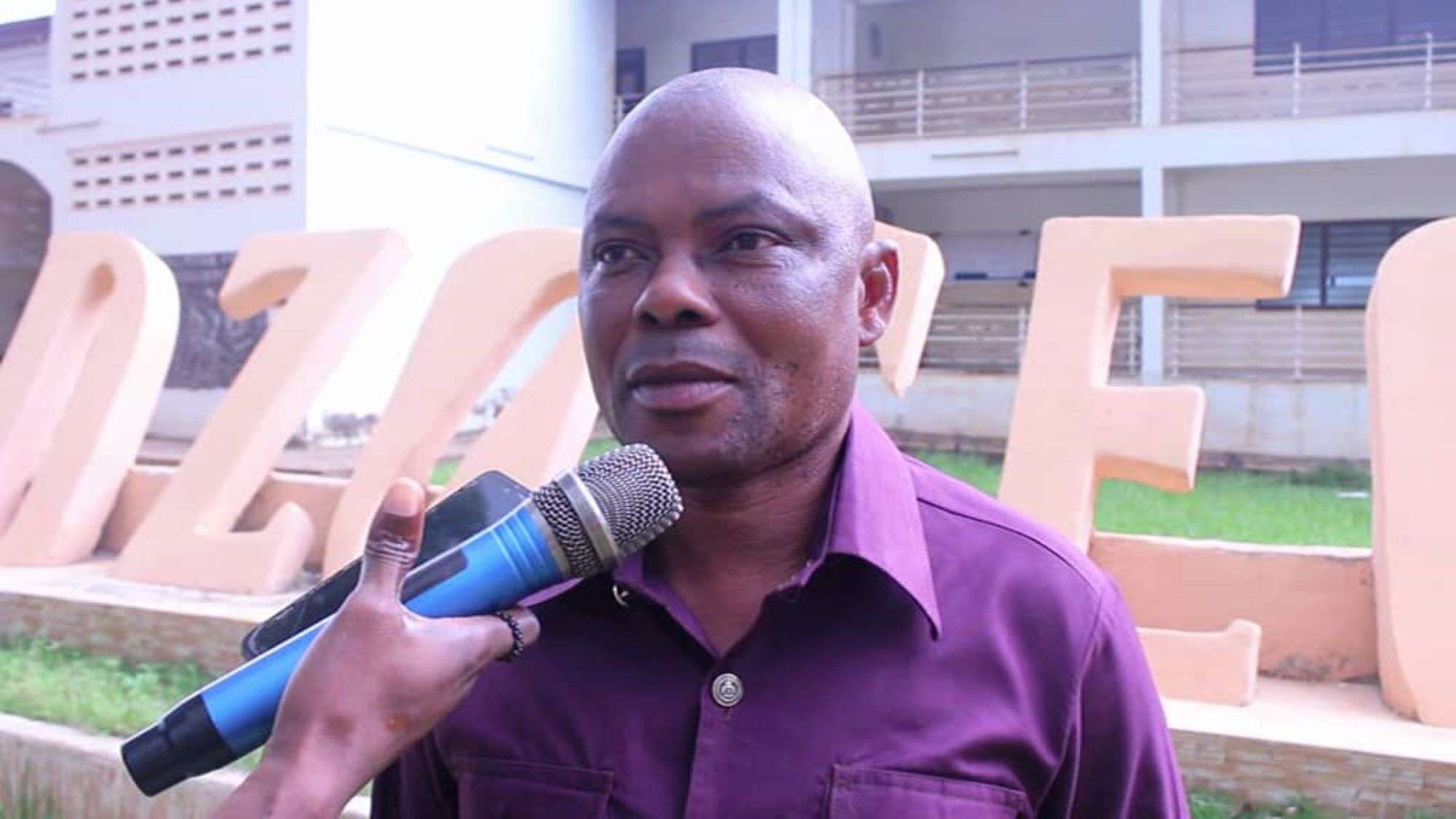
In an interview, Hajia Fatahiya Abdul Aziz outlined other interventions to mitigate the water crisis. She said under her recently launched Yooyili Pag’dede Foundation, additional boreholes and dams would be constructed to complement the existing ones.
The legislator indicated the free water program will, however, continue unabated until when the situation improves.
According to her, the water crisis is further impoverishing the people, particularly women, explaining several productive hours are used in search of water.
Meanwhile, in the greater Tamale area, some residents protested at the Ghana Water Limited (GWL) offices to demand an end to the long-term water shortage.
The demonstrators cited a public health emergency, with broken supply lines forcing reliance on unsafe water sources, causing daily hardships, and halting business operations.
Management of the Ghana Water Company Limited in a media interview attributed the worsening shortages to both environmental degradation and infrastructural constraints.
The management said human activities along the White Volta River which is the main source of raw water for treatment, have significantly reduced the river’s flow.