

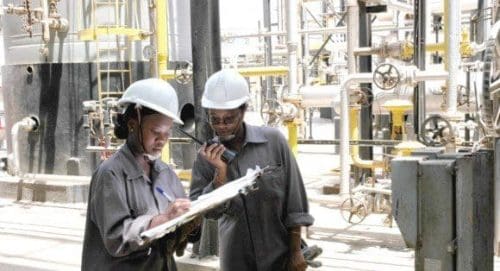
Tema Oil Refinery (TOR) Limited, Ghana’s premier petroleum processing facility, has resumed crude oil refining after more than six years of inactivity, following the completion of major rehabilitation works.
Refining operations restarted at the Crude Distillation Unit (CDU) about four days ago, with the plant currently processing approximately 28,000 barrels per stream day. Management is preparing to commission a new furnace, F-61, which is expected to raise production capacity to between 45,000 and 55,000 barrels per stream day.
Managing Director of TOR, Edmond Kombat, described the refinery’s previous condition as critical, attributing the prolonged shutdown to mismanagement and severe indebtedness. As part of the government’s “reset agenda,” management undertook a comprehensive operational review using the Fish Bone Analysis framework and stakeholder mapping to identify operational gaps and revival opportunities.
One major challenge identified was low staff morale caused by years without promotions. A special committee reviewed more than 300 cases, resulting in the promotion of over 250 employees—an intervention that significantly improved staff motivation and operational efficiency.
In addition, management implemented strict cash management systems, extended terminal loading hours, and introduced stronger accountability measures in product handling. These reforms have enhanced revenue generation and rebuilt confidence among clients.
The refinery has also absorbed hundreds of technicians who participated in maintenance work into permanent positions. TOR now supports about 1,000 employees and their dependents, offering benefits such as free medical care.
Although the refinery is not yet operating at full capacity, test runs and system flushing have been successfully completed. Officials say a formal commissioning ceremony will be held once operational stability is fully achieved.
The revival of TOR highlights how strategic planning, disciplined management, and effective collaboration with labour unions can restore critical national infrastructure.