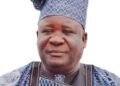

The chief of Sawla, Iddrisu Abdulai Nugbanso has accused the Member of Parliament of Sawla-Tuna-Kalba constituency, Mr. Andrew Chiwetey Dari of fueling the ongoing ethnic conflict between Gonjas and the Birifors.
The Gonja chiefs and youth have evidence that the Birifor militia who attacked and killed four Gonja youth at Gbineyri and Kalba were imported from Ivory Coast.
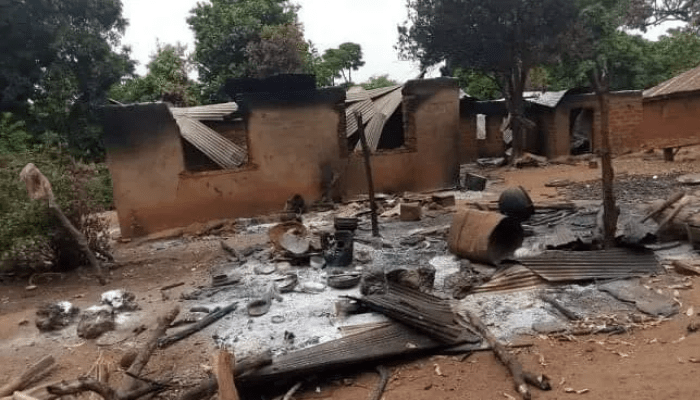
They were armed with sophisticated weapons, which are usually used by state security agencies. Naturally, the killing of the four Gonja youth and the burning of property compelled Gonja warriors (Nbowuras) to launch counter attacks to repel the Ivorian mercenaries and their Ghanaian counterparts (Birifor youth).
The conflict has so far claimed hundreds of lives and left several Birifors and Lobis internally displaced. Others were compelled to seek refuge in Ivory Coast, where women and children are reportedly being sexually abused by Ivorian men. What is more disturbing is that women and children are among those killed and among those internally displaced.
Future of children at risk
A couple of years ago, Compassion International Ghana, an American Christian Child Development and advocacy organization launched its operations in the Bole-Bamboi and Sawla-Tuna-Kalba constituencies. Compassion supports evangelical church partners to release poor and needy children from poverty in Jesus’ name.
Through this intervention, thousands of children are receiving educational, vocational and health support to make them become fulfilled adults. Unfortunately, the conflict has displaced many families and their children who are participants in Compassion’s interventions. Children need a peaceful environment to thrive, so I am praying and hoping for a speedy resolution of the conflict, so that caregivers and their children will return to the affected communities.
Chief’s interaction
In an interaction with a number of stakeholders, which includes the MP of Wa West, Mr. Peter Lacheni at his Palace, the Sawlawura, recalled that a few months ago, some Birifor youth posted audios and videos on social media threatening to unleash violence in the Sawla-Tuna-Kalba constituency.
According to the chief, he severally invited the MP of the area for a discussion on the way forward, but he declined the invitations. “I also invited the elders and opinion leaders of the Birifors to listen to the videos and audios and to talk to their youth to seek a peaceful solution to their grievances, rather than resorting to violence”, he said. He stated that the Birifor elders never gave him feedback, until the killing of the four Gonjas by militias from Ivory Coast.
“We believe that the MP is the one fueling the conflict” the Sawlawura, said, adding that because of his role in the conflict the MP has been avoiding face to face meeting with him.
He explained that the MP has been very disrespectful to the chiefs of Sawla, Tuna and Kalba, the epicenter of the conflict. He recalled that during the funeral of the eight people who died in the helicopter crash he (the Sawlawura) personally went to greet the MP and informed him that the three chiefs were in town. According to him, the MP never bothered to look for them until they returned to their towns.
The Sawla Chief explained that even in war the winners still suffer, let alone the losers. “As a teacher, I know the impact of conflict on women and children”, he pointed out. The Sawlawura declared that, “as long as I remain the chief of Sawla, I will never allow a Birifor man or woman to contest as MP for the Sawla-Tuna-Kalba constituency”, he warned.
He advised the Birifor youth and their elders to understand that they do not own even a meter of the land of the Bole Traditional Area. He explained that Gonjas have never had problems with the Dargatis and the Lobis, who are part of the larger ethnic group of the Lo-Dagarba or (Lo-Birs).
The Lobis, Birifors and Dagartis predominantly hail from the Upper West Region, with others settled across the Sawla-Tuna-Kalba and Bole-Bamboi constituencies. Looking at the loss of innocent lives and damage to properties, are the Birifor youth happy about provoking the conflict?
Gonjaland youth Association
In a press statement, the Gonjaland Youth Association accused the Birifor Youth Association of stockpiling guns and operating clandestinely. The President of GLYA, Mr. Alhassan Darison urged the leaders of Birifor Youth Association to call their warlords to order and to restrain their social media contractors from publishing hate speech about Gonjas.
The Birifors have been the most vociferous in renouncing Gonja customs and ownership of the lands they are settled on. On the contrary, Lobis and Dagartis often do not contend with Gonjas over land ownership.
In the heat of the violence several Birifor youth hiding other parts of the southern Ghana posted very offensive messages on social media against Gonja chiefs and their people. In one post, a Birifor youth claimed that any land they are currently occupying in the Savanna belongs to them, and that Gonjas have no right to claim custodial ownership of the lands. This entitlement mindset has been the major source of conflicts between the Birifors and Gonjas since the 1930s.
Since 1935 when both the Lobis and Birifors arrived in the Bole Traditional area, they have never been denied access to land for farming and settlement. With time the Birifors started clamouring for the right to permanently own and control the lands they are settled on. Historically the Birifors in Ivory Coast and Upper Volta (Burkina Faso) were identified as always agitating for land ownership and control wherever they are settled. This was probably what compelled them to flee Ivory Coast in the 1930s. Historians and sociologists say the Birifors were the last Lobi branch to migrate east of the Black Volta in search for better lands for cultivation.
Access to land
As stated earlier, Lobis, Birifors and Dagartis have unimpeded access to land for economic activities, on condition that they do not claim ownership of any land. Whereas Lobis and Dagartis see themselves as settlers, the Birifors see themselves as custodians of any land they are settled on. It is safer for the youth and elders of Birifors to accept the fact that there are currently no fresh lands anywhere for annexation and forceful occupation. At the time their ancestors arrived in Ghana, the current Bole Traditional Area was already occupied and owned by Gonjas and Vaglas.
Mr. Darison denounced the increasing disregard of the traditional norms and customs of Gonjas by the Birifors. “Gonjas are never frightened by mere guns, we play with guns, so you cannot threaten us with guns”, Mr. Darison warned. “We will defend every inch of our land with our lives and blood”, he added. The GYLA President lamented the untimely death of the four Gonja youth, describing it as an injustice to their families and an affront to peace and security of the Bole Traditional Area. “We demand justice for them. Anything less than justice will only deepen wounds and embolden the insurgents to launch further attacks.”
The John Mahama factor
Some commentators and political analysts have tried to link President John Mahama to the ethnic conflict because he is a Gonja. In my opinion, it is a mere coincidence that the violence occurred at the time he is the President of Ghana. To be honest majority of the eligible voters in the Bole-Bamboi and Sawla-Tuna-Kalba constituencies have overwhelmingly voted for the NDC since 1992. Many people in the two constituencies see the NDC as a religion. For this reason, it is illogical for anyone to argue that President Mahama will deliberately stoke fire in two of the most loyal constituencies to the NDC in the entire northern territory. John Mahama is just a victim of circumstances triggered by Birifor youth and the MP for Sawla-Tuna-Kalba constituency, as the Sawlawura alleged.
It has been the agenda of Lobis, Dagartis and Birifors to have the Bole Traditional Area ceded to them. This was evident in the 1980s, when Flt. Lt. Rawlings created the Upper West Region. In the process, some political power brokers in the PNDC from Upper West tried to prevail on Rawlings to add the Bole Traditional Area to the new region.
However, the well-educated King of Gonjas at the time, Yagbonwura Timu I (James Abudu. Braimah Snr) fiercely resisted the agenda. In a powerful letter to the Chairman of the PNDC, Yagbonwura Timu I stated that Gonjas would no longer allow any part of their land to be added to another region.
He recalled the mistake Kwame Nkrumah made by adding part of Gonjaland to then Brong-Ahafo Region. He advised all ethnic groups that wanted to belong to the new Upper West Region to pack their belongings and cross over.
Early origins and migrations
The Birifor, who are also known as the Malba, are related to the Lobi people of Ivory Coast and Upper Volta. According to historians the Birifor people had migrated between Ivory Coast and Ghana at various intervals in the early part of the 17th century. These movements were largely influenced by repressive conditions under French colonial administration in the Ivory Coast and Burkina Faso.
Another narration suggested that the Birifor migrated from the Chad region through the Niger Belt to Ghana and then into Ivory Coast and Burkina Faso. Apart from their current settlement in the Savanna and Upper West regions, the Birifor also has a sizable population in the Western and Wester-North regions, especially in the cocoa farming areas of the Enchi and Sefwi-Wiaso Districts.
Culture and economy
They live in extended families, in very large muddy houses. At some point the sons departed from their father’s house to start life with their wives and children. They mostly engaged in peasant farming and kept livestock for a living, and this explains why they always migrate to areas with fertile lands. In recent times, the influx of Fulani herdsmen with cattle into the Birifor settlements has compounded their livelihoods as peasant farmers. This condition has made farming unattractive, hence the rapid migration of the young men and women to the south in search of greener pastures.
The Birifor system of inheritance is similar to the Akan matrilineal system, whereby the properties of a deceased person are inherited by the members of the matriclan. In earlier times, the absence of central authority meant that conflicts played an important part among the Lo-Birifors.
Therefore, Lobis and Birifors did have any chieftaincy structures in the pre-colonial times, as they are now advocating. This notwithstanding, the Birifors have been able to build a command structure that revolves around the family and clan heads called the Yir-sur.
Intellectuals
Over the years, the Birifor have produced several intellectuals and industrious business people. They have a vibrant cadre of youth and more associations than Lobis. Starting from the 1980s, they have played active roles in the national politics of Ghana both in the executive and legislative arms of government.
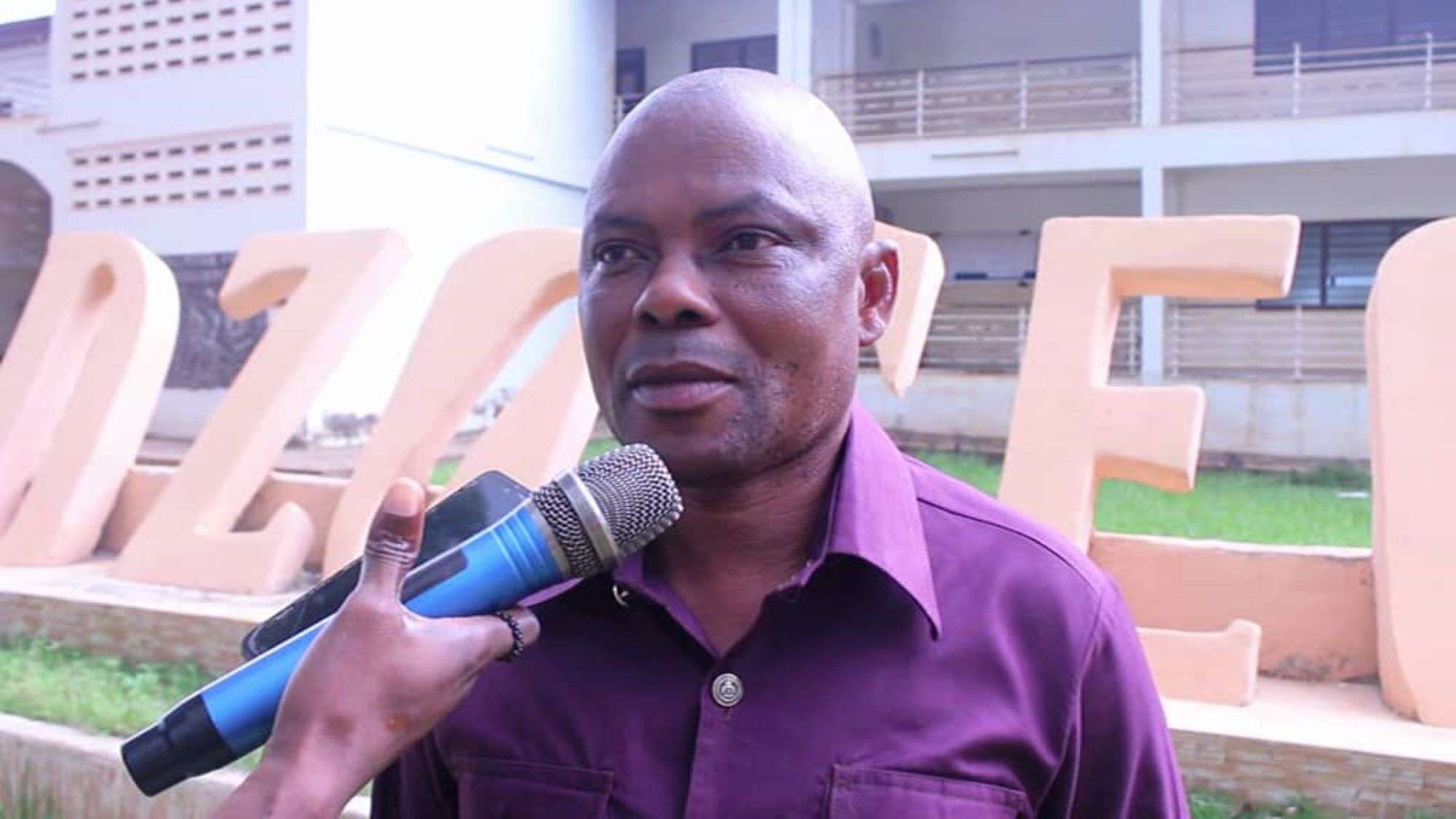
Hon. Joseph Yieleh Chireh, the former Minister of Health in the Mills-Mahama administration and former MP for the Wa West constituency is a Birifor. In addition, since 1992, Birifors have won parliamentary elections as MPs for the Sawla-Tuba-Kalba constituency. The current MP for the area, Andrew Chiwetey Dari, who has been accused of fueling the conflict is a Birifor.
In his interaction with the stakeholders, the Sawlawura assured them that Gonjas do not have a problem with people who respect their customs and ownership of the lands.
“We hope that after this, there will be peaceful co-existence. We are prepared for peace on condition that the Birifors are law abiding and are prepared for peace.”
By Amos Safo
The writer is a Development and Communications Management Specialist, and a Social Justice Advocate. All views expressed in this article are his personal views and do not represent those of any organization(s).