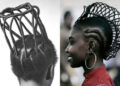


A quiet resurgence of locally threaded hair in Ho is rekindling cultural identity. It is also blending tradition with evolving modern beauty trends among the youth.
Tradition Returns
In the calm neighbourhoods of Ho, the art of locally threaded hair – known as “atifufui” in the Ewe language and “adonko” in Twi, is steadily returning to everyday life. Once dismissed as old‑fashioned, threading is now being embraced as both heritage and style.
Inside a modest salon near Ho Central Market, the rhythmic pull of thread through hair reveals an age-old craft being practiced with care and precision that demands patience and skill.
Seated patiently, a young woman tilted her head slightly as strands of her hair were skillfully wrapped and stretched.
Though the process appeared simple, it demanded patience, endurance and expertise.
Madam Mawudzesim Ati, a seasoned hairdresser, explained: “It is not an easy style to make. Sometimes it is painful, but it helps the hair grow well and keeps it from breaking.”
“It is not an easy style to make. Sometimes it is painful for the person, but it helps the hair grow well and keeps it from breaking.”
She observed a gradual shift in preference among clients, noting that while wigs and chemical treatments once dominated, more people were beginning to return to natural and traditional styles.
“People are beginning to understand that our own ways are also good,” she added.
Identity and Pride
For many young people, threaded hair represents more than aesthetics — it is a symbol of identity and pride in cultural heritage.
Mrs Enyonam Wiafi, who had just completed her hairstyle, said she particularly enjoyed wearing atifufui during national celebrations.
“I like wearing it, especially in March during Ghana’s Independence Day celebrations. It reminds me of my roots and who I am as a Ghanaian,” she said.
Her sentiments reflect a growing consciousness among the youth, who are increasingly using fashion as a medium to reconnect with their cultural background.
Innovation Meets Tradition
Mr Kwame Mordzifa, a resident of Ho, shared his admiration for the hairstyle, especially when styled creatively.
“It is always nice to see women wearing threaded hair. When it is done in a modern way, it looks neat and very beautiful,” he noted.
Indeed, innovation is reshaping the traditional style.
Unlike in the past when threading was often simple and uniform, many young women now experiment with patterns and designs, merging tradition with contemporary fashion.
Madam Abla Nuwornu, a student nurse, said she had embraced threaded hair as both a practical and stylish choice.
“In my field, we are not allowed to wear fancy hairstyles, so I style my threaded hair in a neat and beautiful way.
“Sometimes people don’t even realise it is atifufui,” she explained.
She added that beyond its cultural significance, the style offered economic and health benefits.
“It strengthens my hair, helps it grow, and it is affordable for me as a student,” she said.
Challenges and Shifts
Despite its benefits, foreign hairstyles such as wigs and synthetic braids continue to dominate, reflecting changing perceptions of beauty and modernity.
Some residents believe this trend reflects a broader shift in societal values, where imported styles are often regarded as more fashionable.
Yet as Ghana marked Heritage Month, calls were growing for renewed appreciation of indigenous practices — not only in festivals and cuisine, but also in grooming traditions.
A Living Tradition
Threaded hair is being redefined as a symbol of resilience, simplicity, and cultural pride. Back in the salon, as the final thread was secured, the elegance of the style was unmistakable — simple, refined, and deeply rooted in tradition.
In Ho, one strand at a time, the story of atifufui and adonko is being retold – not as relics of the past, but as living traditions shaping the present and inspiring the future.
By Frank Kwame Abbor