
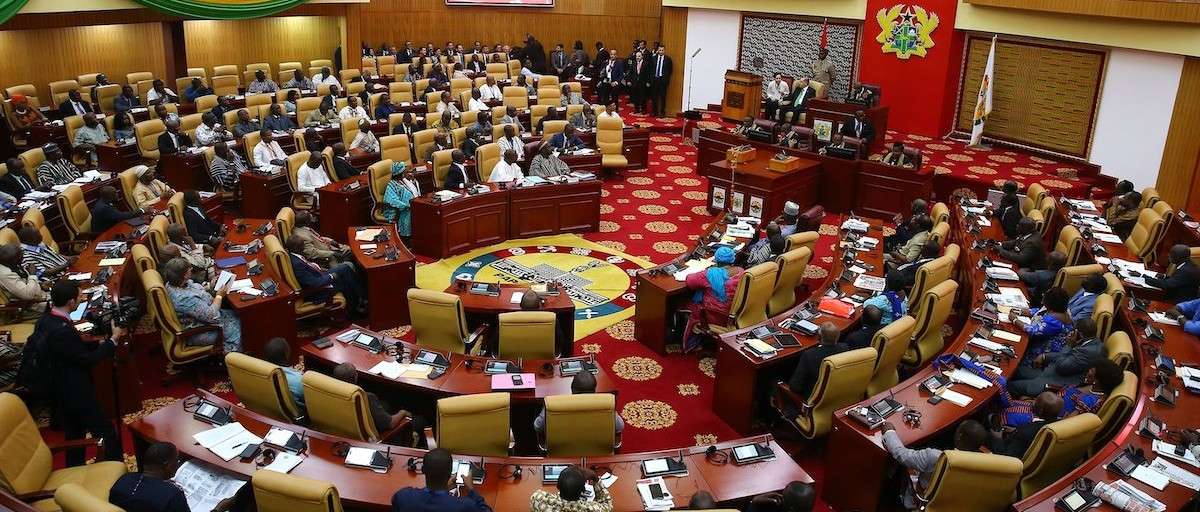
The narrative surrounding Ghana’s democratic journey, particularly within the Fourth Republic, is one often lauded globally. The peaceful and successive transitions of power have indeed established the nation as a “beacon of hope” on the African continent.
This stability, however, is continuously tested by the dynamics of parliamentary power and political ambition, especially following significant electoral shifts.
The outcome of the 2024 general election was not merely a victory for the National Democratic Congress (NDC); it was the creation of an unprecedented constitutional instrument, an overwhelming two-thirds parliamentary majority.
This power, capable of amending entrenched clauses, has ignited a dangerous and distracting debate: a partisan push to test the Constitution for a potential third-term bid for President John Dramani Mahama. This agenda is a profound misreading of the national mandate. The historic two-thirds majority bestowed by Ghanaians is not a blank cheque for tenure elongation or self-serving constitutional manipulation. It is, instead, a powerful tool to urgently deliver on the very legislative promises and reforms the NDC championed while in opposition.
Rather than being squandered on a politically toxic and democratically regressive third-term bid, this supermajority must be channelled into transformative action that secures the NDC’s legacy as a government of concrete achievement.
The framers of the 1992 Constitution were explicit and deliberate: a President shall serve not more than two terms. Indeed, Article 66 (2) of the Constitution states that “A person shall not be elected to office as President of Ghana for more than two terms”. Simplicita. This is a cornerstone of our democratic architecture, designed to prevent the concentration of power and ensure regular renewal. The current attempts by some party apparatchiks and opportunistic prophets to exploit a supposed “lacuna” over a non-consecutive term are an exercise in bad-faith sophistry or paralogy.
They seek to pressure a President who has publicly and internationally renounced a third-term bid, forcing him to “eat back his own words” and thereby plunging the nation into a needless constitutional crisis.
This campaign for the third term, widely perceived as an orchestrated plan born from fear of the 2028 electoral prospects of the NPP’s Dr Mahamudu Bawumia, prioritises short-term partisan survival over long-term national stability. It risks extinguishing Ghana’s democratic beacon for a fleeting political advantage.
The true purpose of this rare parliamentary supermajority lies in the legislative agenda the NDC itself has long advocated. Ghanaians did not grant this power to watch a speculative and divisive debate on term limits; they granted it to see decisive action on pressing national issues. This majority should be the engine to fast-track and perfect the very bills and policies the NDC vociferously supported from the opposition benches:
- The Promotion of Proper Human Sexual Rights and Ghanaian Family Values Bill (LGBTQI+ Bill): This bill, a subject of intense national debate, is a prime example. With a two-thirds majority, the NDC has the capacity to meticulously review, amend if necessary, and ultimately pass this legislation in a manner that reflects the will of its constituents and its long-stated position, bringing clarity and closure to a protracted national conversation.
- A Statement of Emergency & Security Reform: The NDC consistently highlighted gaps in national security and disaster response. This majority should be used to critically review and amend existing emergency powers acts, ensuring they have robust oversight mechanisms, to better protect citizens in times of crisis, fulfilling a key opposition critique.
- Reform of Mining and Natural Resource Laws: This is where the NDC’s mandate can deliver transformative economic justice.
The majority must be used to:
- Amend the Law on Licenses for Mining in Forests and around Water Bodies: To permanently ban or impose crippling restrictions on mining in ecologically sensitive areas, protecting our environment for future generations.
- Increase State Benefits from Mineral Wealth: To renegotiate and legislate a significant increase in royalties and the state’s carried interest in mining ventures, particularly for new strategic minerals like lithium. Moving beyond the criticism of the previous government’s reported 10% stake, the NDC must now use its power to legislate a framework that ensures Ghana gets a fair share, perhaps through models that guarantee a minimum of 30% or more in state benefits.
iii. Overhaul the Entire Mining Legal Framework: To close loopholes, strengthen environmental protections, and ensure mining revenues are transparently accounted for and invested in local development.
- Guarding Against Partisan Entrenchment: Crucially, this majority must not be used to insulate the current government by embedding partisan appointees, such as the IGP, CDS, EC Chair, or Chief Justice, CEOs, and DGs in constitutionally entrenched positions. Such a move would be a grave betrayal, creating a partisan “deep state” that would cripple future administrations and undermine the very democracy that gave power to the NDC.
In conclusion, the path to a lasting legacy is clear. President John Dramani Mahama has the historic opportunity to cement his place not as a leader who clung to power, but as one who wielded unprecedented parliamentary strength to deliver on the core promises his party made to the people while in opposition.
The two-thirds majority is a tool for nation-building, not self-perpetuation. Let the NDC’s legacy be defined by the bold reform of mining laws, the decisive resolution of long-debated social legislation, and the strengthening of national institutions, not by a divisive and damaging third-term gambit.
Ghana’s beacon must shine brighter on the world stage for its substantive governance, not dimmed by the shadows of constitutional manipulation. The mandate is for reform, not for reign. Let history remember this government for what it built for Ghana, not for how long it tried to stay in power.
By Adjei Worlanyo Frank