
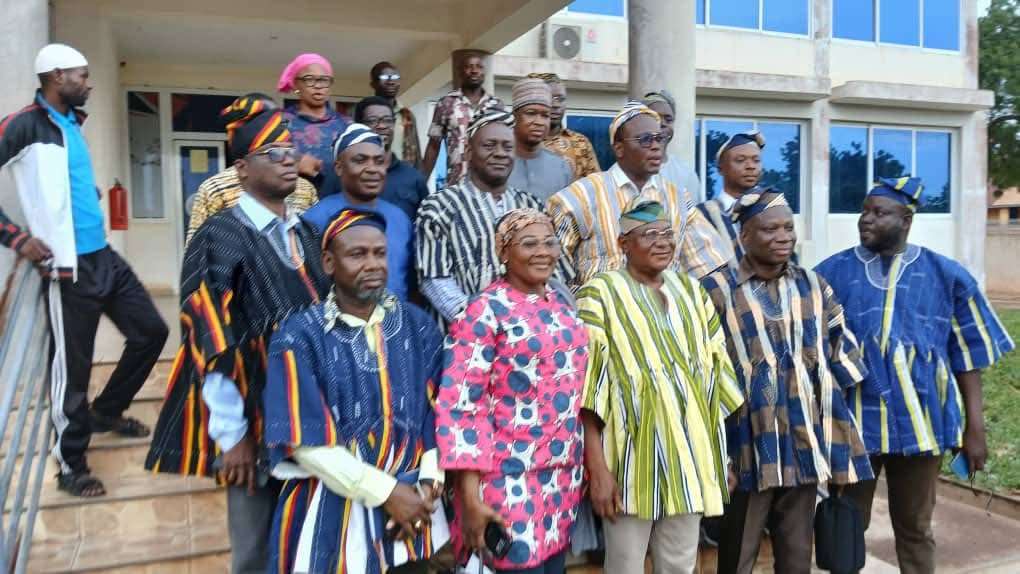
The Member of Parliament for Savelugu and a member of the Parliamentary Select Committee on Sanitation and Water Resources, Hajia Fatahiya Abdul Aziz, has called on the government to urgently address the perennial water crisis affecting thousands of people in most parts of the Northern Region.
The lawmaker observed that many districts in the region, including her background, Savelugu, still battle with water shortage despite her personal interventions to mitigate the situation for her constituents.
She mentioned that as part of her efforts to improve the age-long situation, she constructed over 20 mechanised boreholes dotted across the constituency to serve the hard-hit communities. Additionally, she also procured two water tankers to serve hundreds of households.
However, she lamented that this has not changed the situation due to the increasing demand amidst the rapid growth of the municipality’s population.
Speaking in a media interview last Wednesday, September 17, 2025, in Tamale during a working visit of the Parliamentary Select Committee on Sanitation and Water Resources, Hajia Fatahiya commended the work of the committee after visiting about seven regions so far, adding that the findings of the committee will be presented to the government to address the issues of water and sanitation across the country.
“I want to give an assurance to the entire northern region that this committee will work assiduously, and with all the information we’re gathering, we will take it back to Accra and push to get the situation drastically improved.
“I’m also part of the northern region, and I’m certain that in this region the people of Savelugu suffer more for water than any other constituency,” she stated.
Meanwhile, investment in water, sanitation, and hygiene has become critical for African nations to improve the needed infrastructure and reduce unnecessary WASH-related diseases and deaths.
As a result, during the United Nations (UN) 2023 Water Conference, the UN in Ghana called for an increase in public finance and more private sector investment in WASH.
In Ghana, according to the World Health Organisation (WHO), 7,653 deaths were caused by WASH-related illness in 2019, 21 people per day, almost one person every hour dying from preventable WASH-related diseases.