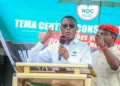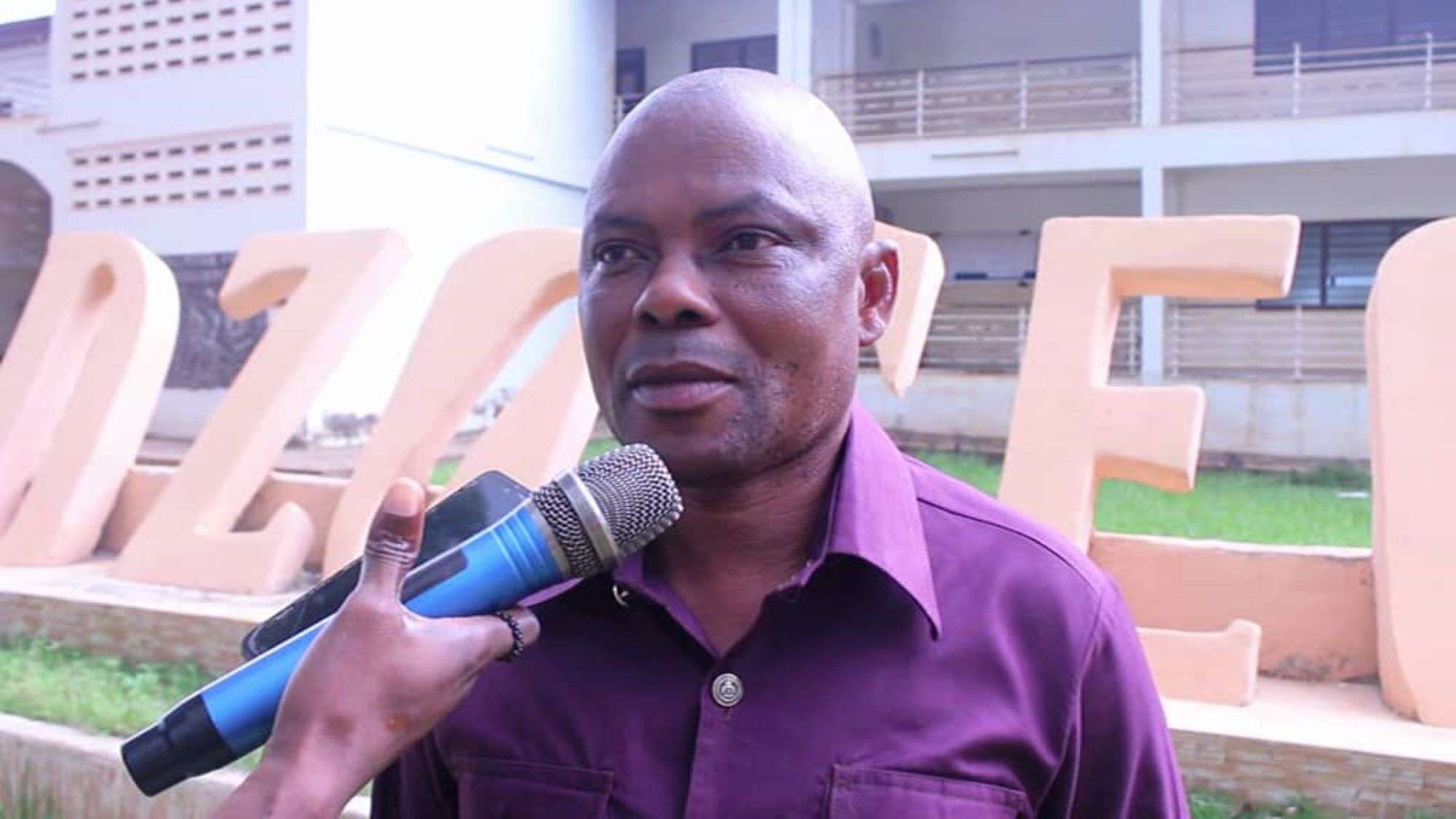

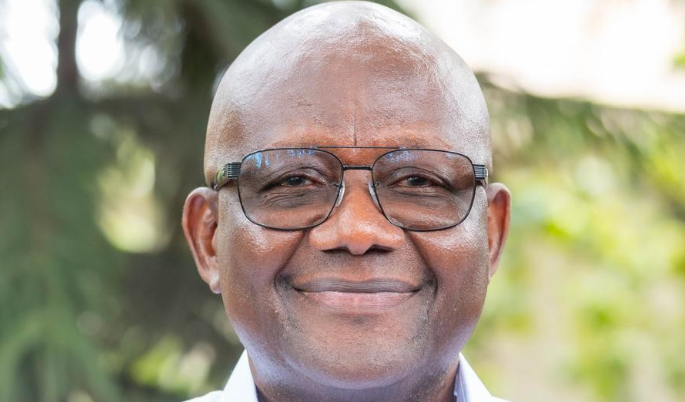
Former National Chairman of the New Patriotic Party (NPP), Mr Paul Awentami Afoko, has formally declared his intention to contest for the position of National Chairman of the party once again.
In a significant move aimed at revitalising the party after its 2024 electoral defeat, Mr Afoko pledged to reunite its ranks, reorganise its structures from the grassroots upwards, and position the NPP for a strong comeback in the 2028 general election.
Speaking at a well-attended news conference in Accra on Monday, July 14, 2026, the NPP Chairman hopeful described the moment as a critical juncture for the party.
He emphasised that his decision was not made in haste but followed extensive consultations spanning several months.
These engagements involved key figures across the NPP spectrum, including party leadership, elders, regional executives, grassroots members, and prominent stakeholders.
Notably, Mr Afoko said he held discussions with former Presidents John Agyekum Kufuor and Nana Addo Dankwa Akufo-Addo, as well as the party’s 2024 presidential candidate, Dr. Mahamudu Bawumia.
He pointed out that these interactions were not early campaigning but genuine efforts at listening, reconciliation, and understanding the concerns of various factions within the party.
Throughout the process, Mr Afoko said he maintained strict adherence to the NPP’s internal rules and regulations governing elections, underscoring his commitment to due process and party discipline.
“It is after these extensive consultations that I am here today to formally announce my intention to offer myself, subject to the rules of the party, for the position of National Chairman of the New Patriotic Party,” he stated firmly.
NPP at crossroads & 3Rs
Mr. Afoko painted a picture of the NPP standing at a defining crossroads following its loss in the 2024 polls.
He argued that the party, long regarded as one of Ghana’s most formidable political organisations, possesses the resilience and potential to regain the trust of Ghanaians.
However, this recovery would require decisive leadership, improved organisation, and a renewed spirit of unity.
Central to his vision is what he termed the “Three Rs” — reunite, rebuild, and recapture power. These pillars, he believes, will form the bedrock of the party’s revival strategy.
United NPP
Mr Afoko acknowledged the existence of factions and feelings of exclusion among some loyal members, stressing that a divided house cannot stand in the competitive arena of Ghanaian politics.
“The New Patriotic Party cannot win when it is divided. We cannot win when loyal members feel excluded, ignored or pushed aside,” he declared.
Positioning himself as a bridge-builder rather than a factional leader, Mr Afoko promised to act as a reconciler, fostering an inclusive environment where every member feels valued and heard.
Track record
Drawing from his previous experience as National Chairman, Mr Afoko highlighted his track record of strengthening the party’s organisational framework. He recalled initiatives such as providing support for constituency offices and enhancing grassroots mobilisation, which helped deepen the party’s reach during his earlier tenure.
Mr Afoko said even though he did not complete that term, he reassured NPP supporters that he never abandoned the party even during his period of suspension as he continued to offer behind-the-scenes support and remained committed to the party’s ideals.
Looking ahead, he outlined plans to devolve more power to the base by bolstering polling station executives, electoral area coordinators, constituency leaders, and regional executives.
He said improved communication channels between the national secretariat and local structures would be prioritised, ensuring that decisions reflect the realities and aspirations of members on the ground.
A robust and cohesive party machinery, he noted, would be indispensable in supporting Dr. Mahamudu Bawumia’s anticipated second bid for the presidency in 2028.
2024 defeat
On the painful issue of the 2024 defeat, Mr Afoko cautioned against simplistic narratives that seek to apportion blame to individuals.
Election outcomes, he observed, are influenced by a complex interplay of factors including organisational effectiveness, communication strategies, public perception, and prevailing economic conditions.
“The duty before us now is not to blame. The duty before us is to rebuild,” he urged, calling for a forward-looking approach focused on learning lessons and implementing corrective measures.
Regional balance
Addressing potential concerns about regional balance — particularly the possibility of both the National Chairman and the presidential candidate hailing from northern Ghana — Afoko dismissed geography as a limiting factor.
He reminded listeners of the NPP’s rich historical tapestry, which traces back to the merger of several political traditions following the Avoidance of Discrimination Act. These included the Northern People’s Party, the National Liberation Movement, Ga Shifimo Kpee, the Muslim Association Party, Togoland Congress, Anlo Youth Organisation, and the United Gold Coast Convention.
This diverse foundation, Mr. Afoko argued, underscores the party’s identity as a truly national movement rather than a regionally confined entity.
“The question should be: who can unite the party, reorganise the party and help our presidential candidate win?” he posed rhetorically. Competence, dedication, and the ability to forge consensus, he maintained, should take precedence over regional considerations in leadership selection.
By formally declaring his candidacy subject to the party’s constitutional processes and electoral timetable, Paul Awentami Afoko has thrown down the gauntlet in what promises to be a keenly contested race for the NPP’s top organisational position.