

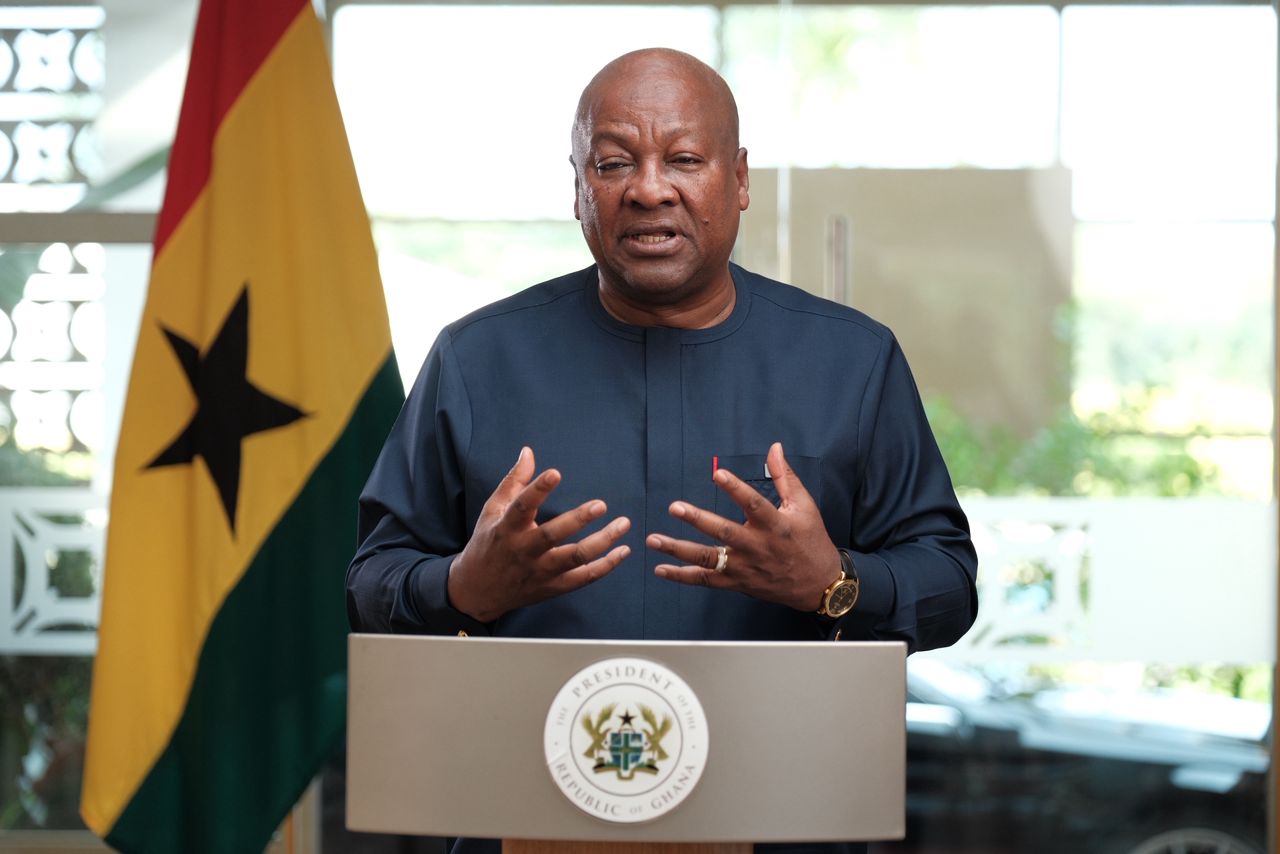
The Chief of Staff, speaking on behalf of President John Dramani Mahama, has called on African nations to strengthen unity, protect cultural values, and deepen sovereignty as essential foundations for the continent’s future development.
He made the remarks at the 4th Inter-Parliamentary Conference on African Family Values and Sovereignty held in Accra under the theme “Consolidating Parliamentary Consensus: Advancing the African Charter on Family Values and Sovereignty.”
The high-level gathering brought together Speakers of Parliament, legislators from across Africa, traditional leaders, faith-based organisations, and other stakeholders.
Ghana’s symbolic role in Africa’s liberation
Opening his address, the Chief of Staff highlighted Ghana’s historic role in Africa’s liberation struggle, describing the country as a “gateway to African freedom.” He referenced the legacy of Dr. Kwame Nkrumah and Ghana’s independence experience as a foundation for continental self-determination.
He noted that the ideals of Pan-Africanism and self-governance remain relevant today as Africa continues to define its development path.
Family and sovereignty at the heart of Africa’s development
According to the Chief of Staff, the African family remains the cornerstone of society, responsible for shaping identity, values, and resilience across generations.
He stressed that strong families are essential to building stable communities and nations.
He also defined sovereignty as the ability of African countries to determine their own political, cultural, and economic systems based on their history and aspirations.
He said the conference theme reflects two interconnected priorities: preserving African family values and strengthening national sovereignty.
Role of Parliaments in shaping Africa’s future
The Chief of Staff emphasized the importance of Parliaments in shaping long-term national development through laws and democratic consensus-building. He urged legislators to work together to advance the proposed African Charter on Family Values and Sovereignty.
He noted that parliamentary decisions often outlast governments and therefore carry significant responsibility in shaping future generations.
Economic sovereignty and practical development
He stressed that sovereignty must be measured in practical terms, including food security, job creation, quality education, healthcare delivery, and national self-reliance.
“A sovereign nation must be capable of feeding its people, educating its children, and creating opportunities for its youth,” he stated.
He further called for increased investment in African economies, regional trade, and domestic production to reduce dependency and strengthen resilience.
Cultural identity and global engagement
While reaffirming Africa’s openness to international cooperation, the Chief of Staff emphasised that engagement with the global community must not undermine Africa’s right to define its own cultural and social values.
He noted that African traditions around family and community life remain deeply rooted and must be preserved through strong institutions and policy support.
Strengthening traditional and cultural institutions in Ghana
The Chief of Staff praised Ghana’s traditional leaders, including the National House of Chiefs, Queen Mothers, and religious leaders, for their continued role in preserving cultural identity and social cohesion.
He called for policies that support indigenous languages, creative industries, and cultural education to strengthen national identity.
Youth empowerment and Africa’s future
He also highlighted the importance of Africa’s youth, warning that unemployment and lack of opportunity pose a greater threat to African values than globalisation or technology.
He emphasised that providing education, skills, and jobs is critical to ensuring that young people remain committed to their societies and contribute positively to national development.
Call for implementation, not just policy
The Chief of Staff cautioned that progress depends not only on policy formulation but on effective implementation.
He stated that the success of the African Charter will be judged by how well its principles are translated into tangible improvements in citizens’ lives.
Conclusion
Concluding his remarks, he reaffirmed Ghana’s commitment to African unity, mutual respect, and shared prosperity. He urged delegates to leave the conference with renewed commitment to strengthening families, deepening sovereignty, and creating opportunities for future generations.
He officially declared the conference open, noting that Africa’s future must be shaped by Africans themselves.
“History will not judge us by resolutions alone, but by our ability to protect what matters and build the Africa we envision,” he said.