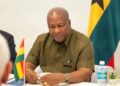


The Minority Chief Whip and Member of Parliament for Nsawam-Adoagyiri, Frank Annoh-Dompreh, has called on the government to end the exemption of state-owned vehicles from compulsory third-party motor insurance.
He said the continued exemption creates unequal treatment under the law and exposes victims of road accidents involving government vehicles to difficulties in securing compensation.
Speaking in Parliament, Mr Annoh-Dompreh argued that the government must lead by example by ensuring that all vehicles operating under its authority are properly insured.
He cited the Motor Vehicles (Third Party Insurance) Act, 1958 (Act 42), which makes third-party insurance compulsory for motor vehicle users but exempts vehicles owned by or exclusively employed in the service of the government when used for official purposes.
According to him, the exemption places ordinary motorists, commercial drivers and tricycle operators under stricter insurance obligations than the state.
“When a family loses a mother, a father or a child on our roads, its grief does not depend on the number plate of the vehicle that caused the loss. A child is no less an orphan because the vehicle was owned by the state,” he told Parliament.
Road accident deaths raise concern
Mr Annoh-Dompreh highlighted the country’s road safety situation, citing National Road Safety Authority (NRSA) figures indicating that 2,949 people died in 14,743 road crashes in 2025.
The figure represents an 18.2 per cent increase from the 2,494 deaths recorded in 2024, making 2025 the deadliest year on Ghana’s roads in 35 years, according to the figures he presented.
He added that 16,714 people were injured, while 2,561 pedestrians were knocked down during the year.
He further cited Police Motor Traffic and Transport Department (MTTD) figures showing that 2,151 people died in 10,157 crashes between January and September 2026.
The Minority Chief Whip said government vehicles, including ambulances, school buses, official cars and agency pick-ups, were equally exposed to road accidents and should not be exempted from insurance requirements.
Government vehicles largely uninsured
Mr Annoh-Dompreh recalled that successive governments had maintained the policy of leaving state-owned vehicles uninsured on the grounds that the government could pay compensation when accidents occurred.
He referenced findings presented to Parliament in 2022, indicating that more than 18,000 government vehicles were uninsured, with estimates suggesting that between 98 and 99 per cent lacked insurance coverage.
He also cited a July 2024 accident involving an uninsured GETFund school bus near Koforidua, which he said left victims without insurance benefits.
Additionally, he referred to comments by the Minister of Health indicating that the national ambulance fleet was uninsured when he assumed office, leaving the government responsible for the full cost of repairs following accidents.
He commended the minister for addressing the situation but insisted that insurance coverage should be extended to all government vehicles.
Annoh-Dompreh rejects government self-insurance argument
The Nsawam-Adoagyiri MP questioned the argument that government could rely on its own resources to compensate victims of accidents involving state-owned vehicles.
He maintained that self-insurance without a dedicated fund does not guarantee timely compensation, as victims may have to petition ministries, pursue legal action against the Attorney-General and wait for budgetary allocations.
He cited concerns raised by the National Insurance Commission (NIC) about the difficulties Ghanaians face in obtaining compensation from accidents involving state-owned vehicles.
According to him, compulsory third-party insurance would provide victims with a more reliable route to compensation while allowing the government to manage financial exposure through predictable premium payments.
He also argued that the exemption undermines public confidence in Ghana’s insurance industry and raises questions about equality before the law.
Three demands presented to government
Mr Annoh-Dompreh proposed three measures to address the situation.
He called on the government to:
-
Introduce amendments to Act 42, in consultation with the National Insurance Commission and the Attorney-General, to remove the exemption for government vehicles.
-
Direct all Ministries, Departments and Agencies (MDAs) to insure their vehicle fleets immediately and register them on the Motor Insurance Database.
-
Make provision for insurance premiums in the 2027 Budget and publish an audit of the government’s vehicle fleet and its insurance status.
He stressed that the proposal should not be viewed as an attack on any particular administration, noting that successive governments had failed to address the exemption.
“This is not an indictment of one administration. Successive governments, including mine, left this exemption untouched. Fixing it should be a test we all pass,” he said.
He concluded that the government must demonstrate the same commitment to compulsory insurance that it demands from private motorists, to ensure that every road accident victim has equal assurance of compensation regardless of who was driving.