
Chiefs in the Asante Akyem enclave of the Ashanti Region have backed the government’s decision to revoke the mining lease of Northern Ashanti Mines.
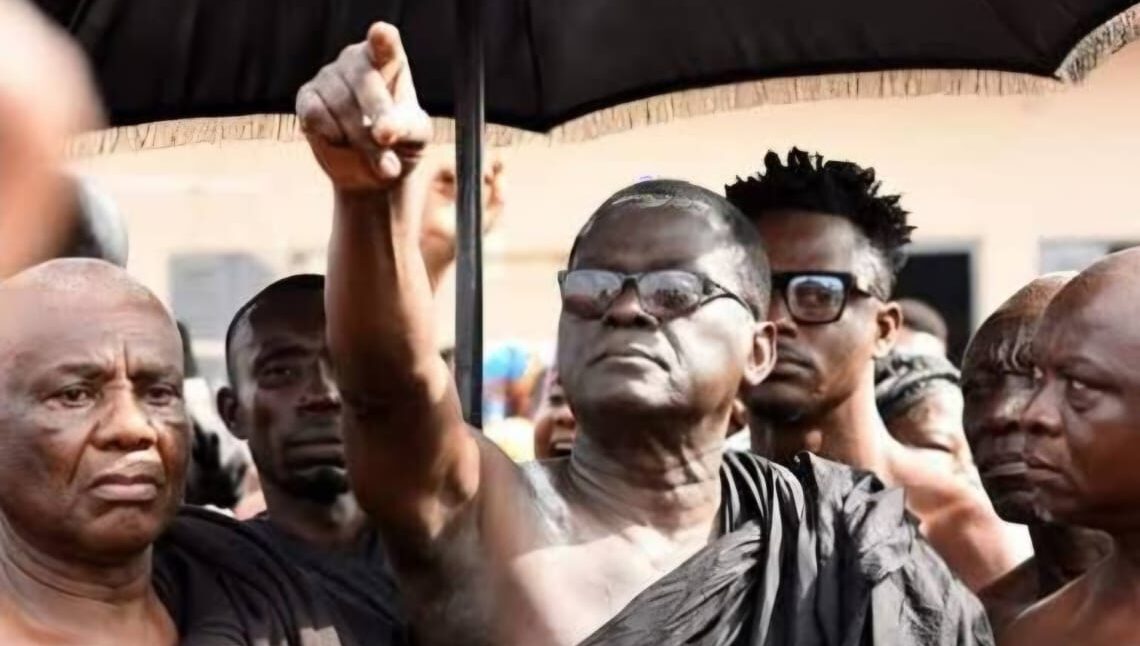
The traditional authorities including Mennamhene Nana Tweneboah Kodua Bempah and Konongo Chief Nana Dr Awuah Abedimisa II, endorsed the decision of the Minerals Commission to terminate the lease, citing the company’s outstanding mineral right fees and its failure to undertake meaningful mining operations.
Mining companies, the chiefs maintained, must be held accountable for failing to meet their statutory obligations and demonstrate the capacity to operate their concessions effectively.
Their support comes amid renewed debate over the enforcement of mining regulations and the need to ensure that companies granted mineral rights have the financial and technical capacity to develop Ghana’s mineral resources for national and community benefit.
Konongohene questions company’s capacity
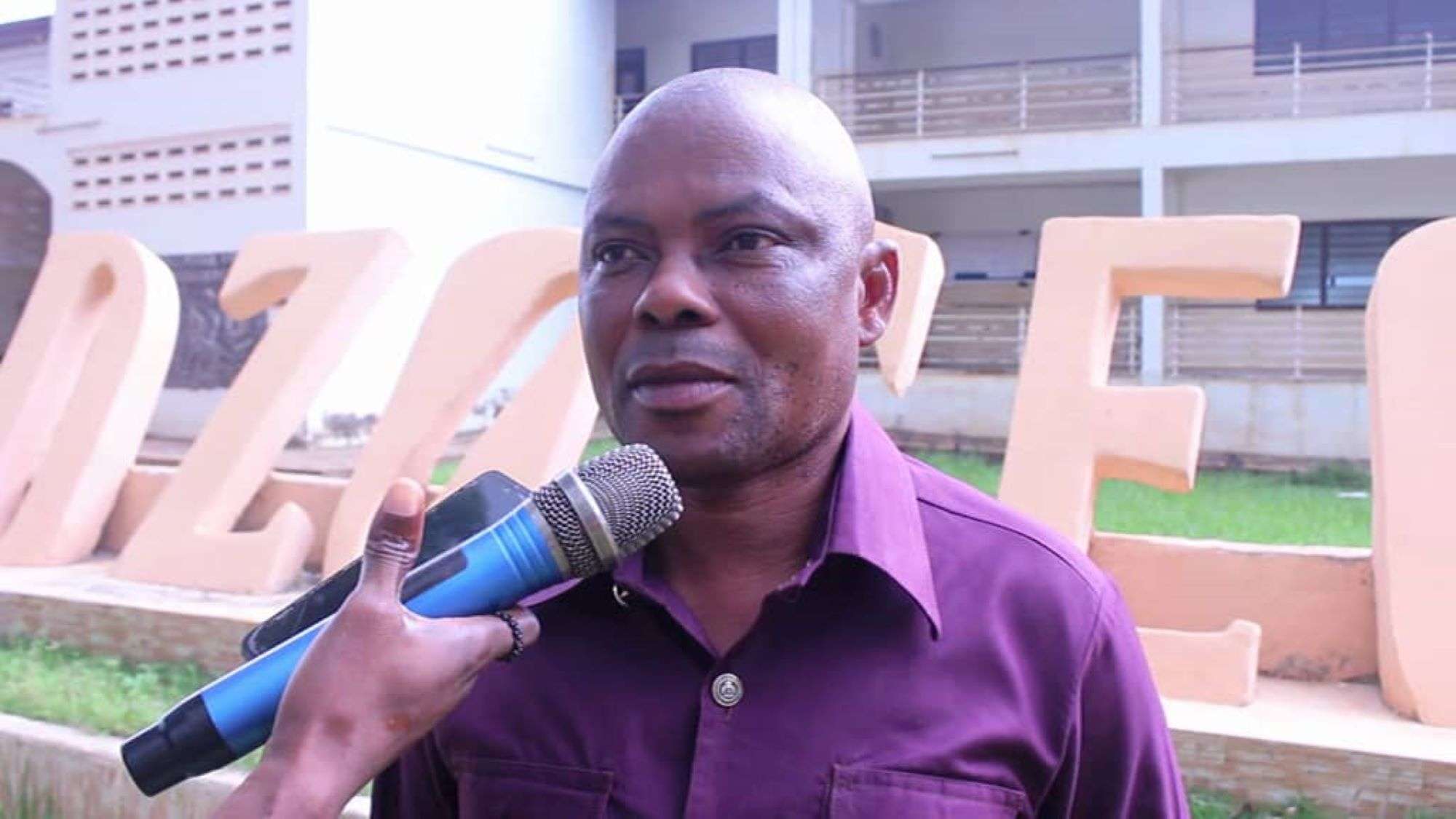
Addressing the media, Konongohene Nana Dr Awuah Abedimisa II described the Northern Ashanti Mines’ performance as below expectations.
According to him, the company had failed to demonstrate the financial capacity required to undertake effective gold mining operations to meet the expectations of the state and beneficiary communities.
He said the Minerals Commission’s decision was necessary, particularly when a company holding mineral rights had failed to demonstrate the capacity to develop and operate its concession effectively.
Nana Dr Awuah Abedimisa II urged the Commission to ensure that the process of selecting a new operator followed the appropriate procedures and prioritised investors with the financial strength, technical expertise and operational efficiency needed to manage the concession.
The chief also called for transparency and due diligence in the selection process, stressing that the choice of a new investor should go beyond the transfer of mineral rights and focus on securing a company capable of translating the area’s gold resources into tangible economic benefits, particularly within the concession’s catchment area.
‘No mining firm should be shielded’
Mennamhene Nana Tweneboah Kodua Bempah who spoke on behalf of Juansamanhene, Nana Kwaku Dankwah Opamago Kodie II, said government was justified in terminating the company’s mineral rights, stressing that no mining firm should be shielded from accountability.
“Holding a mining concession does not place any company above the law. Government has the authority to terminate a lease where sufficient grounds exist,” he said.
The chief also criticised companies that portray themselves as victims after allegedly breaching mining regulations, describing such conduct as unhelpful to efforts to promote accountability and responsible mining.
Reasons for lease revocation
The chiefs’ reaction followed the revocation by the Minerals Commission over breaches of statutory and contractual obligations.
In a statement dated October 27, 2026, the Commission said termination was carried out in accordance with the Minerals and Mining Act, 2006 (Act 703) and the Minerals and Mining (Licensing) Regulations, 2012 (L.I. 2176).
According to the Commission, Northern Ashanti Mines, formerly Owere Mines, acquired a mining lease covering 595 cadastral blocks in January 2010 but failed to pay Annual Mineral Right (AMR) fees.
Notices to Remedy Breach were issued as far back as May 28, 2020 when the debt was over US$4 million.
By December 29, 2022 the debt had risen to US$6.18 million, and by April 14, 2025, the outstanding amounts were US$8.33 million for mining leases (2010-2025) and US$49,928 for prospecting licences (2019-2025).
The company also failed to undertake meaningful mining operations for more than two years, contrary to Section 69(1) of Act 703.On April 7, 2026, the Commission notified the Minister for Lands and Natural Resources, requesting termination.
As a result of the aforementioned breaches, the Minister approved request on April 24, 2026, and the Commission terminated the lease on April 30, 2026.
Minerals Commission defends its rights
The Chief Executive Officer of the Minerals Commission, Mr. Isaac Tandoh has rejected allegations that the Commission and the Minister for Lands and Natural Resources acted in bad faith in terminating the lease.
Speaking at a news conference at the Commission’s headquarters in Accra on October 29, 2026, Mr Tandoh insisted that the Minister exercised his lawful authority before the termination process was completed.
He also disputed Northern Ashanti Mines’ claim that it had paid US$1 million in annual mineral right fees, saying the Commission’s records showed payments of only US$300,000 in two tranches.
Mr Tandoh questioned why the company, which reportedly claimed to have invested US$200 million in the mine, had failed to settle its outstanding obligations to the state.
“A mineral right is not a gift, and it is not an inheritance! It is a privilege conferred by the State on terms, and those terms must be honoured. No company, whether indigenous or foreign, may hold the resources of the Republic, withhold what is owed to the people of Ghana, and then turn around to cry foul when the law takes its course,” he said.
Mr. Tandoh said the company had acknowledged receipt of the termination notice but had opted to pursue legal action against the Minister, the Minerals Commission and the Attorney-General.
He urged the company to allow the courts to determine the dispute, adding that the mineral rights had reverted to the state following the termination.
However, Mr. Tandoh said the Commission would continue efforts to recover the outstanding debts and protect the mining assets against encroachment and other illegal activities in accordance with the law.
Company goes to court
The Northern Ashanti Mines has filed two actions at the High Court in Accra, an application for judicial review filed October 21, 2026 seeking to quash the termination, and an interlocutory injunction filed October 22, 2026 to restrain government, the Minerals Commission, the Minister and security agencies from seizing its US$110 million investment at Konongo, deploying military personnel, or re-allocating the concession to a third party.
It was reported that on October 22, officials of the Minerals Commission, accompanied by military, police and NAIMOS stormed the concession at dawn and ordered workers to vacate.
Former MP’s reaction
Former Obuasi East MP Edward Enin condemned what he described as a forceful takeover of an indigenous company.
However, the Commission has insisted that the mineral rights have reverted to the State and it will pursue all outstanding debts while securing the assets under Section 70 of Act 703.
Way forward
The revocation has renewed attention on the enforcement of mining regulations and the responsibilities of companies holding mineral rights in Ghana.
For the traditional authorities in Asante Akyem, the decision presents an opportunity to secure an investor with the financial and technical capacity to develop the concession effectively while meeting its obligations to the state and host communities.
The chiefs have maintained that the next stage of the process must be handled transparently to ensure that any new operator can sustain mining operations, comply with the law and deliver tangible development benefits.
According to them, the ultimate objective should be to ensure that Ghana’s mineral resources are managed responsibly and productively in the national interest.
By Kyei Boateng