
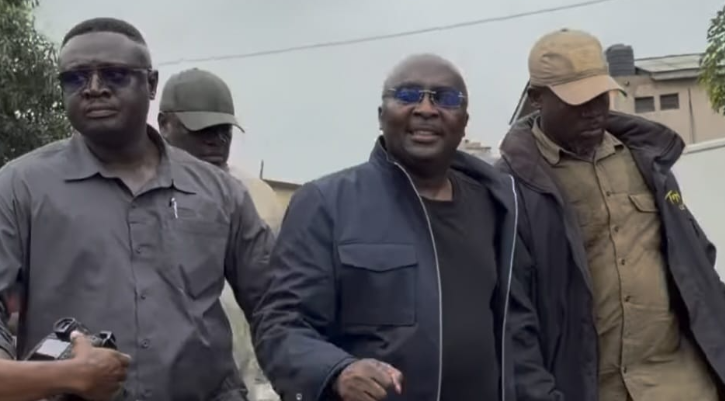
Former Vice President Dr Mahamudu Bawumia has called on President John Dramani Mahama to declare a state of emergency in response to the devastating floods that have affected parts of Accra.
According to Dr Bawumia, the scale of the flooding and its impact on lives, property, and businesses require an urgent national response that goes beyond routine disaster management measures.
He urged the government to mobilise all available resources to provide immediate relief to affected communities and implement long-term flood mitigation strategies.
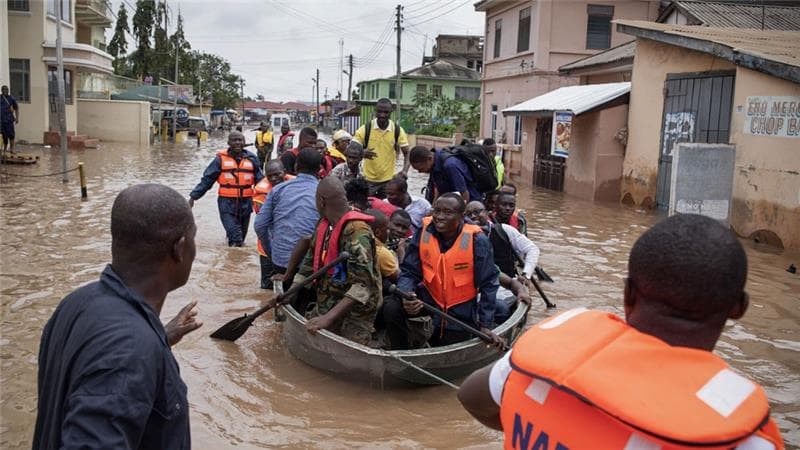
The appeal comes after heavy rains inundated several parts of the capital, leaving roads submerged, displacing residents and disrupting transportation and commercial activities.
Emergency responders have been working to rescue stranded residents while assessment teams continue to evaluate the extent of the damage.
Dr Bawumia made this known when he visited some of the flood-prone areas in Accra.
He expressed sympathy to families who have lost loved ones, homes or livelihoods as a result of the floods. He also commended first responders, volunteers and community members who have been assisting victims despite difficult conditions.
He stressed that declaring a state of emergency would enable a more coordinated national response, facilitate faster deployment of resources and accelerate relief efforts for affected households.
“What is worrying for me, is that the forecasts are forecasts of even more rains to come, if there is going to be more rain, I believe that the government could also consider even declaring a state of emergency so that we deal with this in that particular order. This is a really big problem for the country, and we have to put all our emergencies, all our talents, engineers, bring everybody together regardless of the political party,” Bawumia said.
He further called for stronger collaboration among government agencies, local authorities and disaster management institutions to address both the immediate crisis and the underlying causes of recurring floods.
The former Vice President also emphasised the need for sustained investment in drainage infrastructure, enforcement of planning regulations and improved waste management to reduce the risk of future flooding in the capital.
Meanwhile, authorities have advised residents in flood-prone communities to remain vigilant, avoid driving or walking through flooded roads and follow safety directives issued by emergency services. Relief operations are expected to continue as officials work to support affected communities and restore normalcy.
Meanwhile, Minister for the Interior, Muntaka Mohammed Mubarak, has announced that more than 38,800 residents have been displaced, and 12 people have been confirmed dead following the devastating floods that swept across parts of the Greater Accra Region.
Addressing Parliament on Tuesday, June 30, 2026, the Minister described the flooding as one of the most severe weather events Ghana has experienced in decades. He revealed that the country recorded 169 millimetres of rainfall within a single day, making it the fourth-highest daily rainfall recorded since 1995.
According to Muntaka, authorities were only informed late the previous night that the expected rainfall would be far more intense than initially forecast, leaving little time to strengthen emergency preparedness measures.
“By the time we got to the morning, we saw a volume that is the fourth highest that this country has ever seen since 1995. A volume of 169 millimetres of water in a day,” he told Parliament.
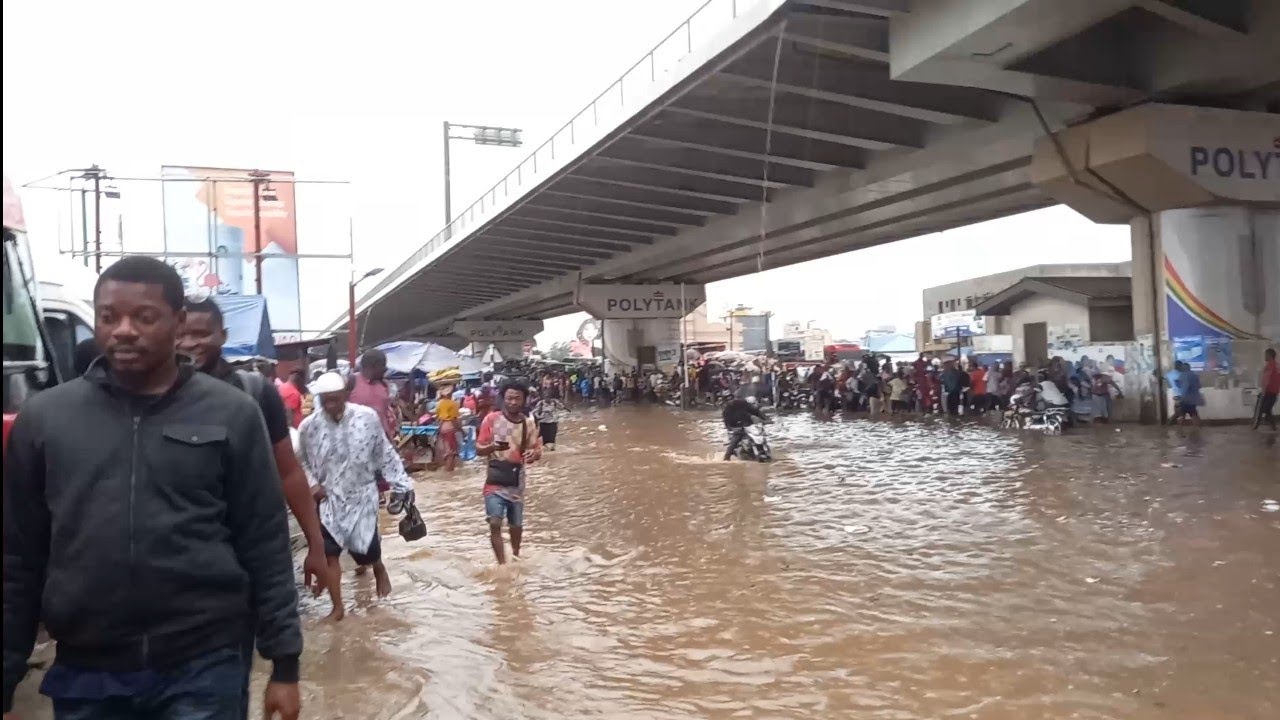
The heavy rains triggered widespread flooding across 25 communities within 16 Metropolitan, Municipal and District Assemblies (MMDAs), disrupting transportation and bringing economic activity in many parts of Accra to a standstill. Several major roads became impassable, preventing commuters from accessing the Central Business District and other key areas.
The affected assemblies include Ga East, Ledzokuku, Ayawaso Central, Ga Central, Ga West, Ablekuma North, Ningo Prampram, Weija-Gbawe, Ga South, Adenta, Korle Klottey, Okaikwei South, Okaikwei North, Tema West, Tema Metropolitan Assembly, La Dade Kotopon and Krowor.
Providing a detailed assessment of the disaster, the Interior Minister said the floods affected a total of 7,761 households, forcing 38,802 people from their homes.
Korle Klottey recorded the highest number of displaced residents, with 6,500 people from 1,300 households affected. Tema Metropolitan Assembly followed with 3,601 displaced persons, while Tema West recorded 3,450 displaced residents. Ayawaso Central also suffered significant impacts, with 3,021 people displaced.