

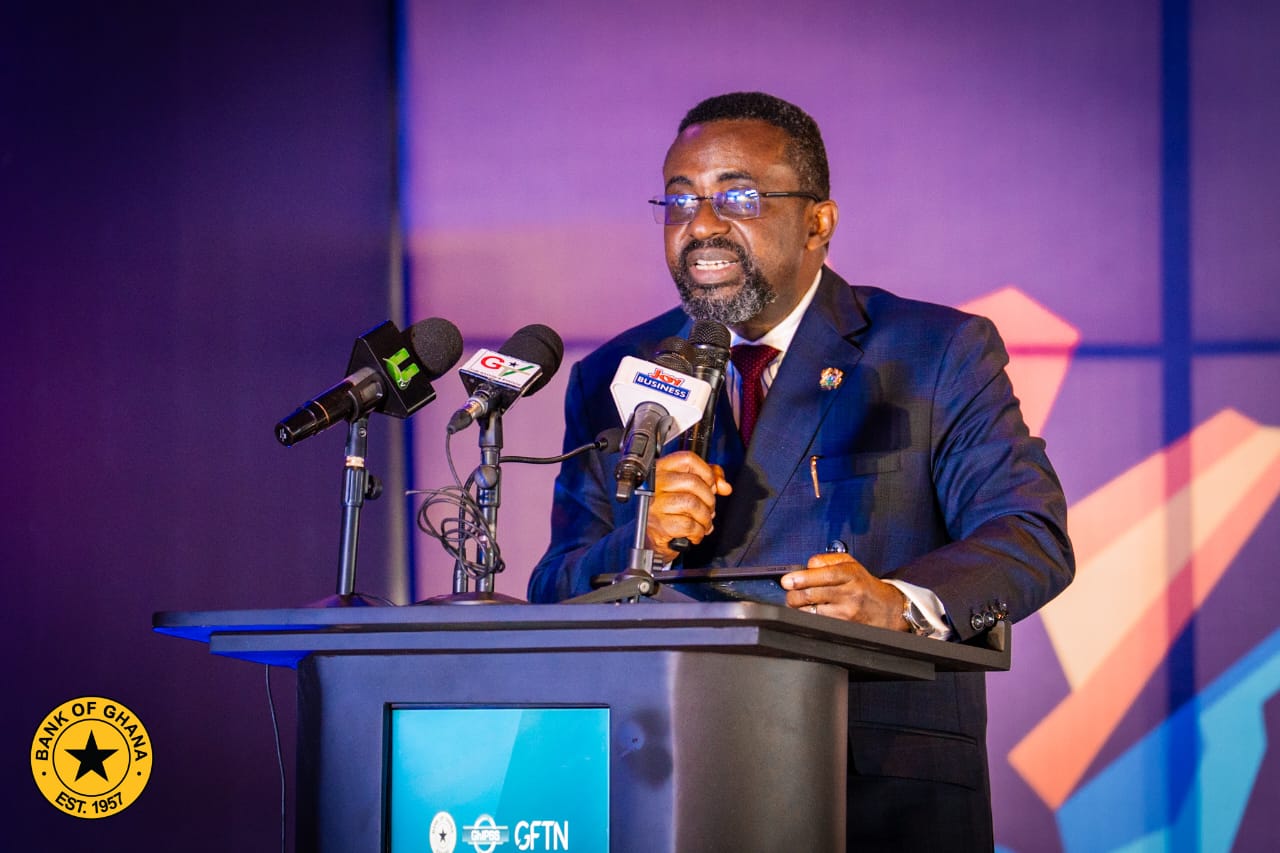
The Governor of the Bank of Ghana, Dr Johnson Asiama, has framed the ongoing crisis in Burkina Faso not only as a regional challenge but also as a potential catalyst for economic opportunity—particularly within Ghana’s agricultural sector.
Speaking on recent developments on Channel One TV, Dr Asiama acknowledged the risks associated with instability in neighbouring Burkina Faso, including disruptions to trade, food supply chains and cross-border economic activity.
However, he emphasised a forward-looking approach aimed at transforming these challenges into strategic gains, noting that the situation could create jobs for unemployed youth while boosting local production.
According to the Governor, a small, focused working group has already been established to explore actionable solutions in collaboration with key institutions, including the Ministry of Agriculture, Ghana Export-Import Bank and the Ghana Export Promotion Authority.
“The risks posed by the Burkina Faso crisis to me are opportunities. We decided to set up a small group, and we’re going to work with the Ministry of Agriculture. We will work with GEXIM and the Ghana Export Promotion Authority (GEPA). The thing is, if Burkina Faso bans exports of tomatoes, why should it become a crisis in Ghana?
“We have five hundred thousand young people looking for work to do. We have money with the Ghana EXIM Bank, and we have the varieties, what are we waiting for? GEXIM, we were going to give you a call. We are all going to descend and get these things solved,” Dr Asiama said.
Dr Asiama noted that Ghana has the capacity to expand domestic production to fill potential gaps created by disruptions in Burkina Faso. By investing in local agriculture, improving logistics and supporting farmers, the country could safeguard its food supply while positioning itself as a stronger player in regional markets.
Meanwhile, the government has outlined a raft of measures to boost tomato production, reduce post-harvest losses and expand irrigation-backed farming to stabilise supply in the wake of Burkina Faso’s export ban.
Speaking at a press conference in Accra, the Minister of Food and Agriculture, Eric Opoku, assured the public that the country would not face a tomato shortage despite disruptions in imports.
He explained that the immediate response focuses on developing high-yielding seed varieties, scaling up irrigation schemes and strengthening market linkages to reduce waste and ensure farmers have ready buyers for their produce.
A key component of the strategy involves collaboration with the West Africa Centre for Crop Improvement to produce improved tomato seeds capable of increasing yields to at least 15 metric tonnes per hectare within a short period.
The Minister noted that Ghana’s reliance on tomato imports from Burkina Faso had exposed vulnerabilities in the country’s food system, stressing the urgency of building local capacity.
As the situation in Burkina Faso continues to evolve, Ghana’s response may serve as a model for how neighbouring countries can navigate uncertainty—transforming regional instability into a platform for growth and development.