

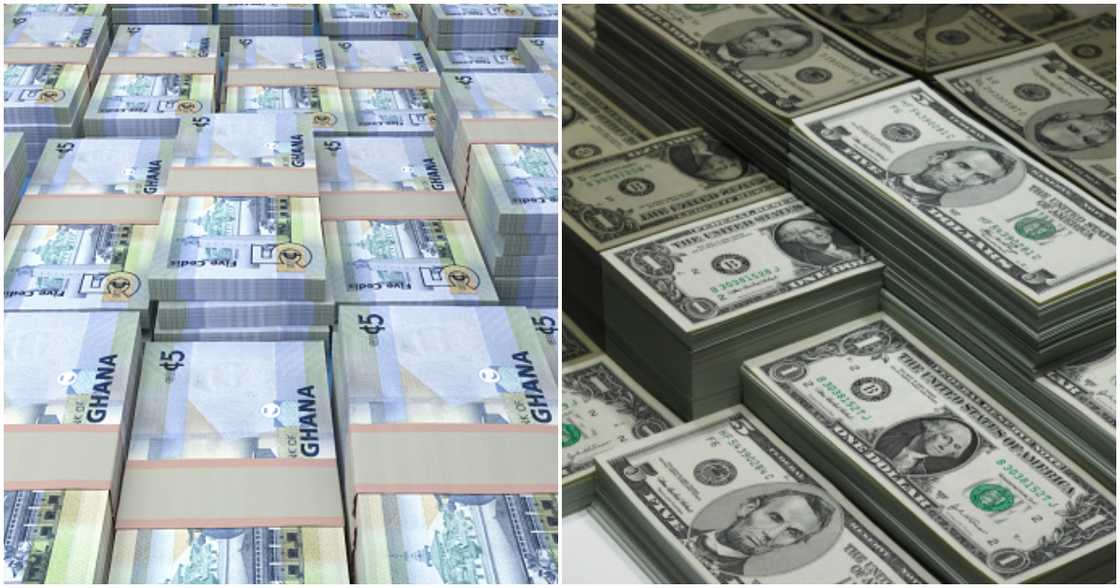
The Ghana cedi’s depreciation against the US dollar has worsened to 10.6 per cent in November 2026, up from 9.5 per cent in September, amid renewed pressure on the local currency from constraints in foreign exchange supply.
Data from the Bank of Ghana’s latest Summary of Economic and Financial Data indicate that the cedi traded at GH¢11.69 to the dollar in November, against GH¢11.66 in September.
The local currency’s weakness was not limited to the US dollar, as it also lost ground against the British pound and the euro.
The Bank of Ghana reported that the cedi depreciated by 9.2 per cent against the pound and 5 per cent against the euro on the interbank market.
During the period, the cedi exchanged at GH¢15.47 to the pound and GH¢12.92 to the euro.
The latest figures underscore the volatility that has characterised the cedi’s performance this year, with periods of depreciation interspersed with intermittent recoveries, partly driven by the central bank’s foreign exchange interventions.
Looking ahead, Fitch Solutions anticipates additional pressure on the currency in 2027, forecasting an average exchange rate of GH¢12.40 to the US dollar.
The research firm says an anticipated decline in international gold prices, together with government efforts to rebuild the country’s foreign exchange reserves, could limit the availability of foreign currency on the domestic market.
Associate Director at Fitch Solutions, Mike Kruiniger, believes these factors could weigh on the cedi and trigger renewed inflationary pressures.
“We expect to see the currency to weaken a little bit, and that is going to bring back some important price pressures next year,” he said.
Mr Kruiniger noted that the transfer of foreign exchange intermediation responsibilities from the Bank of Ghana to the Ghana Gold Board, combined with lower gold prices and foreign reserve accumulation under the Ghana Reserve Accumulation Programme, could tighten dollar supply.
He further explained that a stronger US dollar could exert downward pressure on global gold prices, weakening Ghana’s export earnings and leaving the cedi more vulnerable.
The resulting depreciation could increase the cost of imported goods and industrial inputs, potentially feeding into domestic inflation.