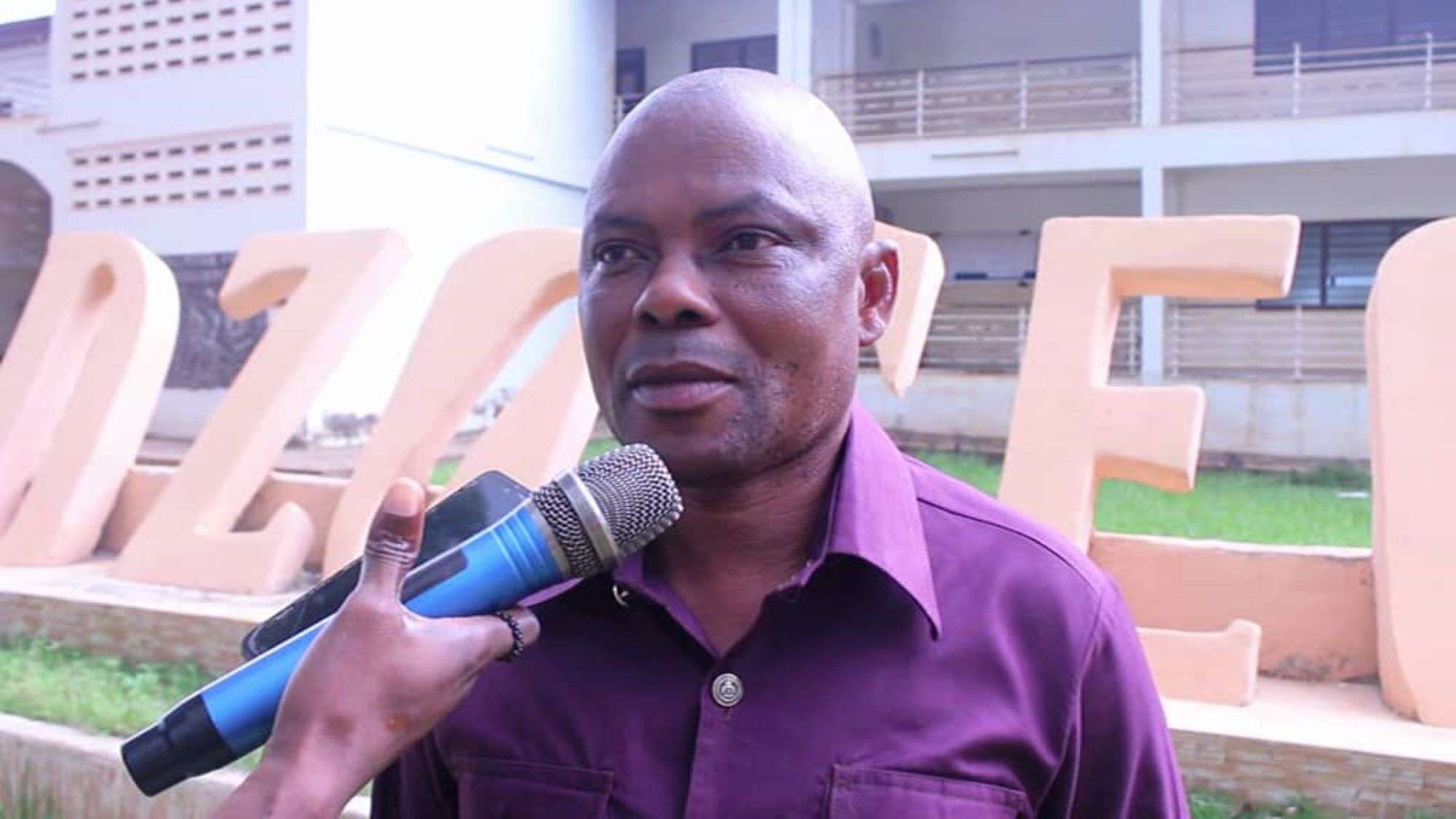


By Amos Safo
One of the most threatening disasters confronting the world is flooding. Over the past decade, urban flooding has become a major problem in many parts of the world due to its social, economic and environmental impact. Flooding has been destroying the developmental infrastructure and increasing human casualties around the globe, with Ghana having its fair share of the havoc over the years.
As in many West African countries the rainfall pattern in Ghana has been unpredictable and this unpredictability is believed to be the major cause of urban flooding. At least, in Ghana one major flood disaster has occurred every four years over the past 20 years. I witnessed devastating floods in 1994, 1998, 2004 and 2014. The 2014 floods killed more than 200 people and destroyed property running into millions of cedis. This was largely due to the construction of the so-called “Circle Dubai”, which made no room for drainage for heavy rainwater from the Eastern Region and various parts of Accra to flow to the sea.
Some studies suggest that an estimated four million people in Ghana have been affected by floods, resulting in economic damage exceeding USD$780 million over a 50- year period. Sadly, for an economy that is barely recovering from the effects of COVID 19, it was least expected that Accra would be further hit by floods. But no one can stop nature. It is time to rain, and the rains must come, else farmers will not plant, and crops will not yield the needed food.
Unpreparedness
The problem with Ghana is our unpreparedness for such eventualities. According to the Ghana Metrological Agency, Ghana needs to brace up for what might become her heaviest rainfall in recent years. The latest floods, which occurred last week after three separate days of heavy down pour in Accra have once more exposed our poor planning, indiscipline, as well as the weak infrastructure in urban Ghana. Whereas in urban Ghana floods are mostly triggered by seasonal rainfall combined with poor drainage and the dumping of waste into waterways, in northern Ghana some floods are caused by spillage from a dam in Burkina Faso. Naturally heavy rains should not be a problem for any country, as rains usually signal good days ahead because of planting and harvesting and the collection of water for future use. But poor planning and chaotic urban settlements remain a huge development challenge.
Overtime, the combined efforts of the Ministry of Works and Housing (MWH), Ministry of Health (MoF), Ministry of Local Government and Rural Development (MLGR), City Engineers and Lands Department to deal with the socio-economic and environmental impact of floods have not yielded the desired results, as new threats continue to resurface. The recurring floods in Accra, Kumasi, Tamale, Sekondi-Takoradi, Eastern and Volta regions waste hundreds of lives and properties worth millions of Ghana cedis yearly. This has led to an increase in relief expenditure and health control by government, and potentially increasing the overall national budget. While caterers of the school feeding program are pressurizing government to pay their arears, government will now be under equal pressure to repair damaged roads and broken bridges and culverts due to the floods. Apart from destruction of properties and economic losses, people living in flood areas are at a high risk of contracting diseases such as cholera, malaria and hepatitis, food shortages and mental stress.
Waste management
Undoubtedly, Ghana has a huge solid waste problem. Poor disposal of solid waste and reckless dumping are the major causes of the blockade of drains drainage systems, thus preventing flood waters from flowing through. If water is prevented from using its natural route, it is compelled to destroy anything on its way. This is what is unfolding in 2022, as in previous years. Several houses and cars have been submerged, with the potential of raising insurance claims and compensations running into millions of cedis. Due to this perennial flooding henceforth, the agencies charged with waste management and environmental preservation should prove their relevance by enforcing the laws and by-laws on building in flood-prone areas.
Reactive strategies
After every flood, the government repairs damaged infrastructure, clears waterways and demolishes properties built close to drainage channels. Arguably these interventions do not deal with the underlying causes of the floods, or adequately equip people the requisite knowledge for untimely flooding. Thus, money that could go into future prevention is instead spent on perpetual cycles of recovery.
Over time, these coping strategies become more costly because the flood risk gets worse each year. The problem is our policy makers react to floods using coping strategies. Not only do these coping strategies fail to address the underlying risks, but they are also expensive. This makes a strong case for the government to consider taking proactive, rather than reactive steps towards flood risk management. The amount of rainfall classified as “heavy” is projected to increase between 2010 and 2050, with the wet seasons projected to get wetter and the dry seasons drier. This will be felt intensely in the urban areas as rural-urban migration intensifies. Already, about 40% of Accra is classified as low lying and “highly prone” to flooding. As a result, we need to make a radical shift from using the reactive approach to the proactive approach.
On a broader scale the government can take a number of measures;
• Government can buy out at-risk properties
• Build new homes on elevated ground or foundations
• Deal with spillage from dams by building canals to channel the water. Such fresh water can be dammed and used for irrigation.
Perhaps, the multi-purpose dam under construction in the Upper East Region will address the water spillage from Burkina Faso every year.
Flood risk adaptation
With the signs on the wall, the government needs to make the country more resilient to withstand the challenges posed by intense and frequent floods. While Ghana participates in a variety of adaptation programmes like the resilient cities network and the Africa Adaptation Program these interventions have yet to translate into action. The government is also embarking on projects to protect against floods, but these are focused on the coastal areas. While the construction of drains and culverts in Greater Accra is on course, much needs to be done, if Ghana is to become proactive. In pursuance of this Ghana must fully transition from coping strategies to long-term strategies. A key strategy could be structural flood protection measures, like storm drains or levees. These need to be constructed to protect areas that are at high risk, and not just the coastal areas.
It is expected that though the initial cost of adaptation measures will be expensive, it will be profitable in the long term. Research shows that for every US$1 spent on flood risk reduction, it saves at least US$4 to US$9 otherwise spent in an emergency response when disaster occurs. The Netherlands is a classic example of a country that has taken flood risk adaptation seriously. A quarter of the country is below sea level and 60% of its people in flood-risk areas but the measures it has taken have reduced the likelihood of major flooding.
Early warning
Furthermore, the government needs to invest in early warning systems to ensure timely flood risk alerts. This should include; a 24-hour monitoring and warning service during peak rain seasons and a public education program to help communities understand the risk, respect the warnings and know how to respond. It is also suggested that the Ghana Metrological Agency should be well equipped to play a leading role in the early warning system. The mass media should embrace this public education as part of their corporate social responsibility and in the spirit of public service broadcasting. In this era of critical national development, it is unfortunate that public service broadcasting is being sacrificed on the altar of commercialization of news and programming.
Besides social protection investments like affordable social housing should be considered. When completed government can relocate more people out of informal settlements that were built in flood prone zones. Also, public policy should be geared toward improving the natural environment such as creating buffer zones that protect and expand wetlands to absorb flood waters. Unfortunately, the Achimota Forest, the only forest left in Accra and the Sakumono wetlands, also the only surviving wetland in Accra have recently become targets of land grabbing by politicians, prompting the Office of the Special Prosecutor to commence investigations into the encroachments. If we mortgage these buffer zones, Accra will be further exposed to the effects of climate change.
Climate change
It is increasingly being proved that flood and heavy rainfall are related to climate change. Currently countries like Germany, Belgium and Holland are experiencing flooding not through poor planning, but through the effects of climate change. Consequently, the impact of climate change on rainfall intensity, duration and frequency has become relevant in recent research. In Africa climate change is increasing the likelihood of extreme rainfall and flooding that threaten both life and property in urban regions, where the existing infrastructure has not been designed to cope with these risks. Accra is a classic example of such urban settlements with poor, if chaotic planning. Small wonder that Ghana’s capital city continually experiences flooding even with 30 minutes of rain. As climate change is increasingly making the rainfall pattern unpredictable, our future planning should seriously consider its emerging effects on our economy.
Moving forward, government needs to be radical and swift with measures to curtail future flooding and its negative impact on the economy. Ghana can take advantage of predictions and past experiences of floods to proactively pursue flood risk adaptation. Failure to do this will increase flood disasters, and social and economic disruptions. For instance, in 2019, 2020 and 2021, the intensity of rain across the country was low. One would have expected the relevant agencies to plan ahead of subsequent years (like 2022), where there might be heavy rains. Not surprisingly our duty bearers were not proactive, and it took three separate days of heavy downpour and its devastating consequences on an already struggling economy for them to become reactive. When will we learn from history and use our past mistakes to address future challenges?
……..
The writer is a Development and Communications Management Specialist, and a Social Justice Advocate.
All views expressed in this article are his personal views and do not represent those of any organization(s)