

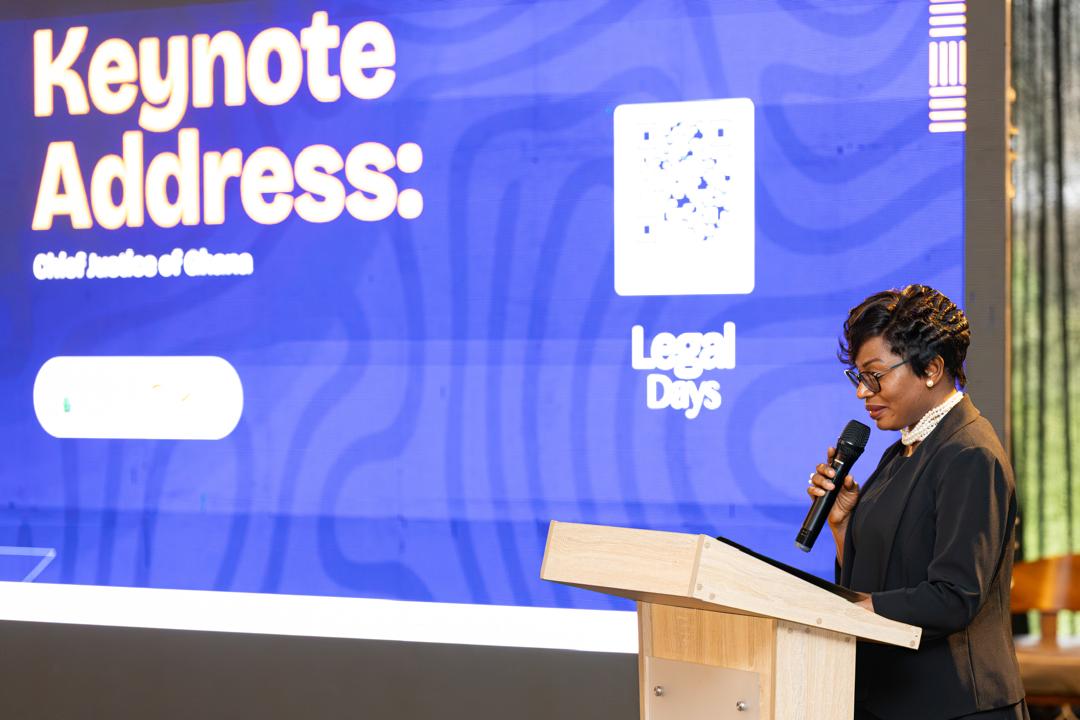
The Ghana Bar Association (GBA) has welcomed the launch of MyGhaLII, describing it as a major step forward in improving access to legal information and modernising legal practice in Ghana.
Speaking on behalf of the Bar at the official launch in Accra, Vice President Victoria Barth said the new platform would significantly change how lawyers research, organise, and apply the law in their daily work.
The launch brought together representatives of the Judiciary, Parliament, the Ghana School of Law, development partners including GIZ, and legal information initiatives such as GhaLII, AfricanLII, and Laws.Africa.
“Access to law is not a convenience”
In her address, Barth emphasised that access to legal information is central to the quality of legal practice, noting that lawyers often spend significant time searching for authorities or verifying whether legislation is still in force.
“Access to the law is not a convenience. It is the ground on which competent practice, sound advice and the confidence of our clients are built,” she said.
She added that improvements in legal access directly benefit both lawyers and the public, enabling more accurate advice and stronger advocacy.
A shift from search tool to workspace
Barth highlighted that MyGhaLII goes beyond traditional legal databases by introducing tools designed around the real workflow of legal practitioners.
These include private research folders, case tracking features that alert users when judgments are later cited by courts, saved search updates, and legislative version tracking that allows users to see how laws have changed over time.
According to her, the platform represents a shift from simply “finding the law” to building a structured legal workspace that supports ongoing research.
Focus on equal access to legal resources
The GBA also underscored the importance of open access to legal information, arguing that digital platforms can help reduce inequalities between well-resourced practitioners and those working independently or outside major urban centres.
Barth said such systems help ensure that all lawyers, regardless of location or resources, can access the same legal materials and maintain high standards of practice.
AI and legal responsibility
The address also touched on the growing use of artificial intelligence in legal work. While acknowledging its usefulness in assisting research and drafting, the GBA warned that lawyers must remain vigilant in verifying information produced by AI systems.
“The responsibility for what we file, and for what we say to a court, can never be passed to software,” Barth said, stressing that professional accountability remains with the lawyer.
Call for African ownership of legal data
A key theme of the speech was the importance of African ownership of legal information in the digital age. Barth cautioned that reliance on foreign datasets in legal technology could result in misrepresentation of African legal systems.
She urged African legal professionals to act as custodians of their own legal data, ensuring that platforms reflect local jurisprudence and values.
Regional cooperation and economic impact
The GBA also linked the development of open legal platforms to broader regional integration efforts, particularly under the African Continental Free Trade Area.
Barth noted that accessible and reliable legal information is essential for cross-border legal practice, investment, and trade, as it reduces uncertainty and helps businesses understand their obligations across jurisdictions.
Recognition of partners
The Ghana Bar Association expressed appreciation to the Judiciary, Parliament, Ghana School of Law, and development partners for supporting the initiative.
Special recognition was given to GIZ for its role in supporting the digitisation of historical legal materials, including judgments and gazettes, which are being made publicly accessible through initiatives like GhaLII.
The GBA described MyGhaLII as more than a technological upgrade, calling it a practical tool that could reshape daily legal work in Ghana.
Barth concluded that the platform’s true value would be measured in its impact on everyday practice—from stronger legal arguments to more reliable client advice—and urged lawyers to integrate it into their professional routines.
The Ghana Bar Association reaffirmed its commitment to supporting the platform and ensuring that it becomes a core part of legal practice in Ghana.