
The New Patriotic Party (NPP) has challenged the Ghana Gold Board (GoldBod) to disclose the names of companies that bought Ghana’s gold, leading to a colossal sum of GH¢22 billion in trading loss recorded under the Domestic Gold Purchase Programme (DGPP).
It emphasised that the identities of the companies involved, as well as the commercial terms and discounts offered to them, should be made public to ensure transparency and accountability.
The party accused GoldBod of failing to provide adequate transparency on the buyers of the country’s gold following the loss of more than US$1.7 billion, equivalent to about GH¢22 billion, in 2025.
It noted that the programme continued to lose money despite the fact that global gold prices experienced one of their strongest periods in decades, saying “the loss was not the market’s fault.”
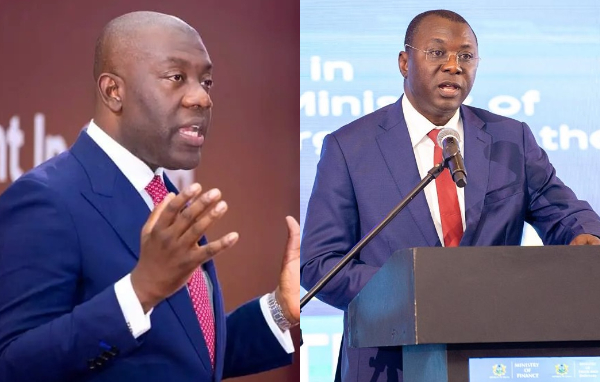
Addressing a news conference jointly by the Chairman of the NPP Policy Co-ordination Committee, Mr. Kojo Oppong Nkrumah and a member of the Committee, Dr. Mohammed Amin Adam on September 1, 2026 in Accra, the two lawmakers said the Committee’s review of the International Monetary Fund (IMF) report, the Bank of Ghana’s audited accounts, GoldBod’s financial statements and other official documents had raised serious questions about how the financial impact of the programme was presented to Ghanaians.
NPP’s demand followed an ongoing tussle between Minority Leader Osahen Alexander Kwamena Afenyo-Markin and GoldBod Chief Executive Officer Sammy Gyamfi over demands for accountability regarding the US$1.7 billion financial loss to the state.
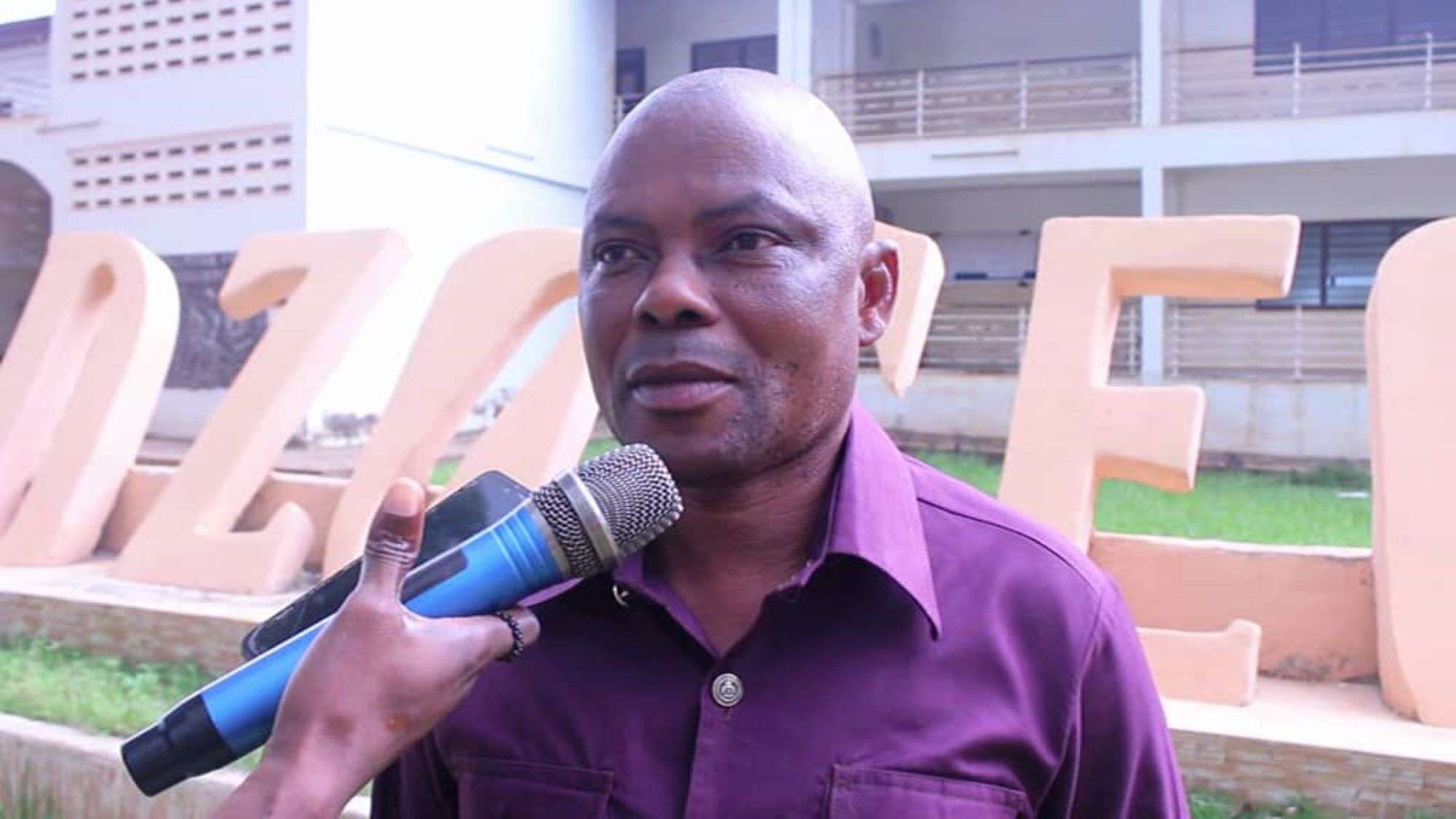
Dr. Amin Adam who is also a former Minister for Finance and MP for Karaga questioned where the gold exported by GoldBod had gone and again demanded details of the companies involved in the transactions.
“Where did our gold go? All the gold they sold, where did that go?” he asked.
“Gold Board has never published the names of the companies buying its gold. And none of the quarterly public reports required under Section 42 of the Ghana Gold Board Act has ever appeared in any way…We want to know the names of the foreign buyers of Ghana’s gold, the discount and commercial terms they were given. Those contracts must be published,” Dr. Amin Adam added.
GoldBod, he pointed out, exported about 103.8 tonnes of gold sourced from small-scale miners in 2025, with 98.8% of the gold reportedly going to two destinations—India and Dubai.
According to him, the pricing arrangements surrounding some of the transactions resulted in significant losses to the country.
Dr. Amin Adam explained that buyers in those markets typically offer faster payment, but often demand discounts in return, which he said contributed to Ghana losing about US$450 million.
“Gold Board had to provide huge discounts, which resulted in Ghana not receiving US$450 million. And this is one of the losses recorded,” he disclosed.
He said the lack of disclosure raised questions about the transparency of GoldBod’s operations, particularly given the scale of Ghana’s gold exports.
Legality of fees charged
Asking more questions, the Chairman of the NPP Policy Coordination Committee, Mr. Oppong Nkrumah said the NPP has further raised concerns about the legal basis for some fees charged by GoldBod.
He called on the Attorney-General to clarify whether the fees had been authorised through the appropriate legislative process, accusing GoldBod of failing to publish quarterly reports required under the Ghana Gold Board Act.
NPP demands parliamentary inquiry
The NPP policy committee said it welcomed the decision to stop the Bank of Ghana from pre-financing gold purchases and the transfer of the programme’s operations to GoldBod.
However, it insisted that reforms going forward should not replace an investigation into what had already happened.
Among its demands, the NPP reaffirmed its call for a signed reconciliation involving the Bank of Ghana, GoldBod and the Ministry of Finance.
The party also called for a full parliamentary inquiry into the programme.
“GH¢22 billion of this country’s money was lost through a system that was approved, only partly disclosed across two different sets of accounts, and never fully explained,” the NPP said.
The party argued that a loss of such magnitude required a transparent investigation to establish what happened and who was responsible.
The NPP argued that different institutions had reported significantly different figures relating to the programme, creating what it described as a need for a clear reconciliation of the numbers.
According to the party, GoldBod reported a GH¢5.45 billion surplus, while the Bank of Ghana’s audited accounts recorded a GH¢9.05 billion net loss.
The IMF, however, reportedly put the full economic cost of the programme at about GH¢22 billion.
The NPP said the three figures appeared to measure different aspects of the same chain of gold transactions.
“The IMF was not wrong,” the party said, arguing that the Bank of Ghana had not adequately explained what it described as a GH¢22 billion economic cost translated into a reported loss of GH¢9.05 billion.
Questions over GH¢13 billion gap
The party identified two major items which it said accounted for much of the difference between the IMF’s estimate and the Bank of Ghana’s reported loss.
The first was a GH¢5 billion transfer from the Consolidated Fund, which the NPP said had been described by the Finance Minister as a recapitalisation bond.
The second was GH¢7.99 billion in unrealised gains that were reportedly recognised as income after the Bank of Ghana sold 22.24 tonnes of reserve gold in October 2025.
According to the NPP, subtracting the GH¢5 billion transfer and the GH¢7.99 billion accounting gains from the GH¢22 billion economic cost leaves a figure close to the Bank of Ghana’s reported GH¢9.05 billion loss.
The party said this demonstrated the need for the Bank of Ghana, GoldBod and the Ministry of Finance to provide a signed reconciliation explaining how the different figures were calculated.
GoldBod surplus questioned
The NPP also challenged GoldBod’s reported GH¢5.45 billion surplus, arguing that GH¢4.54 billion of the amount was a government capital injection recorded near the end of the 2025 financial year.
The party maintained that capital injected by government should not be treated as operating revenue or profit.
It further claimed that much of the remaining amount consisted of fees charged in connection with the gold transactions.
According to the NPP, GoldBod earned significant service and other fees while the wider gold purchase programme recorded substantial losses.
The party questioned how an agency involved in the purchase and trading of gold could report a surplus while the institution financing parts of the operation recorded major losses.
NPP raises concerns over gold sales
The NPP further pointed to the Bank of Ghana’s reported GH¢9.57 billion gain from gold sales in 2025.
It argued that GH¢7.99 billion of this amount represented unrealised gains accumulated from gold purchased in previous years and subsequently recognised following the sale of reserve gold.
The party further opined that removing the accounting gain would have worsened the Bank of Ghana’s financial position.
It said the Ministry of Finance had already provided GH¢5 billion to support the central bank’s financial position and warned that taxpayers could ultimately bear the cost of the losses.
Why Ghana lost money
The NPP identified three main factors which it said contributed to losses under the gold purchase programme.
These included differences in exchange rates used in transactions, discounts given to foreign gold buyers and fees charged at various stages of the trading process.
The party said the Bank of Ghana advanced cedis at one exchange rate while gold purchases were made at higher market rates, resulting in a cost being absorbed by the programme.
According to the NPP, the IMF estimated the combined cost of the programme at about 14.5 per cent of its value in 2025.