
Ghana has called for a shift from climate finance pledges to bankable projects, urging China and its African partners to accelerate investments that create jobs, support green industrialisation and strengthen resilience to climate change.
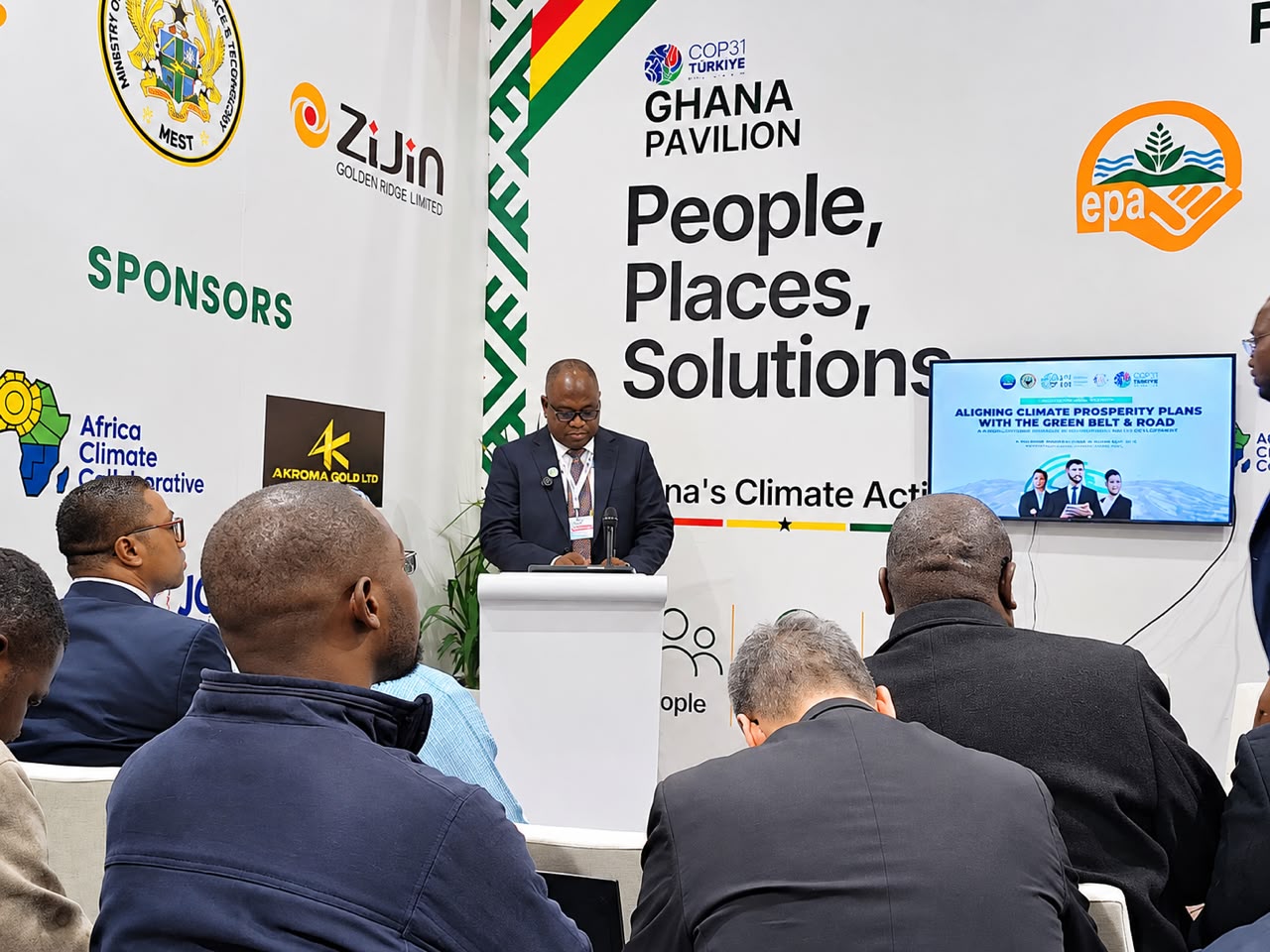
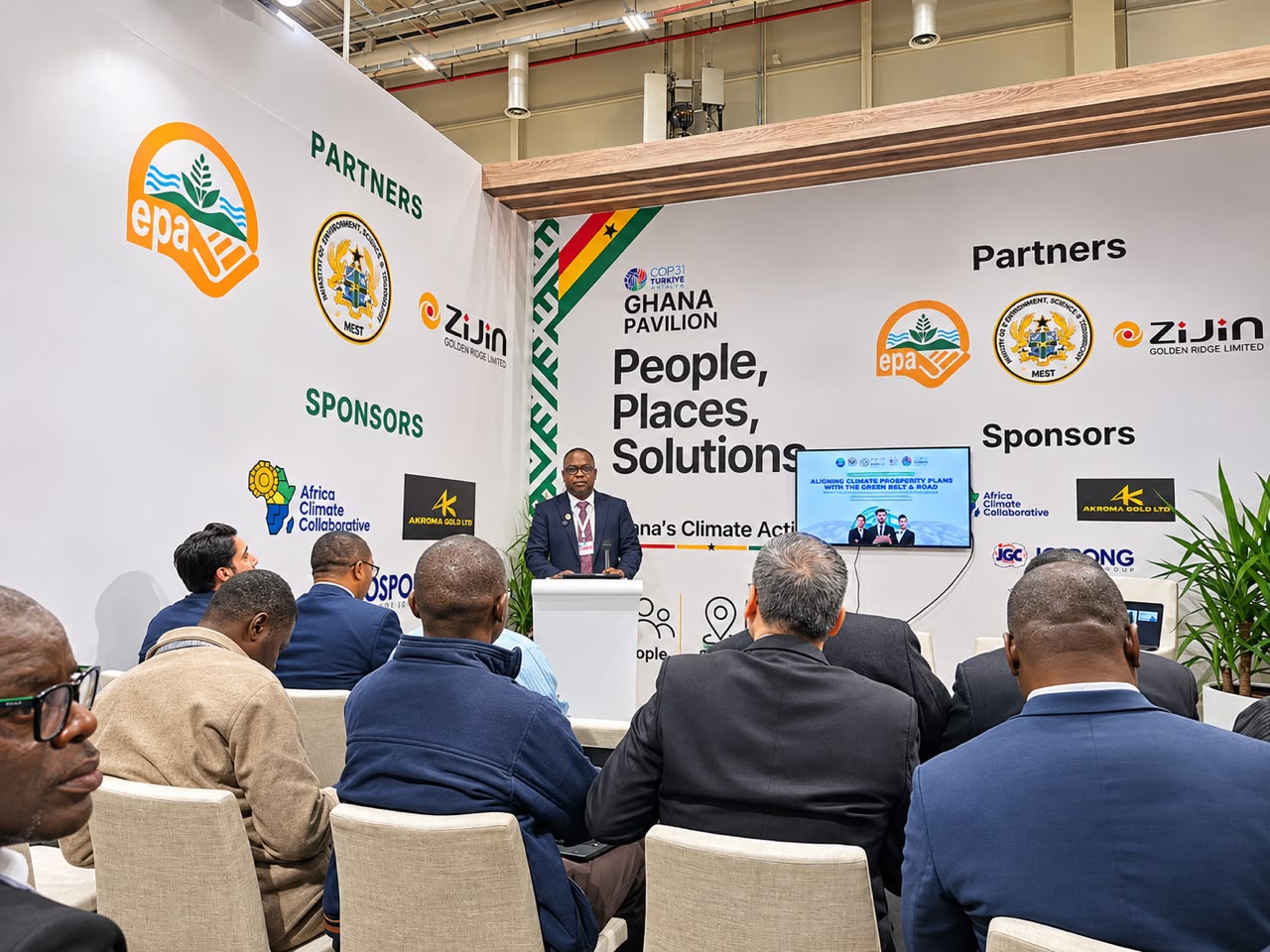
The appeal was made in opening remarks of Ghana’s Minister of State for Climate Change and Sustainability, Mr. Issifu Seidu at a high-level discussion at the Ghana Pavilion in the Blue Zone of the 31st United Nations Climate Change Conference (COP31) in Antalya, Türkiye, on Wednesday.
The event, themed “Shared Future, Shared Prosperity: Aligning Climate Prosperity Plans with the Green Belt and Road”, focused on turning commitments under the Forum on China-Africa Cooperation (FOCAC) into viable national investment pipelines.
“For Ghana, climate action is not charity; it is a strategic investment in our future,” the Minister said in his remarks, describing climate action as an opportunity to accelerate industrialisation, create decent jobs, strengthen energy security and build a more resilient economy.
The Minister highlighted Ghana’s role as host of the headquarters of the Climate Vulnerable Forum and the Vulnerable Twenty Group (CVF-V20), which advocate for economies facing acute climate risks.
The remarks pointed to President John Dramani Mahama’s establishment of a dedicated Office of the Minister of State for Climate Change and Sustainability as part of efforts to strengthen leadership and coordination of climate action across government.
Ghana is pursuing its climate objectives through its Nationally Determined Contributions, National Green Finance Taxonomy and measures to improve institutional coordination and mobilise finance, the Minister noted.
The country’s Climate Prosperity Plan was presented as a framework for linking climate ambition to investment opportunities. The Minister also stressed that affordable finance and debt sustainability must remain central to the development prospects of climate-vulnerable countries.
Turning Africa-China commitments into projects
The Minister welcomed China’s commitment under the FOCAC Beijing Action Plan for 2025–2027 to support 30 clean energy and green development projects across Africa, but said the partnership must be judged by its results.
“The true measure of our partnership must be our ability to translate these commitments into bankable projects, mobilised finance, and tangible development outcomes,” the Minister said.
With the action plan approaching its final year, the Minister called for greater urgency in preparing projects, securing investment and moving to implementation.
Country platforms and Climate Prosperity Plans, the Minister explained, can help governments identify national priorities, develop credible investment pipelines and connect projects with financing, technology and implementation partners.
The Green Belt and Road Initiative was identified as a potential channel for investment in renewable energy, climate-resilient infrastructure, sustainable industrialisation and green technologies. Such projects, the Minister said, should respond to national priorities, strengthen local capabilities and deliver lasting benefits to communities.
African ownership and measurable outcomes
The Minister also called for practical results from cooperation between the CVF-V20 and the Belt and Road Initiative International Green Development Coalition.
“Our success should be measured by the projects we developed, the investments we mobilised, the jobs we create, and the resilience we build for our communities,” the Minister said.
The remarks placed African ownership at the centre of the investment agenda, emphasising that countries should define and lead their own development pathways rather than simply receive externally designed projects.
“Above all, let us ensure that African countries remain at the center of defining and driving their own development pathways,” the Minister said.
The message from Ghana’s COP31 engagement was clear: climate cooperation will have greater value when financing commitments translate into investable projects, stronger local economies and measurable improvements in people’s lives.