
Ghana’s economy expanded by 6% in real terms in the second quarter of 2026, representing a slowdown from the 6.6% growth recorded in the same quarter of 2025.
The latest Gross Domestic Product (GDP) figures released by the Ghana Statistical Service show that economic activity remained resilient, even as the pace of expansion moderated.
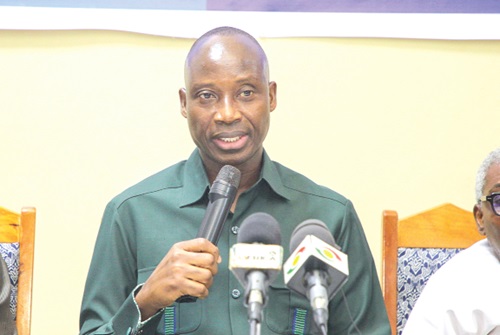
According to Government Statistician Dr Alhassan Iddrisu, Ghana produced GH¢51.3 billion worth of goods and services in real terms during the quarter, compared with GH¢48.4 billion in the corresponding period of 2025.
The non-oil economy recorded a sharper slowdown, growing by 5.4% compared with 8.5% a year earlier.
Services continued to dominate economic activity, accounting for 45.9% of GDP and contributing 57.6% of total growth. However, growth in the sector eased to 8% from 9.5% in the second quarter of 2025.
The industrial sector, which accounts for 33.1% of GDP, performed better than it did a year earlier, expanding by 4.3% compared with 2.4%. Oil and gas activities were the main contributors to the sector’s improved performance, with industry accounting for 23.5% of total economic growth.
Agriculture, representing 21% of GDP, grew by 3.9%, a significant decline from the 7.1% recorded in the same period last year. The sector contributed 13.3% to overall growth.
Despite the moderation in headline economic growth, price developments provided a major source of optimism. The GDP deflator, a broad measure of economy-wide price changes, dropped sharply from 18.6% in the second quarter of 2025 to 5.5% in the second quarter of 2026.
This represents a 13.1 percentage-point decline and points to a substantial easing of price pressures across the economy.
Dr Iddrisu noted that the combination of continued economic growth and significantly improved price conditions was an important development for both households and businesses.
The ICT sector was among the strongest performers, recording an impressive 30.9% expansion and highlighting the growing contribution of Ghana’s digital economy. In contrast, fishing contracted by 24.7%, raising concerns about the welfare of fishing communities and potential implications for food security.
The Q2 2026 data therefore present a mixed picture: Ghana’s economy remains on a growth path, but the pace has moderated, while the sharp easing of price pressures stands out as a major positive development.