

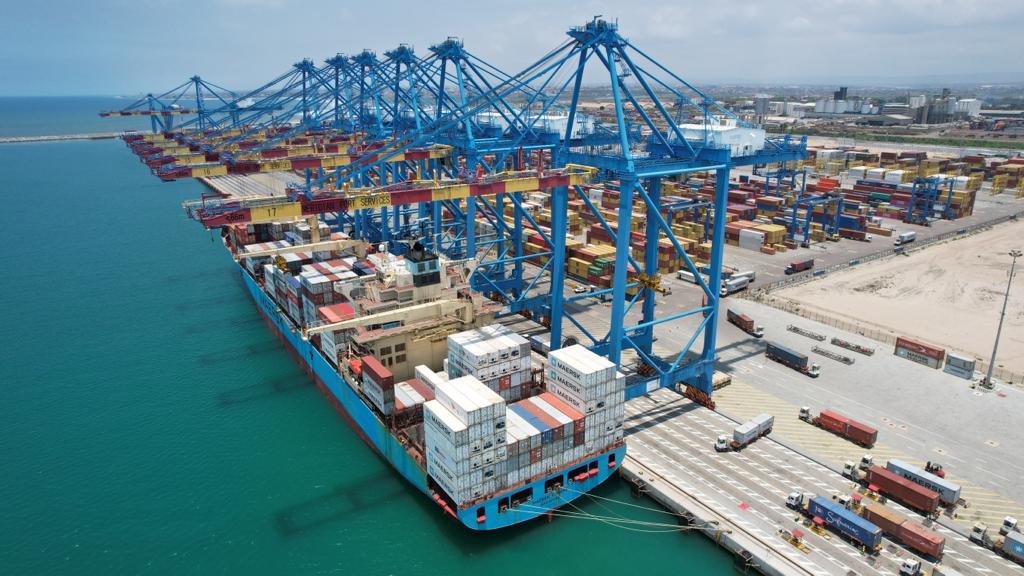
Ghana recorded total exports of GH¢110.3 billion in the first quarter of 2026 against imports of GH¢64.2 billion, producing a trade surplus of GH¢46.1 billion, according to the First Quarter 2026 Trade Report released by the Ghana Statistical Service (GSS).
Government Statistician Dr. Alhassan Iddrisu said the country traded goods worth GH¢174.6 billion, equivalent to US$16.1 billion, between January and March 2026.
“Ghana traded goods worth 174.6 billion Ghana cedis or 16.1 billion US dollars in just the first 3 months of 2026. That is the equivalent of almost 2 billion Ghana cedis worth of trade every single day.”
Gold remained Ghana’s dominant export, generating GH¢63.7 billion (US$5.9 billion) during the period. Cocoa exports also showed improvement. Asia continued as Ghana’s largest trading partner, while trade with other African countries recorded notable growth.
Despite the impressive nominal surplus, Dr. Iddrisu cautioned that the figures do not necessarily reflect a substantial rise in the volume of goods exported. When adjusted for price effects using the unit value index, the picture shifts from a nominal surplus to a real trade deficit.
“When we adjust for price effect using the unit value index, the picture changes from a nominal surplus to a real trade deficit, reminding us that higher prices rather than higher export volumes explain much of the strong trade performance.”
Much of the price surge in the first quarter was driven by gold. “Much of the price gain in quarter one of 2026 came from gold,” he noted.
The GSS is therefore urging greater diversification of Ghana’s export base, increased value addition, and deeper participation in regional trade under the African Continental Free Trade Area (AfCFTA).
Dr. Iddrisu called on the government to sustain efforts that promote broader export options and processing, while encouraging businesses to invest in innovation and competitiveness. He also appealed to consumers to prioritise locally made goods.
“Government should continue promoting export diversification, value addition, and regional trade under the AFCFTA.”
“Businesses should invest in processing, innovation, and competitiveness, and take advantage of the AFCFTA, while households should recognise that buying quality Ghanaian products supports jobs and strengthens our economy.”
The report underscores both the strength of Ghana’s current commodity-driven trade performance and the structural challenges that remain. High global gold prices have boosted export earnings and delivered a healthy surplus in nominal terms. However, the conversion of that surplus into a real deficit once prices are factored out highlights the economy’s continued reliance on a narrow set of primary commodities.
Analysts have long argued that sustained growth will require moving beyond raw gold and cocoa towards processed goods with higher value.
Expanding manufacturing capacity, improving logistics, and fully leveraging the AfCFTA are seen as critical steps. Increased intra-African trade, already showing positive movement in the first quarter, offers an additional pathway to reduce dependence on traditional markets in Asia and elsewhere.
For ordinary Ghanaians, the call to support local products is presented as both an economic and patriotic duty. Every purchase of a competitively produced Ghanaian item, the Statistician suggested, contributes to job creation and strengthens the domestic productive base.
The first-quarter figures provide a mixed but instructive picture: strong headline numbers driven largely by favourable prices, accompanied by a clear warning that volume growth and diversification must improve if the gains are to prove durable. How policymakers, businesses and consumers respond in the coming months will help determine whether the current surplus becomes the foundation for broader and more resilient trade performance.