
The government has called for closer cooperation between the media and security institutions, describing responsible journalism as a critical tool for preventive security and early warning.
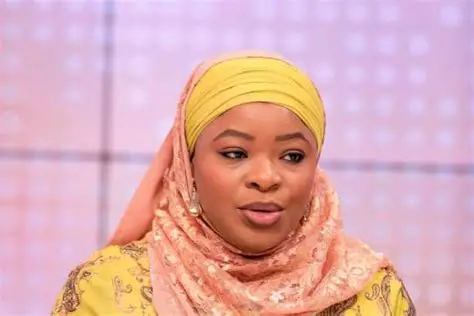
Speaking as special Guest Speaker at a capacity-building workshop on Responsible Security Reporting for PRINPAG Members, held under the theme “Media as a Strategic Partner in Preventive Security and Early Warning in Ghana,” Deputy Presidential Spokesperson Shamima Muslim, who read the speech on behalf of Minister for Government Communications Felix Kwakye Ofosu, said Ghana’s position in a volatile West African neighbourhood made accurate and responsible security reporting increasingly important.
She said Ghana was surrounded by security challenges, including coups in countries to the north, jihadist spillovers in the Sahel, internal tensions and an information environment where false information can spread faster than traditional security responses.
She described the workshop as both timely and courageous because it compelled government and the private media to confront two interconnected challenges: threats to national security and the declining relevance of traditional print media.
Media and politics have a shared history
Shamima Muslim said Ghana’s political and journalistic traditions had historically been closely connected, particularly in the struggle for independence, democratic governance and accountability.
She noted that newspapers such as the Ashanti Pioneer, Accra Evening News, Legon Observer and Daily Graphic played important roles in shaping public debate and Ghana’s democratic development.
According to her, the media’s contribution to Ghana’s democratic journey could also be seen in several areas, including the country’s return to constitutional rule in 1992, advocacy that contributed to the passage of the Right to Information Act, peace journalism, anti-corruption investigations and public health campaigns.
She also cited media advocacy around legislation on domestic violence, human trafficking and affirmative action as examples of how journalism can influence public policy and give visibility to important social issues.
“These moments confirm that when we rise above narrow interests, journalism and politics deepen democracy and protect the public good,” she said.
Print media facing serious challenges
She, however, expressed concern about the difficulties facing Ghana’s print media industry, saying the sector was losing circulation and advertising revenue while facing growing competition from digital platforms.
She observed that newspapers were no longer the dominant source of information for many Ghanaians, with social media platforms increasingly determining what audiences see and discuss.
She also pointed to rising production costs, particularly the cost of imported newsprint, as another major challenge confronting newspapers.
Beyond financial pressures, she identified credibility as perhaps the most serious challenge.
With almost anyone able to publish information through a smartphone, professional journalists are increasingly competing with rumours, unverified claims and sensational content.
She warned that this problem becomes particularly dangerous when security matters are involved.
According to her, social media may quickly show that there is anger in a particular community or that soldiers have been deployed somewhere, but professional journalism must establish the context, verify the information, and explain what is actually happening.
“In this era of AI deepfakes and disinformation, a fake letterhead of a Minister can cause a bank run. A careless headline ‘Soldiers Invade Town’ for a routine patrol can erode 30 years of civil-military trust,” she cautioned.
She, therefore, described the workshop as more than a professional development programme, arguing that it represented an important component of Ghana’s preventive security architecture.
Irresponsible reporting can worsen security threats
Shamima Muslim said the consequences of failures in both politics and journalism could be severe, particularly in relation to political vigilantism, chieftaincy disputes, religious tensions and misinformation.
She cited the activities of political vigilante groups over the years, arguing that sensational coverage sometimes inadvertently turned members of such groups into celebrities.
She referenced the violence recorded during the 2019 Ayawaso West Wuogon by-election as an example of how political violence could damage Ghana’s democratic reputation and public confidence.
Shamima Muslim also highlighted chieftaincy and ethnic conflicts, including the Konkomba-Nanumba conflict, the Dagbon crisis and tensions in Bawku.
She cautioned journalists against using simplistic or inflammatory descriptions of ethnic conflicts, saying such language could deepen divisions and contribute to further violence.
She similarly warned against the unverified publication of religiously sensitive content, particularly digitally manipulated videos and images capable of triggering tensions between Christian and Muslim communities.
“False videos of Quran desecration or church burning, 90% fake, AI-generated from outside, but when a credible newspaper republishes without verification, it becomes real in Nima or Aboabo,” she said.
Five principles for responsible security reporting
Shamima Muslim outlined five principles he believes should guide the relationship between the media and Ghana’s security institutions.
1. Media freedom is a security strategy
Shamima Muslim argued that a free press should not be regarded as a threat to national security.
Instead, she said, allowing citizens to express grievances through legitimate democratic channels could help prevent frustration from developing into violence.
She assured journalists that the government’s responsibility should not be to fear critical headlines but to ensure that journalists have access to accurate information.
She stressed, however, that responsible security reporting was not solely the responsibility of journalists.
Government and security institutions, he said, must also provide timely, credible and coordinated information.
Where operational information cannot immediately be disclosed, authorities should explain the limitations and provide verified updates when possible.
2. Speed must not replace ethics
Shamima Muslim urged journalists to resist the pressure to be first at the expense of accuracy.
She proposed four questions journalists should ask before publishing security-related information:
- Has the information been verified through at least two independent sources, including one official source?
- Could publication endanger security personnel, victims or ongoing operations?
- Does the report reveal tactical information that could assist extremists?
- Could the language unnecessarily inflame ethnic or religious tensions?
She said professional media organisations must distinguish themselves from social media by becoming trusted sources of verified information.
“Let TikTok be first. Let PRINPAG be right,” she said.
3. Information integrity is a national imperative
Shamima Muslim said Ghana could not achieve sustainable development without peace, stability and reliable information.
She argued that misinformation could inflame communities, weaken public institutions and transform legitimate disagreements into hostility.
She linked responsible journalism to President John Mahama’s Resetting Ghana Agenda, saying the media had an important role to play by exposing wrongdoing, highlighting neglected grievances, challenging disinformation and holding institutions accountable.
She stressed that the agenda did not require journalists to shield government from criticism.
Rather, she said, government must remain accountable, journalists must remain responsible, security institutions must maintain professionalism and citizens must remain vigilant.
Print media must evolve
Shamima Muslim also challenged newspaper publishers to rethink their business models, arguing that the future of print journalism should be based less on physical newspapers and more on trusted knowledge.
She proposed several areas where media organisations could develop new revenue streams.
These include analytical security editions, paid electronic newspapers and newsletters, digitised archives and specialised events bringing together traditional leaders, security institutions, civil society organizations, and other stakeholders.
She described newspaper archives as a valuable national resource, noting that decades of reporting on conflicts such as those in Bawku and Yendi could potentially be used as data for understanding and predicting future conflicts.
“The future of print is not paper, it is trust-based knowledge,” she said.
Call for a new government-media pact
Shamima Muslim proposed a new partnership between government communication structures and private media organisations focused on preventive security.
Among his proposals was the establishment of a secure verification channel linking PRINPAG leadership, the National Security apparatus and his office to facilitate rapid fact-checking during security incidents.
She also proposed quarterly security briefings for editors, greater support for journalists seeking information under the Right to Information Act, safety training for journalists and the development of a PRINPAG Code for Responsible Security Reporting.
She emphasised that such cooperation should not amount to censorship but should instead strengthen verification and professional reporting.
Protecting truth, peace and democracy
Shamima Muslim concluded by challenging journalists to consider the historical record they would leave behind.
She asked whether future generations would find a credible media record showing that Ghanaian journalists verified information, reduced tensions and protected the country while defending the truth.
She urged the media to evolve from simply reporting events to becoming an important partner in early warning and preventive security.
“Print must not die. It must evolve, from newspaper to early warning partner,” she said.
She congratulated PRINPAG and the National Security Secretariat for investing in the partnership and expressed hope that the workshop would strengthen trust, professional competence and communication between independent media organisations and national security institutions.
She said the ultimate responsibility of government, security institutions, journalists and citizens was to communicate accurately, act responsibly, protect constitutional freedoms and place Ghana’s peace and security above competing interests.