
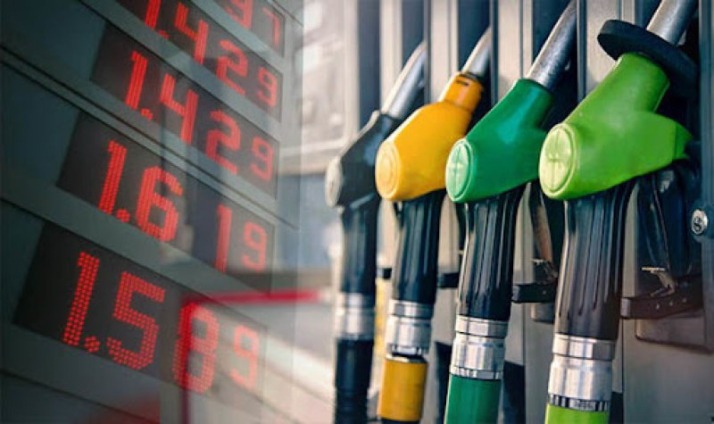
The government has announced a temporary reduction in fuel prices, absorbing GH¢2.00 per litre of diesel and GH¢0.36 per litre of petrol, effective April 16, 2026.
The intervention, which takes effect in the next pricing window, is intended to cushion consumers and ease financial pressure on households, transport operators, and businesses.
Approved by Cabinet, the decision comes in response to rising global petroleum prices that have driven up ex-pump costs in Ghana in recent weeks.
In a statement issued by the Presidency on Wednesday, April 15, the government said the measure will remain in force for one month, during which it will monitor global oil price trends and assess the need for further adjustments.
It also reaffirmed its commitment to maintaining price stability, safeguarding livelihoods, and supporting the country’s economic recovery amid ongoing external pressures.
Earlier, a coalition of leading Civil Society Organisations (CSOs) proposed a substantial reduction in fuel prices to cushion Ghanaians against rising petroleum costs.
The coalition urged the government to cut GH¢1.65 from the current petroleum price build-up as immediate relief for consumers facing increased transport and energy expenses.
The group, comprising IMANI Africa, the Chamber of Petroleum Consumers (COPEC), INSTEPR, and the Institute for Energy Security, presented a detailed breakdown of proposed reductions across various levies and margins within the fuel pricing structure.
In a joint statement issued on April 14, 2026, the CSOs recommended that the relief package be maintained for at least two months, rather than the four-week period initially proposed by the government, to ensure a more meaningful impact on households and businesses.
They argued that a longer duration would enhance stability and predictability in fuel pricing, particularly for transport operators and small businesses that are highly sensitive to price fluctuations.
Proposed tax and levy cuts
The group proposed reductions including 24 pesewas from the Road Fund Levy, 50 pesewas from the Energy Fund Levy, 23 pesewas from the Special Petroleum Tax, six pesewas from the Bulk Oil Storage and Transportation (BOST) margin, four pesewas from the Fuel Marking Margin, 45 pesewas from the Unified Petroleum Pricing (UPP) margin, and 14 pesewas from the Primary Sector Recovery Levy (PSRL).
The proposal follows a directive by President John Dramani Mahama, who instructed the Ministries of Energy and Finance to review taxes, margins, and levies within the petroleum pricing framework to ease pressure on consumers amid ongoing economic challenges.
The coalition maintained that the intervention would not significantly strain Ghana’s fiscal position, citing expected crude oil export revenues as a buffer to offset the temporary reduction in fuel-related taxes.
Beyond immediate relief measures, the CSOs also called for deeper structural reforms in Ghana’s petroleum pricing regime.