
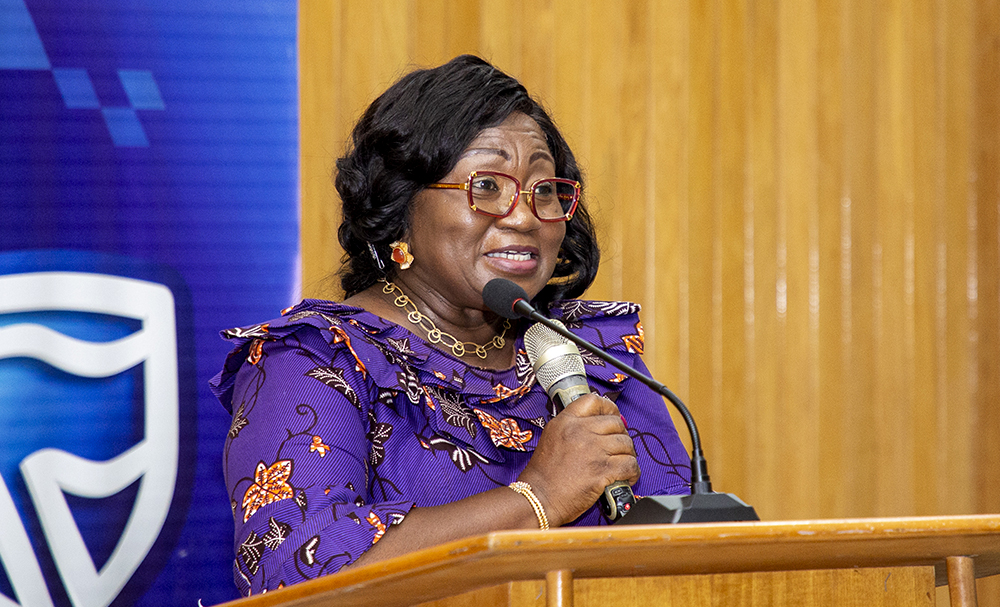
Ghana must intensify investments in young people to fully harness the benefits of its youthful population and secure sustainable national development, the Chairperson of the Parliamentary Caucus on Population and Development, Patricia Appiagyei, has said.
Speaking in Parliament to commemorate World Population Day 2026, Appiagyei stressed that young people remain the foundation of Ghana’s future and that deliberate investments in their health, education, skills, and economic opportunities are critical to achieving national progress.
World Population Day was celebrated globally on July 11, 2026, under the theme: “Realising the Hopes and Aspirations of Young People: Today and for the Future.” Ghana’s national theme for the commemoration is: “Investing in Ghana’s Future through Healthy, Skilled and Empowered Young People.”
According to the legislator, the celebration serves as a reminder that people are central to sustainable development and that government, development partners, the private sector, and civil society must work together to create opportunities for the younger generation.
She noted that Ghana is currently at a crucial stage in its demographic transition, with the country’s population growing significantly over the years.
Citing data from the 2021 Population and Housing Census, Hon. Appiagyei said Ghana’s population stood at about 30.8 million, while current projections estimate the figure has increased to approximately 34.4 million.
She added that nearly 12 million Ghanaians, representing about one-third of the population, are young people between the ages of 15 and 35 years.
The lawmaker described Ghana’s youthful population as a “historic opportunity” that could accelerate economic growth through the demographic dividend if supported by sustained investments in human capital development.
However, she warned that existing challenges facing young people could prevent the country from fully benefiting from this opportunity.
She highlighted youth unemployment and underemployment as major concerns, noting that the 2025 national labour statistics show that about one in every four young people aged 15 to 35 years is not in education, employment, or training (NEET).
Appiagyei further pointed out that young women are disproportionately affected by these challenges, while many employers continue to report difficulties finding workers with the required skills.
She also raised concerns about limited access to financing and business opportunities for young entrepreneurs, adolescent pregnancy, mental health challenges, digital inequalities, and barriers to quality reproductive health services.
Referencing the Ghana Demographic and Health Survey (GDHS) 2022, she noted that 15.2 per cent of adolescent girls aged 15 to 19 years have ever been pregnant, a situation she said continues to affect the education and future prospects of many young girls.
The Member of Parliament emphasised that these issues extend beyond social concerns and have direct implications for productivity, economic growth, and Ghana’s competitiveness.
She argued that countries that prioritise investments in their youth often experience faster economic growth, reduced poverty levels, and stronger social cohesion.
According to her, investments in quality education, healthcare, nutrition, technical and vocational training, digital innovation, entrepreneurship, and decent employment opportunities are essential to strengthening Ghana’s human capital.
She noted that Ghana’s Revised National Population Policy, Sexual and Reproductive Health Policy for young people, the United Nations Sustainable Development Goals, and the African Union’s Agenda 2063 all recognise youth empowerment as a key pathway to inclusive development.
Appiagyei called on Parliament to continue playing its role through legislation, budget approval, and oversight to support policies aimed at improving the lives of young people.
She urged increased investments in key areas including quality and inclusive education, technical and vocational skills development, youth employment and entrepreneurship, improved access to family planning commodities, strengthened primary healthcare, domestic health financing, adolescent reproductive health programmes, mental health services, social protection initiatives, innovation, research, technology, and stronger population data systems.
The Parliamentary Caucus on Population and Development also appealed to development partners, private sector actors, and civil society organisations to deepen collaboration in empowering Ghana’s youth.
Appiagyei cautioned that the decisions Ghana makes today will determine whether the country successfully harnesses its demographic dividend or loses a once-in-a-generation opportunity.
She called for a collective commitment to building a Ghana where every young person is healthy, educated, skilled, productive, and empowered to contribute meaningfully to national development.
“Together, let us invest in Ghana’s future through healthy, skilled, and empowered young people, so that the hopes and aspirations of every young Ghanaian become the driving force for a more prosperous, inclusive, and resilient nation,” she said.
She concluded by wishing Ghanaians a meaningful World Population Day 2026 celebration and called for continued efforts to make young people the centre of Ghana’s development agenda.