
The Minister for Works, Housing and Water Resources, Ahmed Ibrahim, has said the use of locally sourced, low-carbon building materials holds the key to cutting construction costs, creating jobs and narrowing Ghana’s housing deficit.
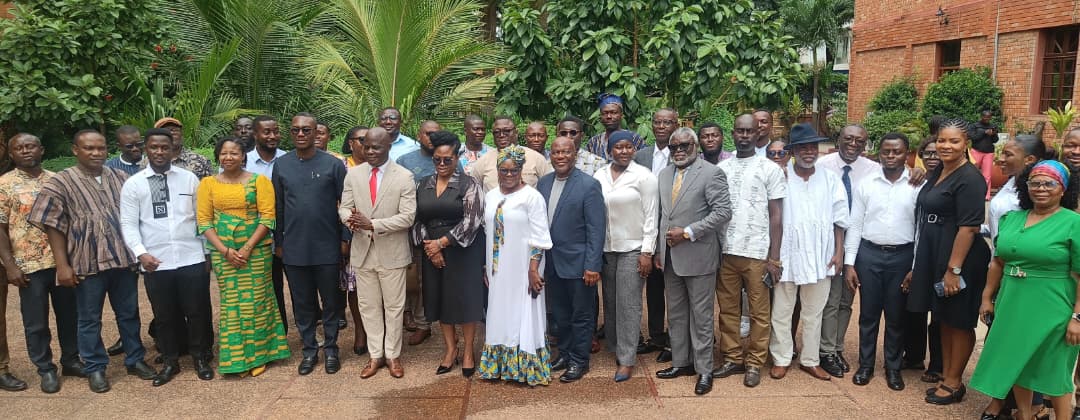
Speaking at the official launch and validation workshop of the “Transforming Ghana’s Built Environment Through Sustainable Materials” Demonstration Project in Accra, he said the country could no longer build the way it did yesterday and expect different results tomorrow.
The project is funded by the German Federal Ministry for Economic Cooperation and Development (BMZ) and implemented by the United Nations Environment Programme (UNEP). Its partners are the Ministry of Works, Housing and Water Resources, the United Nations Office for Project Services (UNOPS) and UN-Habitat.
Housing deficit
Mr Ibrahim said Ghana’s housing deficit was estimated at 1.83 million units as of the 2020 Population and Housing Census. He cautioned that the current figure could be much higher, since there had been no aggressive approach to the challenge while the population kept growing.
He said the construction sector, though a major contributor to economic growth, had made the country dependent on imported, energy-intensive materials.
That dependence had now extended to imported labour such as carpenters, masons and tilers, which drove up housing costs and carbon emissions.
“We cannot continue to use the same approach of yesterday to achieve the results that we need tomorrow,” he said.
Flood reminder
The Minister explained that the launch was initially scheduled for June 29, 2026, but was postponed because of severe flooding that hit parts of Ghana, particularly Accra, and other countries. He said about 39 lives were lost in Ghana. He recalled the strain the disaster placed on the Ministry of Local Government, Chieftaincy and Religious Affairs and on local authorities, where he was Minister at the time.
Government, he said, deeply regretted the loss of lives and the destruction of property and businesses.
He described the incident as a reminder of the very challenges the project sought to address, and urged all stakeholders to support it.
“The next victim is not yet chosen. It may be you. It may be me. The earlier we come together to solve this, the better,” he said.
Mr Ibrahim added that Africa remained highly vulnerable to climate change, which made resilient infrastructure an urgent priority.
Jobs and local industry
According to the Minister, the demonstration project provides a practical means of implementing the roadmap to decarbonise Ghana’s building and construction sector by 2050, which was launched in 2024. It will feed into the District Housing Programme. He said lower construction costs would bring down rents, stimulate local industries, create green jobs and keep investment within communities.
He noted that an aggressive effort to reduce the housing deficit would create jobs for masons, carpenters and tilers, and described tackling housing as one of the best ways to fight youth unemployment.
Mr Ibrahim said Ghana had the resources to succeed. “From limestone to salt, to the wood, the steel, the sand, what do we lack?” he asked.
He called on traditional authorities and metropolitan, municipal and district assemblies to support sustainable land management and orderly spatial development. When spatial planning, low-carbon technology, local materials and local professionals were brought on board, he said, tourism and foreign exchange earnings would also rise.
He urged participants to take ownership of the feasibility study report and the compendium of low-carbon local building materials, describing them as “living tools” for all stakeholders and not for the ministry alone. He invited their constructive comments.
Partners’ remarks
In a statement read on behalf of UNEP, Mr Thomas Kankam-Adjei, National Projects Coordinator and Country Advisor, said the project operates in four countries, including Ghana. It aims to promote circularity in buildings by creating an enabling framework for the responsible sourcing of materials and developing a sustainable construction materials market.
He said much of Africa’s future building stock was yet to be built, and that choosing low-carbon materials today was critical because buildings could last a century or more. UNEP, he added, was committed to supporting the use of bio-based materials, low-carbon cement and steel, while promoting local value chains.
The Head of the UNOPS Ghana Country Office, Ms Linda Agbesi, announced that three housing prototype models developed under the project had received EDGE certification. She said this showed their alignment with international standards for resource efficiency and environmental performance.
She said the project had also produced a techno-economic feasibility study for low-carbon model houses to support the District Housing Programme under Legislative Instrument (L.I.) 2411. The study assesses technical and financial viability, regulatory compliance and scalability.
Ms Agbesi also read a statement on behalf of the United Nations Resident Coordinator in Ghana, Mr Zia Choudhury. In it, he said the partnership brought together policy leadership, environmental expertise and technical capacity to develop practical, evidence-based solutions to guide policy and investment toward more sustainable and affordable housing.
Validation workshop
Participants at the workshop were presented with an overview of the demonstration project, the feasibility study results, and the financial and economic analysis. They were also invited to review and validate the feasibility study report and the compendium of low-carbon local building materials.By Kingsley Asiedu