
President John Dramani Mahama has outlined a package of tax and import-related incentives designed to support businesses operating under the government’s 24-hour economy initiative.
The measures include accelerated depreciation of plants and equipment over two years and deferred payment of duties and levies on imported machinery.
The President said the incentives are intended to encourage manufacturers and other enterprises to expand production capacity, invest in additional equipment and create more employment opportunities for Ghanaians.
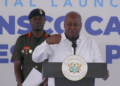
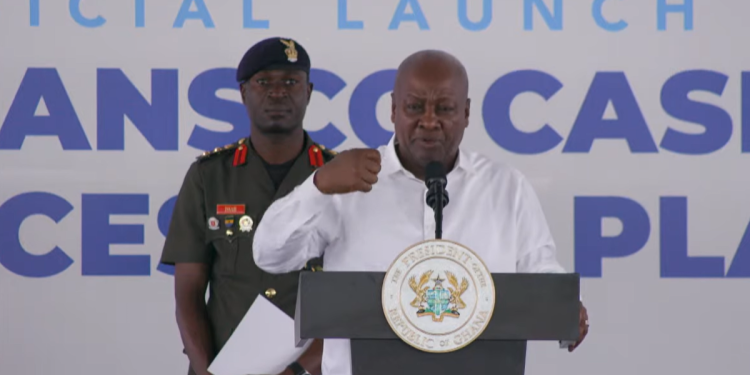
Speaking at the commissioning of the Ghana EXIM Bank-funded Nadkansco Processing Limited cashew factory in Techiman on Monday, 16 November 2026, President Mahama confirmed that the incentives had already received official approval.
He explained that the policy is targeted particularly at companies prepared to operate multiple shifts, a core requirement of the 24-hour economy agenda.
Under the arrangement, businesses running multiple shifts will be permitted to depreciate their plants and equipment over a period of just two years. This accelerated depreciation, the President noted, would free up additional cash flow that companies can reinvest in their operations.
“That’s multiple shifts. And so Nadkansco can apply under the 24-hour economy policy. And what happens is that you’ll be allowed to depreciate your plants and equipment, accelerated depreciation of your plants and equipment over two years,” he said.
President Mahama elaborated that the faster write-down of assets for tax purposes would allow businesses to recover the value of their capital investments more quickly. By reducing the tax burden in the early years of an investment, the measure is expected to improve liquidity and give companies greater financial flexibility to expand, upgrade technology or hire additional workers.
In addition to the depreciation benefit, the President announced a second major incentive focused on imported equipment. Companies seeking to expand existing facilities or establish entirely new factories will be allowed to defer the payment of import duties and levies on machinery for one full year.
After the initial twelve-month period, repayment will begin in the second year and will be spread across the following two years, easing the immediate financial pressure on investors.
“And then aside from that, if Nadkansco decides that he wants to expand or build another cashew plant, all the equipment you import will have deferred duties and levies for one year. For one year, you can bring the equipment in; you will not pay the duties and levies,” he said.
“You start paying only in the second year. And in the second year, we’ll spread it over two years. So you pay bit by bit until you finish paying,” he added.
The President indicated that the package had already drawn positive reactions from manufacturers he had consulted. He expressed confidence that the incentives would encourage more investors to commit capital to factory construction and expansion, thereby generating jobs for young people.
“I’ve spoken to several of the manufacturers, and they have welcomed this policy very highly. I think that it will allow more investors to put money into building factories and employing our young people,” he said.
Beyond the specific fiscal measures, President Mahama used the occasion to urge Ghanaian investors to shift more of their capital into manufacturing and agro-processing rather than concentrating predominantly on trading activities.
He argued that the country needs a larger base of factories capable of converting raw agricultural produce into finished and semi-finished goods for both domestic consumption and export markets. Such a shift, he said, would add greater value to Ghana’s natural resources, reduce dependence on imported processed goods and create more sustainable employment.
The commissioning of the Nadkansco cashew processing facility provided a practical backdrop for the announcement. The factory, supported by financing from the Ghana EXIM Bank, represents the kind of agro-processing investment the government wishes to see multiplied across the country.
By linking the new incentives directly to the 24-hour economy policy, the President signalled that businesses prepared to maximise the use of their facilities through extended operating hours would receive preferential fiscal treatment.
Officials present at the event noted that the combination of accelerated depreciation and deferred import duties is expected to lower the effective cost of capital for qualifying enterprises.
For companies in capital-intensive sectors such as food processing, the ability to spread duty payments and recover equipment costs more rapidly could make the difference between delaying expansion and moving forward with new investment.
President Mahama’s remarks form part of a broader government effort to stimulate industrial activity and address youth unemployment through private-sector growth.
The 24-hour economy initiative aims to increase the productive use of existing infrastructure and encourage businesses to operate beyond traditional daytime hours. The newly announced incentives are intended to make that transition more financially attractive.
As implementation details are finalised, manufacturers and potential investors will be watching closely to understand eligibility criteria, application procedures and the precise interaction of these measures with existing tax laws.
For now, the President’s clear endorsement of accelerated depreciation and deferred duties has set a positive tone, with the Nadkansco factory serving as an early example of the type of enterprise the policy seeks to support and expand.