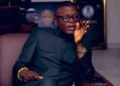

The National Security Coordinator, COP Osman Abdul-Razak, has stated that media freedom and responsible journalism are crucial in maintaining the security of the country.
Responsible journalism, he noted, plays a critical role in protecting Ghana’s democracy and strengthening national security, emphasising that the media must be recognised as an important partner in preventive security.
COP Abdul-Razak described Ghana’s information space as an important part of the country’s national security perimeter, alongside its borders, territorial waters and physical security installations.
The National Security Coordinator stated these when he delivered the keynote address at a Capacity-Building Workshop on Responsive National Security Reporting in Accra for some selected members of the Private Newspaper and Online Publishers Association of Ghana (PRINGPAG).
The event was sponsored by the National Security Secretariat as part of efforts to deepen media understanding of security matters so as to ensure responsible reporting.
COP Abdul-Razak emphasised that his outfit is concerned with responsible media reporting because a free and responsible press can serve as an instrument of security.
“When the press exposes corruption, it protects the public purse more than any prosecution. When it holds power accountable, it gives a lawful outlet to frustration that would otherwise reduce to violence and reduce recruitment and propaganda of extremists,” he said.
COP Osman added that truthful and responsible reporting during periods of tension could help calm the nation and prevent misinformation from escalating into conflict.
“When the press reports truthfully in moments of tension, it becomes the nation’s steady hand,” he noted.
According to COP Abdul-Razak, Ghana’s democratic stability in a region that has experienced a number of military takeovers could partly be attributed to the responsible role played by the media at critical moments.
“If Ghana’s democracy remains outstanding in a region of coups, it is in no small measure because at decisive moments the press has chosen responsibility,” he stated.
He said the workshop was not intended for National Security to lecture journalists but rather to create an opportunity for both institutions to learn from each other.
“We have not come to teach. We have come to learn from each other,” he told members of PRINPAG.
COP Abdul-Razak urged PRINPAG members to develop practical and meaningful proposals on how the media and security institutions can work together while safeguarding the principles of press freedom and responsible journalism.
Government calls for media partnership on national security
The government has called for closer cooperation between the media and security institutions, describing responsible journalism as a critical tool for preventive security and early warning.
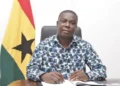
Speaking as Special Guest Speaker at the workshop, Deputy Presidential Spokesperson Shamima Muslim, who read a speech on behalf of Minister for Government Communications Felix Kwakye Ofosu, said Ghana’s position in a volatile West African neighbourhood, makes accurate and responsible security reporting increasingly important.
She said Ghana was surrounded by security challenges, including coups in countries to the north, jihadist spillovers in the Sahel, internal tensions and an information environment where false information can spread faster than traditional security responses.
Shamima Muslima described the workshop as both timely and courageous because it compelled government and the private media to confront two interconnected challenges: threats to national security and the declining relevance of traditional print media.
Media and politics have a shared history
Shamima Muslim said Ghana’s political and journalistic traditions had historically been closely connected, particularly in the struggle for independence, democratic governance and accountability.
She noted that newspapers such as the Ashanti Pioneer, Accra Evening News, Legon Observer and Daily Graphic played important roles in shaping public debate and Ghana’s democratic development.
According to her, the media’s contribution to Ghana’s democratic journey could also be seen in several areas, including the country’s return to constitutional rule in 1992, advocacy that contributed to the passage of the Right to Information Act, peace journalism, anti-corruption investigations and public health campaigns.
She also cited media advocacy around legislation on domestic violence, human trafficking and affirmative action as examples of how journalism can influence public policy and give visibility to important social issues.
“These moments confirm that when we rise above narrow interests, journalism and politics deepen democracy and protect the public good. In this era of AI deepfakes and disinformation, a fake letterhead of a Minister can cause a bank run. A careless headline ‘Soldiers Invade Town’ for a routine patrol can erode 30 years of civil-military trust,” she cautioned.
She, therefore, described the workshop as more than a professional development programme, arguing that it represented an important component of Ghana’s preventive security architecture.
Irresponsible reporting can worsen security threats
Shamima Muslim said the consequences of failures in both politics and journalism could be severe, particularly in relation to political vigilantism, chieftaincy disputes, religious tensions and misinformation.
She cited the activities of political vigilante groups over the years, arguing that sensational coverage sometimes inadvertently turned members of such groups into celebrities.
Shamima Muslim cautioned journalists against using simplistic or inflammatory descriptions of ethnic conflicts, saying such language could deepen divisions and contribute to further violence.
She also warned against the unverified publication of religiously sensitive content, particularly digitally manipulated videos and images capable of triggering tensions between Christian and Muslim communities.