
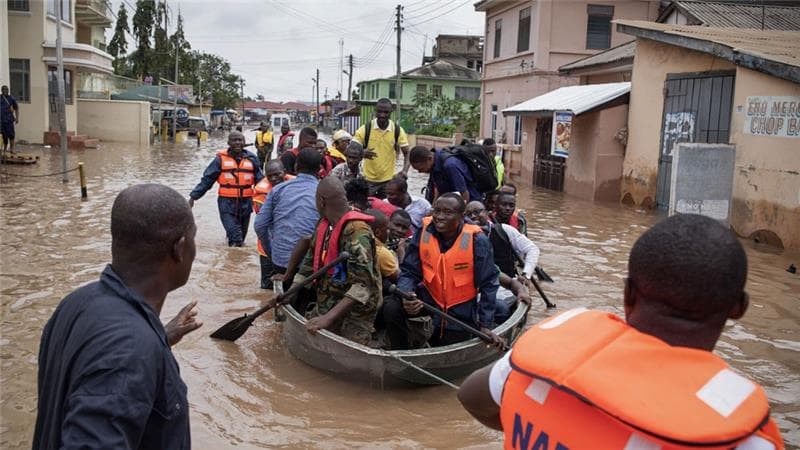
The Minority Caucus in Parliament has pledged its full support for government efforts to provide emergency assistance to victims of the devastating floods that recently affected parts of the country but insists that every pesewa of the proposed GH¢300 million flood relief package must be subjected to strict parliamentary oversight and public accountability.
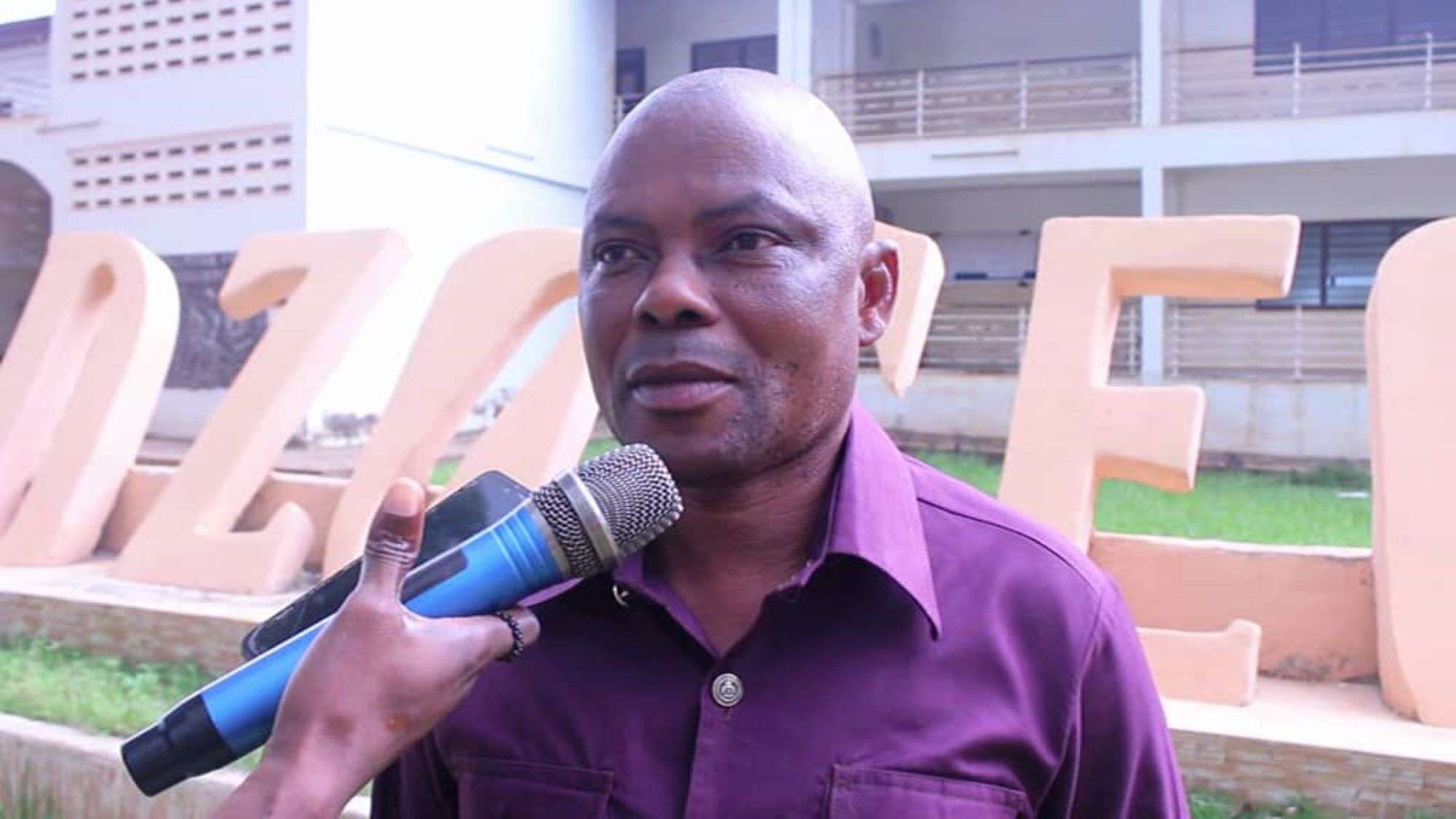
Addressing a press briefing, Minority Leader and Member of Parliament for Effutu, Alexander Kwamena Afenyo-Markin, said while the Minority welcomes any intervention aimed at bringing relief to thousands of displaced families, emergency funding alone cannot substitute for the long-term flood prevention measures that the government promised to implement but failed to deliver.
He argued that the recent flooding, which destroyed homes, businesses and public infrastructure while displacing many residents, once again exposed Ghana’s persistent challenges with poor drainage systems, inadequate urban planning and delayed flood mitigation projects.
According to him, government cannot merely express sympathy after disasters occur without taking responsibility for preventing similar tragedies in the future.
“Compassion for the victims of this crisis and accountability for the government that failed to prevent it are not mutually exclusive. Both are necessary, and the Minority insists on both,” Afenyo-Markin stated.
The Minority Leader stressed that Parliament must not simply approve the proposed emergency expenditure without clear safeguards to ensure transparency and value for money. He therefore called on the government to present a comprehensive and itemised report detailing exactly how the proposed GH¢300 million contingency fund will be allocated, managed and accounted for.
According to the Minority, the report should clearly identify all flood-affected communities that will benefit from the intervention, specify the projects and relief activities to be undertaken, and disclose the names of contractors engaged to execute the works together with evidence that all procurement processes comply with the Public Financial Management Act and other applicable procurement laws.
The Caucus further called on the government to separate the proposed allocations within the relief package to facilitate effective parliamentary oversight. It wants government to provide distinct accounts for the GH¢150 million earmarked for direct humanitarian assistance, including relief items and support for affected families, and another GH¢150 million allocated for flood mitigation and drainage improvement projects, supported by detailed implementation plans, project timelines and expenditure reports.
Afenyo-Markin explained that the Minority’s insistence on strict accountability is informed by previous experiences where emergency intervention funds were announced but comprehensive reports on how the money was spent were never made available to the public.
He noted that Ghanaians have repeatedly witnessed the establishment of emergency task forces and special intervention programmes following national disasters, only for questions to remain unanswered regarding expenditure and project implementation.
According to the Minority, Parliament has a constitutional duty to ensure that public funds are utilised responsibly, particularly during national emergencies when large sums of money are released under expedited procedures.
The Caucus maintained that while it will not stand in the way of genuine efforts to support flood victims, it will equally insist that the proposed relief package is subjected to rigorous parliamentary scrutiny to guarantee that every cedi reaches the intended beneficiaries and that flood mitigation projects are fully executed to help prevent future disasters.
The Minority concluded that beyond emergency relief, government must demonstrate a long-term commitment to investing in resilient drainage infrastructure, effective urban planning and sustainable flood prevention strategies to protect lives, property and livelihoods across the country.