
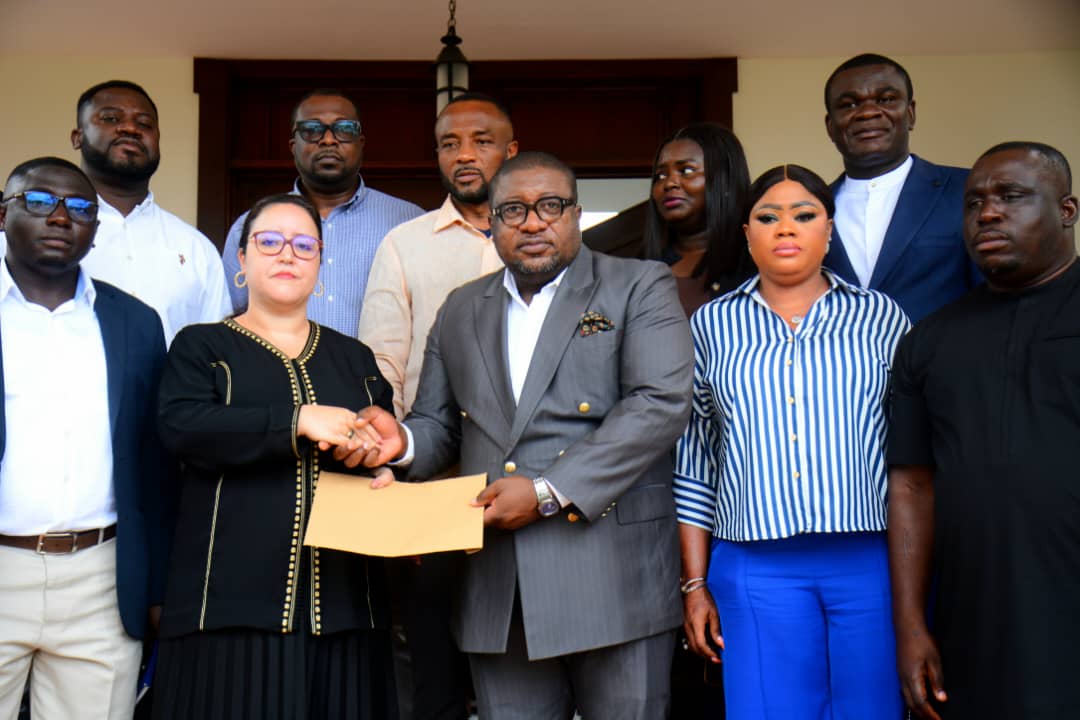
The opposition New Patriotic Party has formally petitioned members of Ghana’s diplomatic community over what it says is a growing deterioration of democratic governance and constitutional freedoms under President John Dramani Mahama’s administration.
In a strongly worded petition addressed to diplomats, development partners, and international stakeholders, the NPP accused the government of overseeing what it described as an organised campaign of political persecution, suppression of dissent, selective justice, and intimidation against critics of the state.
The party claims Ghana’s reputation as one of Africa’s most stable democracies is now under threat due to what it alleges is the increasing use of state institutions and security agencies to target opposition voices.
According to the petition jointly signed by Justin Kodua Frimpong and Alexander Kwamena Afenyo-Markin, recent developments suggest the existence of a “systematic and coordinated architecture of political persecution” capable of undermining freedom of expression, judicial independence, and the rule of law.
The document was signed on behalf of the NPP by General Secretary Justin Kodua Frimpong and Minority Leader Alexander Kwamena Afenyo-Markin.
Concerns over free speech
A major concern highlighted by the NPP relates to what it sees as the growing criminalisation of speech and political criticism.
The party recalled that criminal libel and seditious laws were repealed in 2001 during the presidency of John Agyekum Kufuor under reforms spearheaded by then Attorney-General Nana Addo Dankwa Akufo-Addo.
However, the NPP now alleges that the current administration is relying on Sections 207 and 208 of the Criminal Offences Act, 1960 (Act 29), to indirectly achieve outcomes similar to the repealed laws.
The petition claims that journalists, opposition communicators, activists, and social media commentators are increasingly being arrested or prosecuted for comments critical of government officials and public institutions.
According to the party, the trend represents a dangerous shift from democratic debate toward criminal punishment for political expression.
Abronye DC case
The NPP specifically highlighted the prosecution of Kwame Baffoe as evidence of what it calls politically motivated legal action.
Abronye DC, who serves as the Bono Regional Chairman of the NPP, was reportedly charged with “offensive conduct conducive to breach of peace” and “publication of false news” after comments he allegedly made concerning judicial impartiality.
The opposition party criticised the decision to deny him bail, particularly the reported justification that he might repeat similar statements if granted release.
The NPP argued that such reasoning undermines constitutional rights including freedom of speech, liberty, and the presumption of innocence.
The petition further stated that criticism of judges and public officials should not amount to criminal conduct in a constitutional democracy and should instead be addressed through civil legal remedies where appropriate.
Alleged intimidation of opposition voices
The party also alleged that multiple opposition figures and government critics have faced intimidation, arrests, harassment, or prosecution in recent months.
Among those named in the petition are Paul Adom-Otchere, Rev. John Ntim Fordjour, Mohammed Zakou, Yayra Abiwu, Daniel Adomako also known as Sir Obama, “Fante Comedy,” “Akyenkwa” of Wontumi TV, Okatakyie Afrifa and Kofi Ofosu Nkansah.
Others include Alfred Ababio Kumi, Gordon Asare Bediako, Abubakar Yakubu also called Baba Amando, and David Essandoh.
The NPP claims many of these individuals have been targeted over comments made about government officials or political matters.
Security agencies accused
The petition also accuses state security institutions of being used as political tools against opponents of the government.
The party specifically mentioned the National Investigations Bureau, National Security, EOCO, and the Ghana Police Service, alleging that these agencies have carried out aggressive arrests, midnight raids, and prolonged detentions.
According to the NPP, some opposition figures have been subjected to humiliating arrests and difficult bail conditions designed to discourage political activism and criticism.
The party also questioned why persons accused of speech-related offences are being detained in NIB facilities.
In the case involving Abronye DC, the NPP alleged that there were procedural concerns surrounding his detention, including claims regarding the absence of a signed remand order from the court registry.
Allegations of selective law enforcement
The petition further accused law enforcement authorities of failing to apply justice equally.
The NPP alleged that while opposition members are swiftly investigated and prosecuted, persons affiliated with the ruling National Democratic Congress are often spared similar scrutiny.
Citing events surrounding the Akwatia by-election, the party alleged that individuals connected to the NDC engaged in violent conduct and threats against opposition members.
The petition specifically named Chairman Awudu Sofo Azorka and Abdul Wahab Amadu, Abuakwa North NDC Communications Officer.
According to the NPP, despite evidence and petitions reportedly submitted to police authorities, no meaningful action has been taken.
The party argues that this perceived imbalance damages public trust in law enforcement and weakens confidence in democratic institutions.
Judiciary under pressure
Another major issue raised in the petition concerns judicial independence.
The NPP referenced the removal of Chief Justice Gertrude Araba Esaaba Sackey Torkornoo, arguing that the development has intensified fears about Executive influence over the judiciary.
The party claimed there is growing concern within legal and political circles that judges could face retaliation or victimisation if they issue rulings that do not favour the government.
It also argued that certain bail rulings and the growing number of speech-related prosecutions create perceptions of judicial bias.
According to the NPP, any weakening of judicial independence threatens the constitutional order and undermines the judiciary’s role as the guardian of democratic governance.
International appeal
The opposition party is now urging the diplomatic community, international human rights organisations, and development partners to pay close attention to developments in Ghana.
The NPP called for monitoring of democratic governance conditions, reaffirmation of judicial independence and freedom of speech, and engagement with the government over alleged abuses of criminal prosecution powers.
The petition also appealed for efforts aimed at ensuring security agencies operate within constitutional limits and respect civil liberties.
Warning about Ghana’s democracy
In concluding its petition, the NPP warned that democratic erosion often happens gradually through intimidation, fear, institutional capture, and selective application of the law.
The party argued that if left unchecked, such developments could normalise silence and discourage citizens from openly expressing political opinions.
According to the NPP, the issues raised are not merely partisan concerns but broader national issues affecting Ghana’s democratic future.
The party reaffirmed its commitment to constitutional rule, democratic accountability, peaceful political engagement, and the protection of civil liberties.