
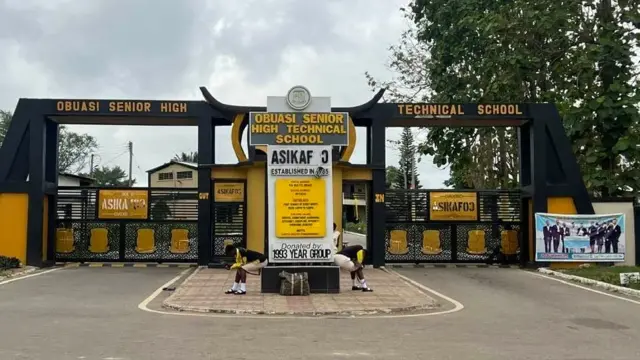
The Aya Institute for Women, Politics and Media has called for an independent national audit of sexual abuse safeguards in schools, stronger institutional accountability and improved protection for survivors following allegations of sexual abuse involving female students at Obuasi Senior High Technical School.
In a statement expressing outrage and concern over the allegations, the Institute commended investigative journalist Manasseh Azure Awuni and JoyNews for bringing the matter to national attention.
It also praised the courage of those who had spoken out and welcomed steps towards investigation and accountability, stressing the need to protect survivors throughout the process.
However, the Institute said the allegations raised broader questions about whether Ghana’s institutions were adequately preventing abuse, responding promptly to complaints and holding those responsible for protecting children accountable.
It warned that reports of sexual exploitation and violence against girls and women exposed the dangers of dismissing complaints, silencing survivors or prioritising institutional reputations over their safety.
According to the Institute, the country’s protection systems should not depend on investigative journalists uncovering abuse before authorities take action.
“The test of our laws and policies is whether they work when a girl first asks for help,” the statement said.
Aya Institute proposes six measures
As part of its call for urgent national action, the Institute urged the Ministry of Education and the Ghana Education Service (GES), in collaboration with the Ministry of Gender, Children and Social Protection and independent experts, to conduct a comprehensive audit of safeguarding systems in schools.
The proposed audit should assess prevention measures, confidential reporting channels, referral procedures, investigations, redress mechanisms and monitoring arrangements.
It should also establish when safeguarding protocols were last reviewed, whether staff had received appropriate training and how compliance was being verified.
The Institute further called on GES to publish an anonymised report covering at least five years of sexual abuse complaints, investigations, disciplinary actions, police referrals and unresolved cases, subject to appropriate privacy protections.
It said such reporting would enable the public to assess how institutions handled complaints rather than simply relying on the existence of policies.
The Institute also demanded accountability beyond alleged offenders, calling for independent inquiries into whether complaints had been ignored, concealed or mishandled and whether officials had failed in their safeguarding responsibilities.
It stressed that transferring staff accused of misconduct should not replace proper investigations, protective measures or lawful referrals to the relevant authorities.
On survivor protection, the Institute called for accessible and independent reporting channels in every school, prompt referrals to child protection agencies and law enforcement, safeguards against retaliation, and access to medical, psychosocial and legal support.
It said both students and staff should be adequately informed about the procedures for reporting and responding to abuse.
The Institute also urged the government to consider establishing a legally regulated national sex offenders register for people convicted of specified sexual offences, alongside lawful background-screening arrangements for positions involving children and other vulnerable persons.
It emphasised the need for appropriate safeguards to protect due process and privacy.
Additionally, it called for independent monitoring, periodic compliance reviews and the publication of corrective actions to ensure that reforms translated into meaningful improvements in the handling of abuse cases.
Authorities given 30-day call to action
The Aya Institute called on the Ministry of Education, GES and the Ministry of Gender, Children and Social Protection to provide a coordinated public account of existing safeguards against sexual abuse.
It wants the institutions to clarify the procedures governing prevention, reporting, redress and monitoring, when the systems were last evaluated, how they had been applied to complaints, and what data and annual reports were available.
The Institute further urged the responsible authorities to announce, within 30 days, a time-bound plan for an independent audit and public reporting.
It also expressed support for survivors and peaceful public solidarity initiatives, including the Red Wednesday initiative, but insisted that public concern must translate into lasting institutional reforms.
“Protecting girls is not an act of goodwill; it is a measurable duty of governance,” the statement said.
The Institute maintained that justice for the girls of Obuasi must lead to stronger protection for girls across the country, warning that silence, impunity and institutional failures must end.
The statement was issued by the Chief Gender Officer of the Aya Institute for Women, Politics and Media and copied to the Ministry of Education, GES, the Ministry of Gender, Children and Social Protection, the Department of Children, the Department of Social Welfare, the Ghana Police Service and its Domestic Violence and Victim Support Unit (DOVVSU), the Commission on Human Rights and Administrative Justice (CHRAJ), relevant parliamentary committees and national media houses.