
The Minority New Patriotic Party (NPP) has condemned the government’s decision to reduce the cocoa producer price from GH¢3,625 to GH¢2,587 per 64kg bag, calling for its immediate reversal.
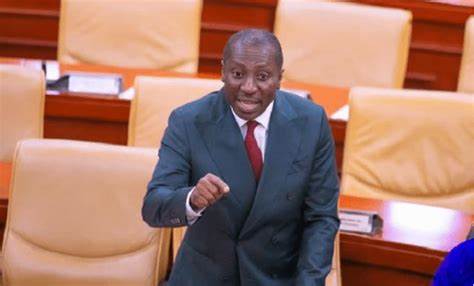
Presenting a statement on the crucial issue, the Minority Leader, Osahen Alexander Afenyo-Markin, described the move as illegal, unjust, and harmful to Ghanaian cocoa farmers, insisting that the original price announced for the 2025/2026 season remains binding.
“Once the producer price is announced, it is minimum and guaranteed for the entire crop year. Government cannot vary it to the disadvantage of farmers,” he stated.
According to him, the GH¢3,625 per bag represented the minimum guaranteed price for the entire cocoa season, which runs from October 1 to September 30.
He argued that the government has no legal authority to revise the price midway.
Osahen Afenyo-Markin explained that cocoa pricing is determined by the Producer Price Review Committee (PPRC) based on achieved weighted average prices of cocoa already sold and contracted, including main crop, light crop, and rollover stocks.
“The achieved FOB price is based on real market transactions. It is not speculation,” he stressed.
He recalled that in October 2025, Finance Minister Ato Forson announced that Ghana had achieved an FOB price of US$7,200 per tonne, entitling farmers to US$5,040 per tonne — equivalent to GH¢58,000 per tonne or GH¢3,625 per bag.
“If that FOB price was factual, then government and COCOBOD must continue paying GH¢3,625 till the end of the season,” he added.
Osahen Afenyo-Markin warned that the sudden reduction has already begun hurting cocoa farmers and purchasing clerks across cocoa-growing communities.
He cited the case of a licensed buying clerk who had purchased about 200 bags of cocoa at the old price but now faces losses because COCOBOD has not evacuated the produce.
“This man is now facing a loss of nearly GH¢200,000. How many of us here can suffer such a loss and survive?” he asked.
He described the situation as “a matter of life and debt” for many families in cocoa-growing areas.
Oppong Nkrumah and others support call
Supporting the Minority Leader, Mr Kojo Oppong Nkrumah in his contribution said the price cut would worsen poverty in rural communities where cocoa remains the main source of livelihood.
He noted that over one million Ghanaians are directly involved in the cocoa sector, and reducing each bag by nearly GH¢1,000 amounts to a massive income cut for farmers.
“When you cut every bag by a thousand Cedis, you are cutting the future of these families,” he said.
Mr Oppong Nkrumah who is also the MP for Ofoase-Ayirebi warned that the policy would discourage young people from entering cocoa farming and undermine long-term productivity.
Majority side disagrees
Majority Leader Mahama Ayariga emphasised that the government’s decision to review the producer price downward is both lawful and consistent with standard practices in commodity pricing.
According to him, the adjustment reflects the sharp drop in the world market price of cocoa and is intended to maintain the sustainability of the sector while ensuring that farmers are still compensated fairly based on achievable international prices.
Mr. Ayariga noted that the emergency Cabinet session on 11 February 2026 was convened to address structural challenges and long-standing mismanagement within the Ghana Cocoa Board.
He stressed that the review of the producer price is part of broader reforms to stabilize the cocoa sector, including the introduction of a new financing model, the revival of domestic processing, and the restructuring of legacy debts to restore the financial health of COCOBOD.
He explained that the downward adjustment to GH¢2,587 per bag was calculated to ensure immediate liquidity for the Cocoa Board, enabling the prompt payment of farmers who are owed money.
The Majority leader stressed that without this intervention, farmers could face even greater delays in payment due to the liquidity constraints facing COCOBOD under the current market conditions and financing framework.
He clarified that reviewing producer prices upward or downward is a normal practice in line with the Producer Price Review Committee’s mandate to align farm-gate prices with international market realities. He underscored that this flexibility is crucial for protecting the long-term interests of both farmers and the cocoa industry, especially in times of global price volatility.
Mr. Ayariga reassured parliament that the government remains committed to protecting farmers’ livelihoods while implementing reforms to improve efficiency and accountability in the cocoa sector.
He emphasised that these measures, including the new financing and domestic processing policies, are designed to strengthen the sector, create jobs, and ensure that Ghana’s cocoa remains competitive in the international market.
By Osumanu Al-Hassan