

By Amos Safo
As Ghana’s economy is going through some challenges, the pressure on the government to review its public expenditure have come under public scrutiny. While some people easily dismiss the notion that COIVD 19 had a destructive impact on the global economy (including Ghana), the reality is telling on economies of developing countries, with Ghana’s economy not an exception.
In 2022 public expenditure is expected to reach GH¢32,391.00 million according to Trading Economics global macro models and analysts’ expectations. A chunk of this spending will go into education, including free Senior Secondary School (SHS). The ongoing fiscal challenges has emboldened opponents of the government to reconsider public expenditure and the debt burden. One of the causalities to such critics is to scrap the much maligned, but inclusive free secondary education policy.
Some critics are even mooting the idea of a military intervention simply because government is facing some fiscal challenges. In my article last week titled “the powers of the state and the coup agenda”, I indicated that military interventions have never benefitted Ghana. I also insisted that no matter the current economic circumstances, caused by global factors a military coup is not an option. Neither is a return to the IMF a prudent option. The negative effects of Ghana’s previous dealings with the IMF have been well-documented. Thus, going back to the IMF is an imprudent approach to economic management and should be off the book. Whatever our current challenges the government and all Ghanaians to brace up and resist any individuals or groups planning to return the country to the dark ages.
In this article, I will justify why scrapping the free senior secondary school should not be an option for the government, no matter the current fiscal challenges. A better option is internal revenue generation, with a universal tax regime like E-levy. All over the world, government spending policies like setting up budget targets, adjusting taxation, increasing public expenditure and public works are very effective tools in influencing economic growth and Ghana should be no exception.
Sustaining free SHS
In 2017, the Akufo-Addo Administration, a few months into its first tenure took a new and bold policy decision to implement the free Senior High School (SHS) education. From an initial national enrollment of 393,995 in 2007/08, enrollment reached a record 470,000 in the 2017/18 academic year. By 2020, a total of 1.6 million extra students had benefited from the free SHS policy. Thus, had it not been for the policy several children of secondary school going would have been denied their rights to secondary education.
Undoubtedly, the introduction of the Free SHS, has solved many social problems including the improvement in female enrollment at the secondary school level. For a reminder the policy aims at;
• Removal of cost barriers through the absorption of fees approved by GES council.
• Expansion of infrastructure across the country
• Improvement in Quality and Equity.
• Development of Employable Skills.
Hitherto, poor families choose boys over girls in their decision on the future of their children. Across families and societies, it is the girl that is often sidestepped in favour of the boy child due to financial constraints. Thankfully, free SHS has changed the dynamics, since money can no longer be used as an excuse to reduce the girl-child to the role of a housewife and in the kitchen, making them financially dependent.
If we want to change the structure and future of our economy policymakers must prioritise female empowerment, and free SHS is the best policy alternative. No doubt, empowered girls and women constitute a potential resource for the country’s future. This is because they can make healthy life choices, space their births and contribute to economic growth.
Directive principle of state policy
The strongest case against scrapping free SHS is grounded in Article 25(1b) of the 1992 Constitution. The Article notes that “Secondary education including technical and vocational education, shall be made available and accessible to all by every appropriate means, and in particular, by the progressive introduction of free education.”
Furthermore, the Directive Principle of State Policy mandates the government to provide the platform for every child to have at least some level of basic education, which now terminates at secondary school. The free SHS policy gives true meaning to the right of the child to have quality education as stated in article #25 of Ghana’s Constitution; article #28 of the Convention on the Rights of the Child; and article #26 of the Universal Declaration of Human Rights. Human rights have two central moral and political senses: rectitude and entitlement. In the sense of rectitude, we speak of the ‘right thing to do” by policymakers and other stakeholders. In this sense free SHS is the right policy, though aspirational. In the realm of entitlement, we typically speak of someone with a right, as mandated in the 1992 Constitution.
Obligations
Both rectitude and entitlement link right with obligation, but in different ways. Rectitude insists that what is wrong cannot be right. Rights and entitlements by contrast focus on duty bearers to provide people, especially the youth with their entitlement to free secondary education. In this sense, rights cannot be equated to policy wishes or economic boom. Rights such as the free SHS are entitlements and when duty bearers fail to discharge them, we are right to hold them to account.
In line with the Directive Principle of State Policy free SHS affirms our collective resolve to create a new and a prosperous Ghana, with emphasis on the social, economic and educational empowerment of the young people who hold the key to the future of Ghana. It must be emphasized that education and skills training are the most important source of empowering and providing opportunities to the youth to help drive Ghana’s development, and a key process of creation. Thus, it is indefensible for anyone to think that due to lack of infrastructure and the current economic situation free SHS should be scrapped.
SDGs targets
Let’s remind ourselves that free SHS constitutes a deliberate state policy towards achieving some targets of the Sustainable Development Goals. Goal 4, Target One of the Sustainable Development Goals (SDGs) states that “by 2030, all boys and girls should complete free equitable and quality primary and secondary education leading to relevant and effective learning outcomes.” The Sustainable Development Goals (SDGs), were adopted by the United Nations in 2015 as a universal call to action to end poverty, protect the planet, and ensure that by 2030 all people enjoy peace and prosperity. The SDGs are designed to end poverty, hunger and discrimination against women and girls, especially in the area of education. This is because the creativity, knowhow, technology and financial resources from all segments of society is necessary to achieve the SDGs in every context.
Enrollment rate
Since 2000, there has been enormous progress in achieving the target of universal primary education. The total enrollment rate in developing regions reached 91 percent in 2015, and the worldwide number of children out of school has dropped by almost half. There has also been a dramatic increase in literacy rates, and many more girls are in school than ever before, though disparities between boys and girls remain.
The United Nations states that achieving inclusive and quality education for all reaffirms the belief that education is one of the most powerful and proven vehicles for sustainable development. This goal ensures that all girls and boys complete free primary and secondary schooling by 2030. It also aims to provide equal access to affordable vocational training, to eliminate gender and wealth disparities, and achieve universal access to a quality higher education.
Agenda 2063
Agenda 2063 is Africa’s master plan to become the global powerhouse of the future. It is the continent’s strategic framework that aims to deliver on its goal for inclusive and sustainable development and is a manifestation of the pan-African drive for unity, self-determination, freedom, progress and collective prosperity.
The letter and spirit of Agenda 2063 is to prioritise inclusive social and economic development, continental and regional integration, democratic governance and peace and security amongst other issues aimed at repositioning Africa to becoming a dominant player in the global arena.
Thus, Ghana’s free SHS, as well as “Ghana beyond Aid” are our response to both the SDGs and the Agenda 2063. Education for all means that everyone will have basic expertise which will hopefully be used to solve some of the problems facing the economy. From this perspective it is difficult to understand why the very middle-class people who are kicking against E-levy are also the loudest against free SHS. Thus, I am once against pushing free SHS to become an election issue in 2024.
Love for free SHS
I have never hidden my love for free SHS because I am a product of the same policy in the north. In as much as the policy allows both boys and girls from poor homes to go to secondary, current and future governments should stay clear of the policy. Any attempt to destroy free SHS would amount to a breach of the social contract with the youth, often touted as leaders of tomorrow. If indeed the youth are the leaders of tomorrow, we need to invest in their future and stop paying lip service to social policies that target youth development. The benefits of free SHS will begin to manifest in the next two decades when beneficiaries will be contributing in diverse ways to their families and country.
…….
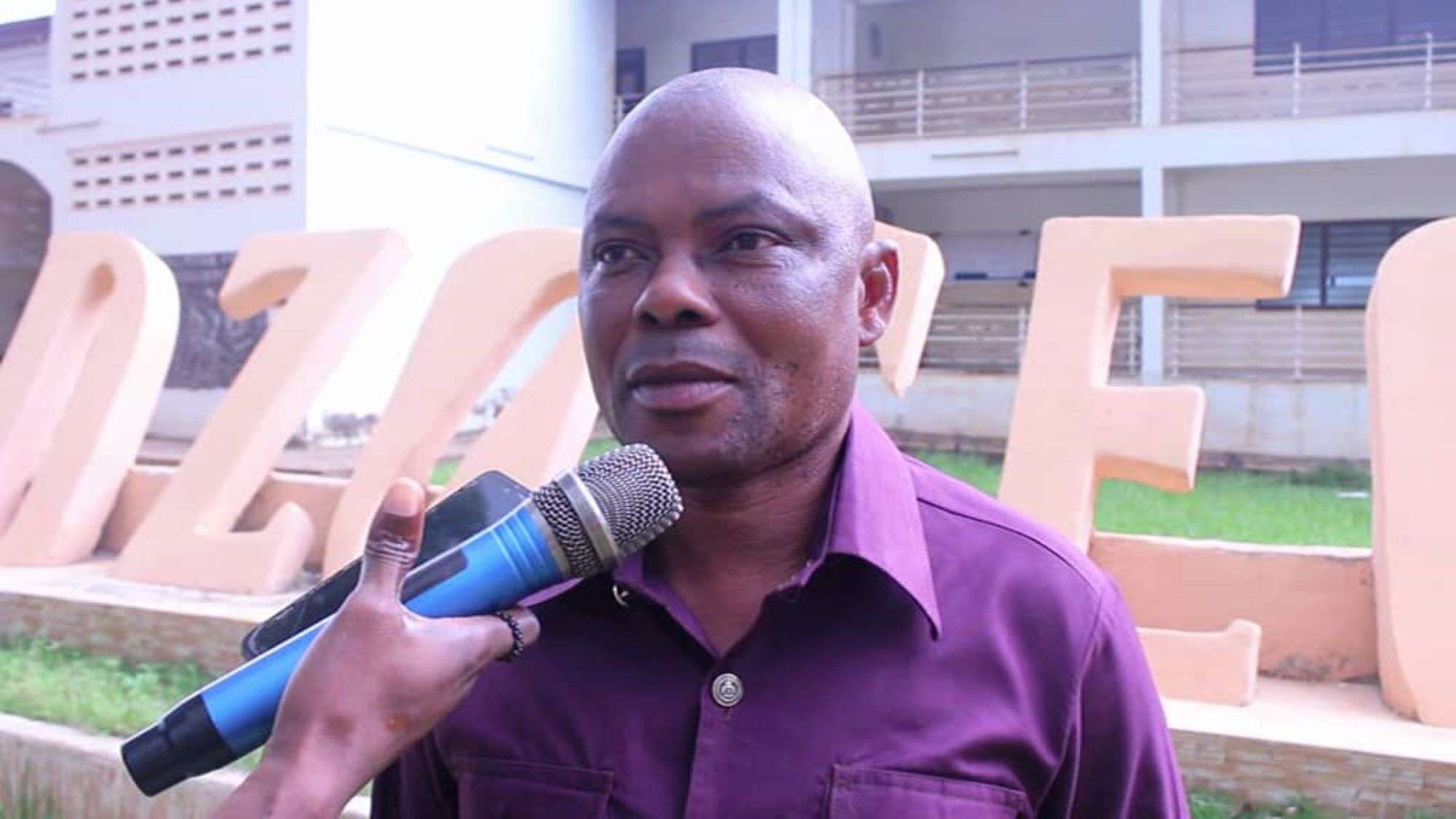
The writer is a Development and Communications Management Specialist, and a Social Justice Advocate. All views expressed in this article are his personal views and do not represent those of any organization(s).