

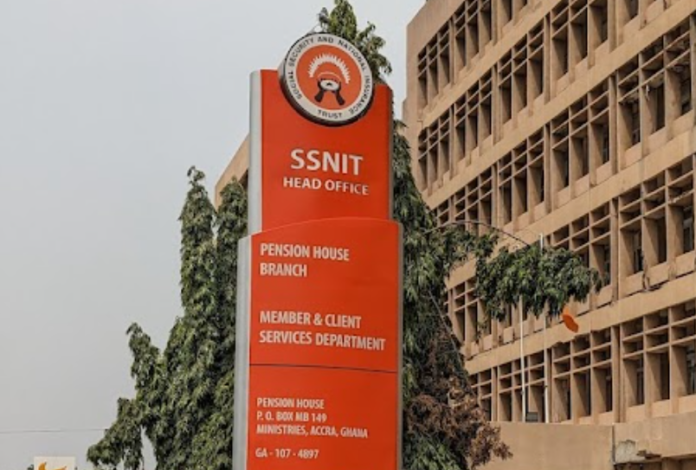
Pension benefits paid by the Social Security and National Insurance Trust (SSNIT) reached GH¢7.6 billion in 2025, while the minimum monthly pension increased by more than 32 percent, the National Pensions Regulatory Authority (NPRA) has disclosed.
The NPRA’s 2025 Annual Report showed that the minimum SSNIT pension increased from GH¢300 to GH¢396.58 following a 12 percent average pension adjustment introduced in January 2025. The average monthly pension also climbed to GH¢1,990.03 from GH¢1,776.81.
During the year under review, SSNIT received GH¢9.7 billion in contributions and recorded 2.14 million active contributors alongside 261,928 pensioners. The scheme’s assets grew to GH¢30.6 billion, supported by a nominal investment return of 23.8 percent.
The NPRA further reported that Ghana’s pension industry continued its expansion, with total pension assets under management increasing by 28.9 percent from GH¢86.09 billion in 2024 to GH¢111.1 billion in 2025.
“The pensions industry continued its strong growth trajectory, with a notable rise in Assets Under Management (AUM). Total pension fund assets increased by 28.9% from GHS 86.09 billion in 2024 to GHS 111.1 billion in 2025,” the report stated.
The regulator attributed the industry’s performance to sustained contributions and strong investment returns, although it acknowledged that declining inflation and interest rates affected earnings from fixed-income investments.
The NPRA said the sector remained financially sound and capable of protecting workers’ retirement savings.
“Overall, the pensions industry remained financially stable, liquid, and resilient in 2025. Growth in AUM, positive investment performance, improved diversification, and sound liquidity indicators supported the industry’s performance during the year,” the Authority said.
The Authority added that it would intensify efforts to strengthen oversight, improve risk management and ensure pension funds remain secure.
“The Authority will therefore continue to strengthen data-quality controls, promote prudent diversification, monitor emerging risks, and use the implemented RBSS to support proactive and evidence-based supervision,” the report said.