

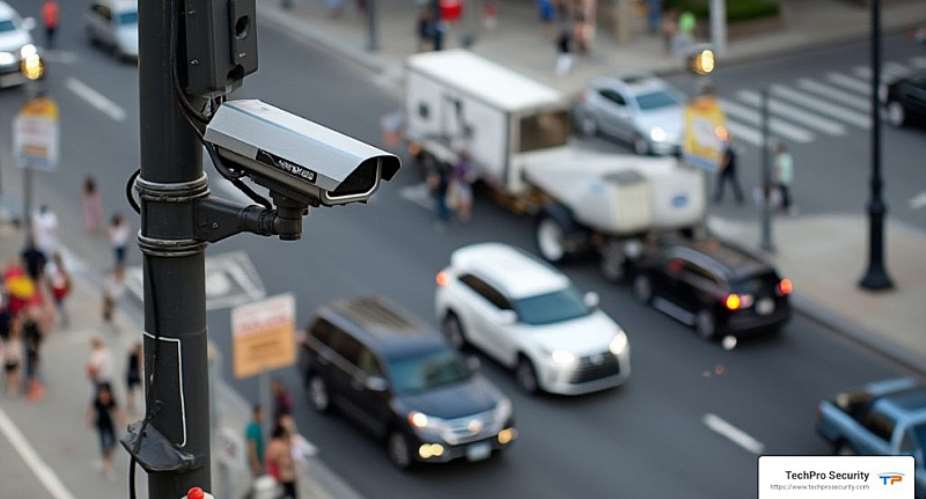
Ghana has introduced a new technology-driven traffic enforcement system, TraffiTech-GH, aimed at improving road safety, tackling reckless driving and strengthening compliance with road traffic regulations.
The system, developed by the Ghana Police Service and implemented through its Motor Traffic and Transport Department (MTTD), uses cameras, sensors, radar equipment and digital devices to detect traffic violations and issue electronic notices to offending motorists.
The programme officially commenced on Sunday, November 1, 2026, following a public education and sensitisation exercise ahead of its nationwide implementation.
Unlike the traditional approach, which largely depends on police officers stopping drivers on the road, TraffiTech-GH allows certain traffic offences to be detected and documented electronically, even when an officer is not physically present.
Here is everything motorists need to know about the new system, how it works, the offences it covers, how to pay fines and what to do when they receive a traffic violation notice.
1. What is TraffiTech-GH?
TraffiTech-GH is an automated traffic law enforcement system developed by the Ghana Police Service to monitor and enforce road traffic regulations.
It uses technological equipment, including fixed cameras, mobile cameras, in-vehicle devices, sensors and laser speed-measurement equipment, to capture vehicles that violate traffic regulations.
The system automatically records photographic or video evidence of offences, which is transmitted to a central system for review and verification before an Electronic Notice of Violation (ENV) is issued.
Its main objective is to reduce road traffic crashes, injuries and deaths by encouraging motorists to comply with road safety regulations.
2. When did TraffiTech-GH commence?
The system officially became operational on November 1, 2026.
The initial implementation was scheduled for October 1, 2026, but the Ghana Police Service postponed the rollout to November 1 to allow for additional public education and stakeholder engagement.
The MTTD subsequently confirmed that preparations had been completed for the implementation.
3. How does TraffiTech-GH work?
The system uses cameras and other electronic monitoring devices to detect traffic violations.
When a vehicle commits an offence, the equipment captures photographic or video evidence, including relevant details of the violation.
The evidence is transmitted to the MTTD’s back office, where officers review and validate it before issuing an Electronic Notice of Violation.
The notice is sent through SMS to the phone number registered to the vehicle owner.
The message contains information such as:
-
The electronic ticket number.
-
Vehicle registration number.
-
Location of the offence.
-
Date and time of the violation.
-
Description of the traffic offence.
-
Prescribed fine.
-
Payment deadline.
The notice also provides information on how to access the evidence of the alleged offence.
Importantly, the system does not automatically impose penalties without verification. The police are expected to review the captured evidence before issuing the electronic notice.
4. What traffic offences does TraffiTech-GH cover?
The initial rollout focuses on speeding offences, particularly at locations identified as prone to road crashes.
However, the Ghana Police Service’s published TraffiTech-GH guidelines identify several other traffic violations that can be enforced through the system.
These include:
-
Speeding: Driving above the prescribed speed limit.
-
Running red lights: Failing to stop when traffic signals indicate red.
-
Wrongful overtaking: Overtaking in prohibited or dangerous circumstances.
-
Non-use of seatbelts: Driving without wearing the required seatbelt.
-
Expired roadworthiness certificate: Operating a vehicle without a valid roadworthiness certificate.
-
Expired driving licence: Driving with an expired licence.
-
Driving an uninsured vehicle: Operating a vehicle without valid insurance.
-
Misuse of sirens: Unlawful use of sirens.
The police have indicated that the programme will operate alongside existing manual traffic enforcement.
5. What are the speed limits under TraffiTech-GH?
During the initial rollout, the MTTD outlined the following speed limits for different road categories:
| Road category | Speed limit |
|---|---|
| Towns and built-up areas | 50 km/h |
| Highways | 90 km/h |
| Motorways | 100 km/h |
Motorists who exceed the prescribed speed limits risk being captured by the system and issued electronic violation notices.
Drivers are advised to pay attention to road signs because speed restrictions may vary depending on the particular road and location.
6. What happens when you receive an Electronic Notice of Violation?
An Electronic Notice of Violation (ENV) is an official notification sent by the Ghana Police Service to the registered phone number of a vehicle owner following a verified traffic offence.
If you receive an ENV, you should:
-
Check that the SMS sender identification reads GPS-MTTD.
-
Take note of the electronic ticket number.
-
Visit the official evidence portal at traffitech-ghpay.nib.com.gh.
-
Enter your ticket number to review the evidence.
-
Decide whether to pay the fine or contest the violation.
The notice should contain the vehicle registration number, location, date, time, description of the offence and the amount payable.
Motorists should always verify the authenticity of a notification before making any payment.
7. How do you pay TraffiTech-GH fines?
Motorists who accept the violation can pay their fines through approved electronic payment channels.
According to the Ghana Police Service, payments can be made through:
-
Mobile money services, including MTN MoMo, Telecel Cash and AT Money.
-
Debit and credit cards.
-
The short code 7100#.
Motorists should use only officially approved payment channels and avoid sending money to individuals claiming to represent the police.
8. What happens if you disagree with a traffic violation notice?
Receiving an electronic traffic violation notice does not mean you have no right to challenge the allegation.
Motorists who disagree with the offence have 14 days from the date the ENV is issued to initiate an online contest.
The process involves:
-
Accessing the official TraffiTech-GH platform.
-
Submitting a contest against the alleged violation within the stipulated period.
-
Selecting a preferred MTTD regional police station and hearing date.
-
Waiting for confirmation of the appointment through SMS.
The motorist must attend the scheduled hearing with the ENV reference number and a valid form of identification.
You do not have to appear in court simply because you receive an ENV. However, you must follow the prescribed contest procedure if you wish to challenge the notice.
9. What happens if you fail to pay your fine within 14 days?
Motorists who fail to settle their fines within the stipulated 14-day payment period will face additional financial penalties.
The Ghana Police Service says a late payment penalty of 1 per cent of the original fine will be added for each day of default after the 14-day period.
This means the amount owed will continue to increase for every additional day the fine remains unpaid.
Motorists are therefore encouraged to check their notices and settle legitimate fines within the prescribed period.
10. Can you receive a fine if someone else drives your vehicle?
Yes.
Under the Road Traffic Regulations, 2026 (L.I. 2519), electronic violation notices are sent to the registered owner of the offending vehicle.
The registered vehicle owner remains responsible for the violation, even if another person was driving at the time.
This also applies to vehicles owned by companies, employers and other organisations.
The police therefore advise vehicle owners to ensure that their ownership details and registered telephone numbers are accurate and updated with the Driver and Vehicle Licensing Authority (DVLA).
If you sell a vehicle, you should formally notify the DVLA to update the ownership records.
11. How can you check outstanding TraffiTech-GH fines?
Motorists can check whether their vehicles have outstanding traffic violation fines by dialling:
** *220# **
Follow the prompts to check the outstanding fines associated with a vehicle registration number or driver’s licence number.
This service is particularly important for people intending to buy second-hand vehicles, as an existing traffic fine could affect subsequent transactions at the DVLA.
12. Can outstanding fines prevent you from accessing DVLA services?
Yes.
The Ghana Police Service says motorists with outstanding TraffiTech-GH fines may be prevented from accessing certain DVLA services until the fines are cleared.
These restrictions include:
-
Renewal of a driver’s licence.
-
Transfer of vehicle ownership.
-
Registration and re-registration of vehicles.
-
Laying off vehicles.
-
Vehicle roadworthiness inspections.
Motorists are therefore encouraged to check their outstanding fines before visiting the DVLA.
Once payment is made, they should allow the prescribed processing period for the restriction to be lifted.
13. Does TraffiTech-GH apply to motorcycles, taxis and commercial vehicles?
Yes.
The system applies to all classes of motor vehicles using Ghana’s public roads.
These include:
-
Private cars.
-
Motorcycles.
-
Tricycles, popularly known as aboboyaa.
-
Taxis.
-
Trotros.
-
Ride-hailing vehicles.
-
Commercial buses.
-
Haulage trucks.
Commercial transport operators and private motorists are therefore expected to comply with the traffic regulations enforced under the programme.
For company-owned vehicles, the registered company or organisation is responsible for paying or contesting the violation notice.
14. What happens if the camera records the wrong speed?
The Ghana Police Service says speed-enforcement devices operating under TraffiTech-GH are type-approved and periodically calibrated by the Ghana Standards Authority (GSA).
The calibration is intended to ensure that the equipment measures vehicle speeds accurately and meets internationally accepted standards.
However, motorists who believe their speed was incorrectly recorded can challenge the electronic notice through the prescribed contest procedure within 14 days.
15. How does TraffiTech-GH affect road safety in Ghana?
The introduction of TraffiTech-GH forms part of broader efforts to address road indiscipline and reduce the number of crashes, injuries and deaths on Ghanaian roads.
During the pilot phase, the system reportedly recorded improvements in road safety indicators.
According to reports, road crashes declined from 1,108 in September 2025 to 1,003 in September 2026.
Injuries also dropped from 1,405 to 1,194, while fatalities decreased from 243 to 224 over the same period.
The figures were presented during an engagement with new media stakeholders by the MTTD as part of the programme’s pilot performance assessment.
The police believe that technology-driven enforcement will encourage motorists to observe traffic regulations, particularly speed limits, even when police officers are not physically present.
16. How can motorists avoid TraffiTech-GH scams?
As the system becomes operational, motorists are being advised to remain alert to fraudulent messages and individuals posing as police officers.
The Ghana Police Service has issued the following guidance:
-
Check that official violation notices carry the sender identification GPS-MTTD.
-
Do not make payments through unofficial links or personal mobile money numbers.
-
Verify the ticket number and offence details through the official evidence portal.
-
Use only approved government payment platforms.
-
Do not share sensitive financial information with suspicious individuals.
Motorists who receive suspicious calls or messages should contact the official TraffiTech-GH support channels for clarification.
17. Where can motorists get more information or assistance?
The Ghana Police Service has provided the following contact details for enquiries and assistance:
| Contact channel | Official details |
|---|---|
| traffitech@police.gov.gh | |
| Call Centre | 059 692 2402 |
| Toll-free police line | 18555 |
| Emergency Police | 191 |
| Official information | Ghana Police Service |
| Evidence portal | TraffiTech-GH |
Motorists can also visit the Ghana Police Service website for additional information about the programme, payment procedures, penalties and the process for contesting electronic violation notices.
Conclusion
TraffiTech-GH represents a major shift in how traffic regulations are monitored and enforced in Ghana.
By introducing automated cameras, digital evidence collection and electronic violation notices, the Ghana Police Service hopes to reduce dependence on traditional roadside enforcement and encourage greater discipline among motorists.
However, the success of the initiative will depend not only on the technology but also on transparency, accurate evidence, public education and the protection of motorists’ rights to challenge incorrect violations.
For drivers and vehicle owners, the message is straightforward: observe speed limits, comply with road traffic regulations, keep vehicle and ownership records updated, and respond promptly to any legitimate electronic violation notice.