

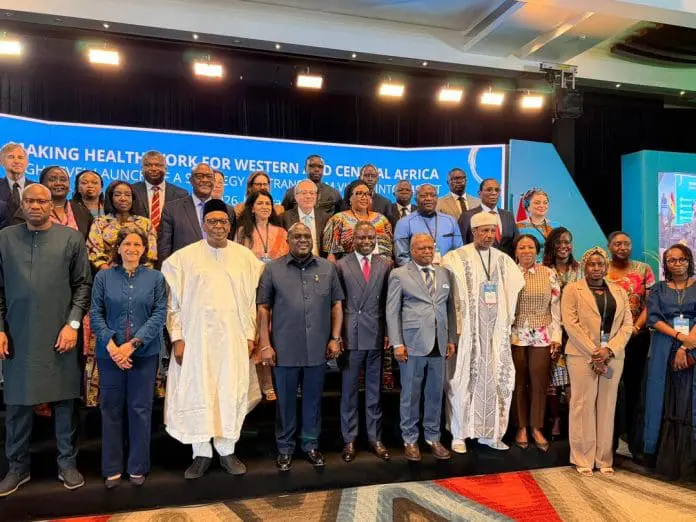
The World Bank Group has reaffirmed its commitment to provide quality and affordable health services to 1.5 billion people worldwide by 2030, with a specific target of reaching at least 200 million in Western and Central Africa alone under the Universal Health Coverage initiative (UHC).
This ambitious target was announced at the recent high-level launch of a strategy designed to transform vision into impact for Africans. The World Bank believes this initiative is essential at this time to address the rising needs of an ever-growing population concentrated within Western and Central African countries.
The World Bank’s Commitment
Projecting into the future, the World Bank Group Vice President announced a commitment to contributing to Africa’s health needs by providing quality, affordable health services.
“The World Bank Group has set an ambitious global target: to provide quality, affordable health services to 1.5 billion people by 2030. To achieve this, our goal is to reach at least 200 million people across Western and Central Africa,” she stated.
“Two key tools to help us deliver on this strategy are the Global Financing Facility and the Accelerating Impact on Medicines and Supply Initiative, AIM2030.”
The World Bank Group Vice President, Ms. Mamta Murthi, added that the strategy is a shared blueprint to make health systems resilient, sustainable, and “Fit to Prosper.”
Speaking on behalf of the President of Ghana, Hon. Julius Debrah commended the financial commitment the World Bank has made to these African countries to help strengthen healthcare delivery.
“With a robust portfolio of 24 active operations across 20 countries and a commitment of US$4.4 billion, the Bank is helping us turn the tide on maternal mortality, child health, and pandemic preparedness,” he noted. “The future of our economies will not be determined only by what we extract from the ground—but by what we invest in our people. Health is an economic strategy.”
He went on to express gratitude for the financial support the World Bank provided Ghana during COVID-19 and through the recent Primary Health Care Investment Project, adding that the newly launched strategy aligns closely with the country’s vision.
Additional Insights
The launch of “Fit to Prosper,” under the World Bank Group’s Health, Nutrition, and Population (HNP) Strategy in Accra, brought together ministers and representatives from countries from Western and Central Africa, embassies, regional organizations, private sector and youth leaders, as well as representatives from development partners, including the United Nations International Children’s Emergency Fund (UNICEF), the UK Foreign and Commonwealth Development Office (UK FCDO), the Japan International Cooperation Agency (JICA).
The Minister of Health, Hon. Mintah Akandoh, emphasized the need for collaboration across Africa to address healthcare issues across the sub-region.
“The challenges before us are not isolated national challenges; they are regional, interconnected, and increasingly complex. Therefore, the solutions we design must be equally coordinated, forward-looking, and firmly anchored in the realities of our people,” he said.
The Health Minister added that he views this regional HNP strategy as a complementary initiative to Ghana’s comprehensive UHC Compact.
What You Should Know
It is reported that 33% of global child deaths, 44% of maternal deaths, and nearly 60% of malaria deaths occur in Western and Central Africa alone. Additionally, one in every three children living in these regions suffers from stunted growth.
African countries are calling for a more localized approach to managing health financing. This is captured in the “Accra Reset” and “Lusaka Agenda,” which aim to encourage African countries to invest more in their own health systems rather than relying solely on donor financing.
As such, the World Bank’s Health, Nutrition, and Population strategy, Fit to Prosper: Investing in Health for Jobs and Development in Western & Central Africa, is aligned with these agendas. It provides a framework to assist countries in making strategic moves toward the manufacturing of essential health products, strengthening health security, and creating jobs.