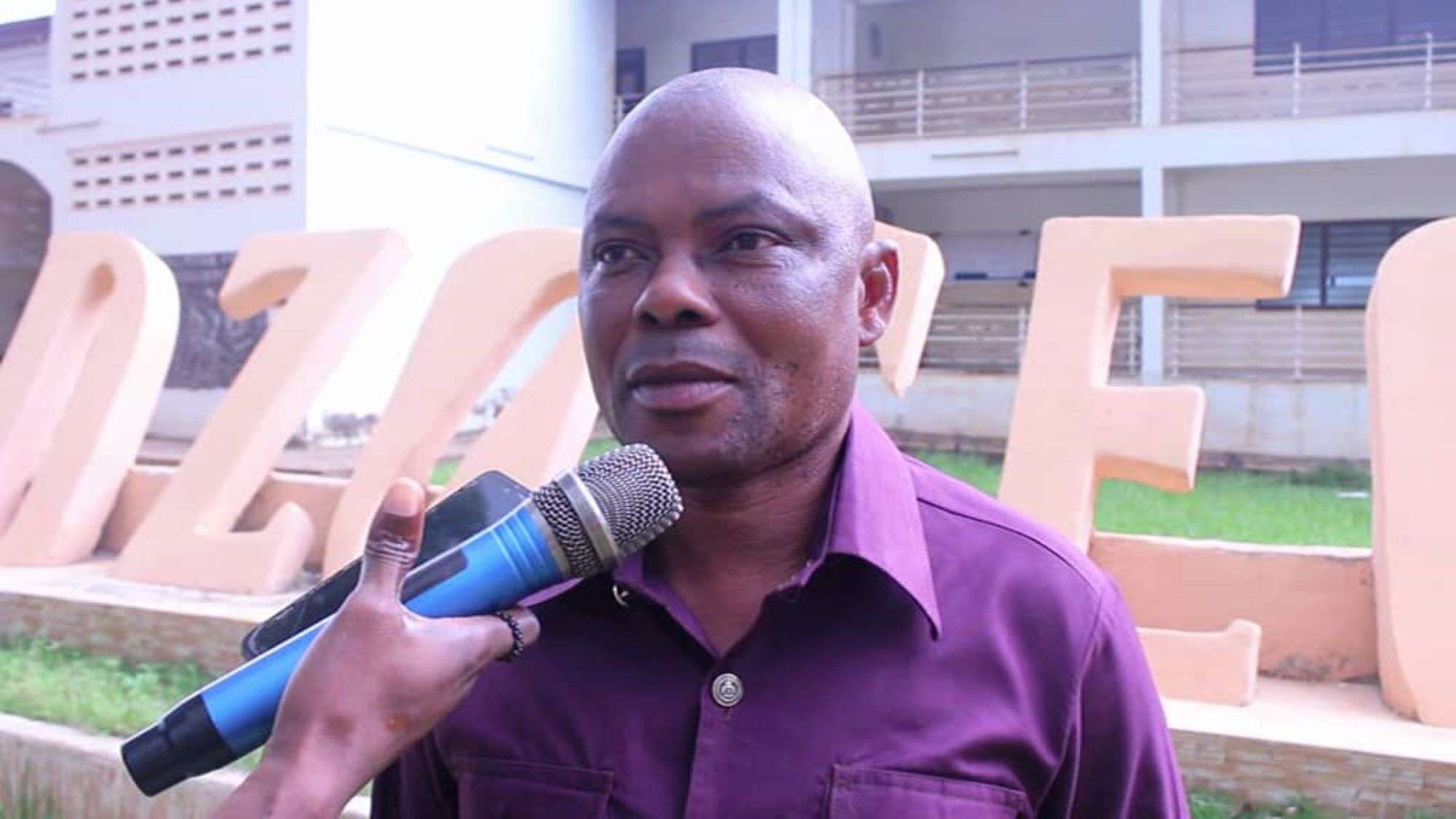


The Minority Leader in Parliament, Osahen Alexander Kwamena Afenyo-Markin has described the reset agenda of the governing National Democratic Congress (NDC) as a destructive tool for what has been built by the state and the previous government.
Giving his closing remarks on the 2025 Mid-year budget review on Friday, Osahen Afenyo-Markin told Parliament that everything the previous New Patriotic Party (NPP) government built for Ghana’s prosperity has been systematically destroyed by the “apostles of reset.”
“We built robust diplomatic relationships with strategic partners like the United States, strengthening Ghana’s position in global markets.
“The apostles of reset have assassinated these partnerships with reckless, undiplomatic utterances that are gradually making Ghana a pariah in international circles.
“We initiated the transformational One District, One Factory policy to create jobs and boost local production across every corner of Ghana. The apostles of reset have murdered this industrial revolution, condemning entire districts to economic stagnation.
“We launched Agenda 111 hospitals to heal our people and create a foundation for medical tourism. The apostles of reset have killed this health infrastructure expansion, leaving communities without hope for quality healthcare.
“We instituted the Teacher Licensure Exam to ensure only the most qualified educators shape our children’s minds.
The apostles of reset have executed this quality assurance system, compromising our educational standards.
“We pioneered Planting for Food and Jobs to feed our people, ensure food security, and create agricultural wealth.
The so-called apostles of reset have slaughtered this agricultural transformation, leaving farmers abandoned and food security compromised.
“We established rigorous prosecutions to recover stolen national resources and reinvest recovered funds into national development.
The so-called apostles of reset have butchered almost every prosecution, turning the Attorney General’s office into a protection racket for cronies.
“We created an enviable pricing regime for cocoa farmers to boost output and generate foreign exchange.
The so-called apostles of reset have demolished this farmer-friendly system, driving cocoa production into decline.
Human cost of economic incompetence
Osahen Afenyo-Markin noted that with 30 percent youth unemployment, the Mahama government has allocated less than
GH¢0.5 billion to job creation, a pittance that insults three million unemployed young Ghanaians.
“When young people have no stake in the legitimate economy, they become recruits for criminal gangs and illegal mining operations,” the Minority Leader who is also the Member of Parliament for Effutu stated.
According to him, there is a direct correlation between this government’s failure to create jobs and the unprecedented insecurity plaguing our nation.
“Every unemployed youth represents not just wasted potential, but a security threat born of economic negligence,” Osahen Afenyo-Markin pointed out.
BoG’s heavy intervention forex market
Osahen Afenyo-Markin noted that the Bank of Ghana’s heavy intervention in the forex market has played an unsustainable role in propping up the cedi.
“Despite earlier denials, it took the IMF to reveal that in the first quarter of 2025 alone, the BoG injected over $1.4 billion of reserves into the market to support the cedi.
“This kind of artificial support, effectively using scarce reserves to boost the cedi –can only be a short-term strategy.
“Indeed, the IMF has cautioned our government about the sustainability of this approach,urging that we reduce the BoG’s footprint and allow greater exchange rate flexibility going forward,” he pointed out.
Many importers and businesses, the Minority Leader noted, have been telling the sobering truth about the actual exchange rates in the country.
“While the official interbank rate has shown a strong cedi, dollars have become scarce in the open market.”
He also observed that while the cedi appears “strong” on paper, but it is difficult for businesses to actually obtain forex at those rates.
“As one of my colleagues aptly put it, ‘cedi no apicki, but Abochi has the dollar’.”
Accordingly, Osahen Afenyo-Markin pointed out that the real economic strength comes from a currency’s purchasing power, not just its exchange rate on a given day.
‘Cedi appreciation not new’
The Minority Leader questioned claims by the Finance Minister, Dr Cassiel Ato Forson, that the recent appreciation of the cedi is unprecedented, insisting that the previous NPP administration had already stabilised the local currency before leaving office.
Osahen Afenyo-Markin maintained that despite setbacks caused by global factors such COVID-19 pandemic and Russia-Ukraine war, the NPP government was able to stabilise the Cedi by the end of 2023.
He cited policy initiatives such as the IMF agreement, debt restructuring efforts, and the Gold-for-Oil programme as contributing factors.
“After reaching its weakest point in late 2022, the Cedi’s slide was arrested and partially reversed.
“By the end of 2024, the depreciation had slowed dramatically, only 19% year-on-year against the dollar. That was a marked improvement from the earlier free-fall,” Osahen Afenyo-Markin reiterated.
The governing NDC administration, led by President John Mahama, he stressed, inherited a recovering currency rather than a collapsing one.
“So when the new government took over the reins of affairs in January 2025, they inherited a stabilising currency, not a perpetually dwindling one,” Osahen Afenyo-Markin concluded.