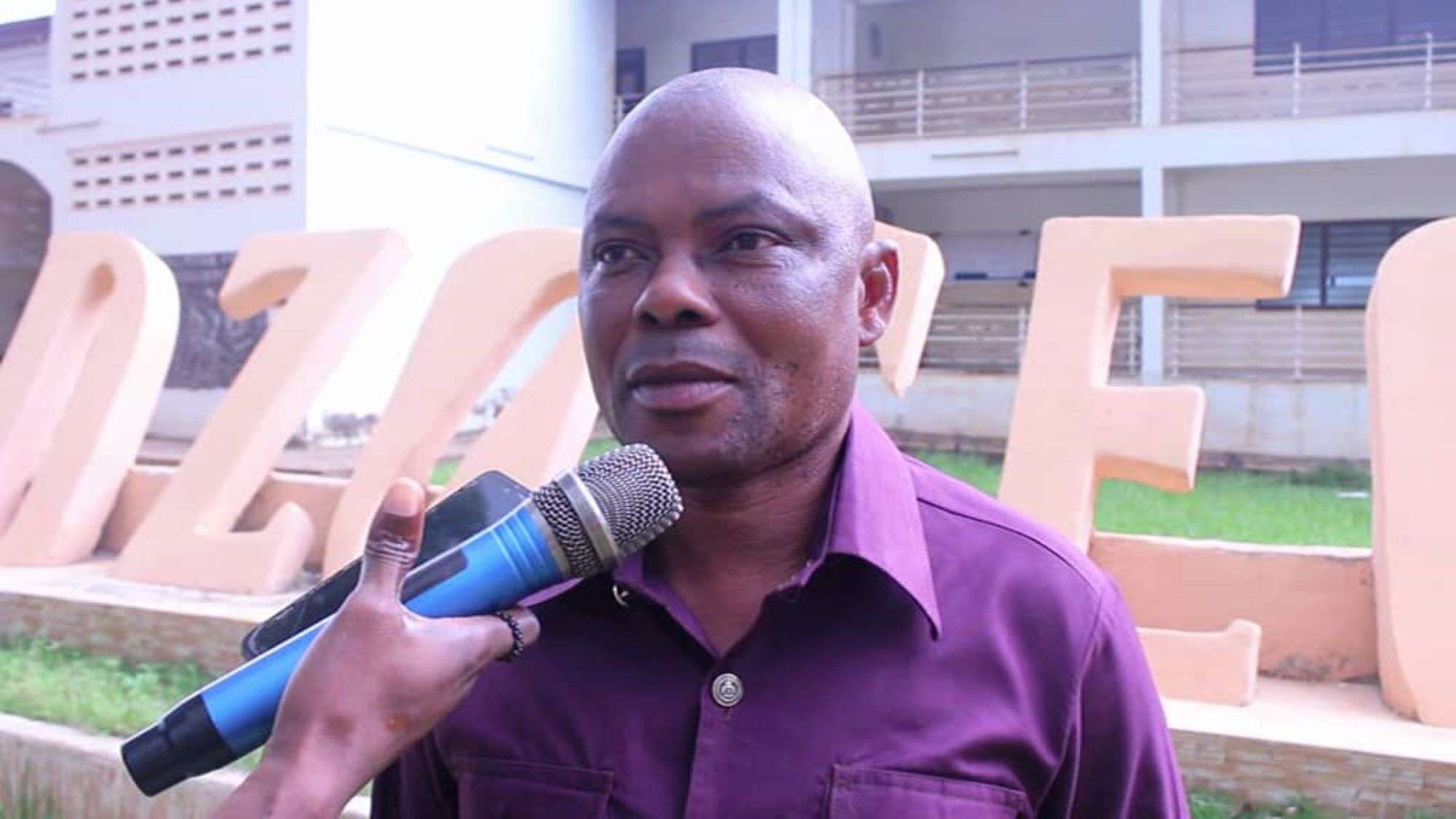


The Deputy Minority Leader and Member of Parliament (MP) for Asokwa, Madam Patricia Appiagyei, has intensified calls for accountability regarding the release of GH¢350 million in flood relief funds, demanding the resignation of Attorney-General and Minister for Justice over what she described as a breach of constitutional procedures.
She accused the Attorney-General, Dr. Dominic Akuritinga Ayine of authorising the release of money from the Contingency Fund despite being aware that the fund was subject to ongoing court proceedings.
Addressing journalists at news conference on July 8, 2026 Wednesday, with a statement titled “A Republic Governed by Chaos,” the Deputy Minority Leader indicated that a July 1, 2026 letter from the Attorney-General to the Governor of the Bank of Ghana acknowledged the existence of garnishee orders involving the Contingency Fund.
However, Dr Ayine without proper legal authority, directed the central bank to proceed with the withdrawal “notwithstanding the pending garnishee proceedings”.
According to Madam Patricia Appiagyei, the Attorney-General relied on his own interpretation of “exceptional circumstances” and “overriding public interest” rather than seeking appropriate legal clearance.
“The Attorney-General is the principal legal adviser to the government and is responsible for the conduct of all civil proceedings against the state. His letter of 1 July 2026 is a written admission of failure on both fronts.
“As the officer responsible for civil proceedings against the state, he presided over litigation in which a constitutional fund of the Republic was attached and there is no indication that the attachment was resisted or that any application was made to discharge it. As principal legal adviser, when the moment came to counsel lawfulness, he counselled the opposite and was rebuffed by the very central bank he sought to direct,” the Deputy Minority Leader pointed out, reiterating their call for the Attorney-General’s resignation.
Beyond the legal concerns, the Minority also raised concerns about transparency and accountability, calling for clarity on the exact source of the funds and whether similar withdrawals had been made without parliamentary approval or proper authorisation.
“One conclusion is difficult to escape. If the Contingency Fund remained under attachment and could not lawfully be accessed, then the emergency disbursement could only have proceeded through another public account.
“In other words, when the approved source became unavailable, an alternative source appears to have been used. If that is what occurred, then Parliament was never asked to approve that alternative source, and the constitutional requirements governing withdrawals from public funds were bypassed.
“Yet the Ministry of Finance’s official statement announced, without qualification, that the money had been released from the Contingency Fund. If the funds were in fact drawn from another account, then that statement did not accurately reflect what transpired.
“We say to the government: these are your records. The garnishee order, the Bank of Ghana account statements, the Controller and Accountant-General’s transfer advice, all of it sits in your custody. If the GH¢350 million truly came from the Contingency Fund as you told the nation, lay the records before Parliament and prove it. If it did not, then tell Ghanaians which account was used, who authorised the withdrawal, and under what law,” the Minority demanded.
The Deputy Minority Leader argued that the action of the Attorney-General could undermine constitutional safeguards governing public expenditure and cited Articles 177, 178, 88, 1(2), and 125 of the Constitution as provisions that may have been violated.
A catalogue of governance failures
The Minority caucus chronicled what it described as a catalogue of governance failures by the governing National Democratic Congress (NDC).
According to the group, a constitutional fund of the Republic was dragged into garnishee proceedings and the government told no one and Parliament approved an emergency withdrawal without being told the fund was encumbered.
Madam Patricia Appiagyei also accused the government of failing to disclose the court proceedings to Parliament’s Finance Committee before approval was granted for the withdrawal on June 29, 2026.
“An Attorney-General who presides over the attachment of a constitutional fund has failed in diligence. An Attorney-General who conceals that attachment from Parliament has failed in candour. An Attorney-General who directs the central bank to proceed ‘notwithstanding those proceedings’ on the strength of his own opinion has failed in fidelity to the very Constitution he swore to uphold — and has exposed himself to proceedings for contempt of court. And an Attorney-General whose directive is so plainly unlawful that the central bank of the Republic refuses to carry it out has been repudiated not by his political opponents, but by the institutions of his own government.
“The Attorney-General, guardian of legality, overreached by directing the central bank to disregard a subsisting court process on the strength of his personal opinion. The money then moved from an unapproved account. And the Ministry of Finance announced to the nation a version of events that the government’s own records will not support.
“The Attorney-General’s letter itself referencing a telephone conversation with the Governor that very afternoon and directives “already issued” paints the picture of a government scrambling in panic to paper over a problem it should have seen coming and should have handled in open court,” the Minority bemoaned.
Specific demands
The Minority has issued a four-point demand, including an appearance before Parliament by the Attorney-General and Finance Minister to present all relevant documents, including court records and correspondence on the matter.
The caucus also wants the Governor of the Bank of Ghana to explain the Central Bank’s role in the transaction and confirm the account from which the money was released. Additionally, it has called on the Auditor-General to conduct a special audit into the flood relief disbursement.
Madam Patricia Appiagyei warned that failure by the government to provide satisfactory answers could trigger a parliamentary investigation and possible legal action at the Supreme Court.
Minority empathises with flood victims
While acknowledging the urgency of providing support to victims of the recent floods, which have resulted in dozens of deaths and displaced thousands, the Minority insisted that emergency interventions must still comply with constitutional requirements.
“Let us be abundantly clear. The Minority stands with the victims of these floods fully and without reservation. Not one pesewa of relief should be delayed, and we shall support every lawful measure to get help to those who need it.
“Our issue is with a government that conceals court processes from Parliament, directs its central bank into illegality, moves the people’s money through unapproved channels, and then tells the nation a story its own records contradict.
“The greatest danger to a constitutional democracy is when those entrusted to uphold the law decide that the law no longer applies to them. In this affair, the Attorney-General presumed to overrule a court by letter.
“The Executive presumed to substitute Parliament’s approval with its own convenience. The Ministry of Finance presumed that an official statement could replace the truth. That is not the conduct of a government committed to the rule of law. It is the conduct of a government that has begun to confuse power with permission,” the Minority concluded.