

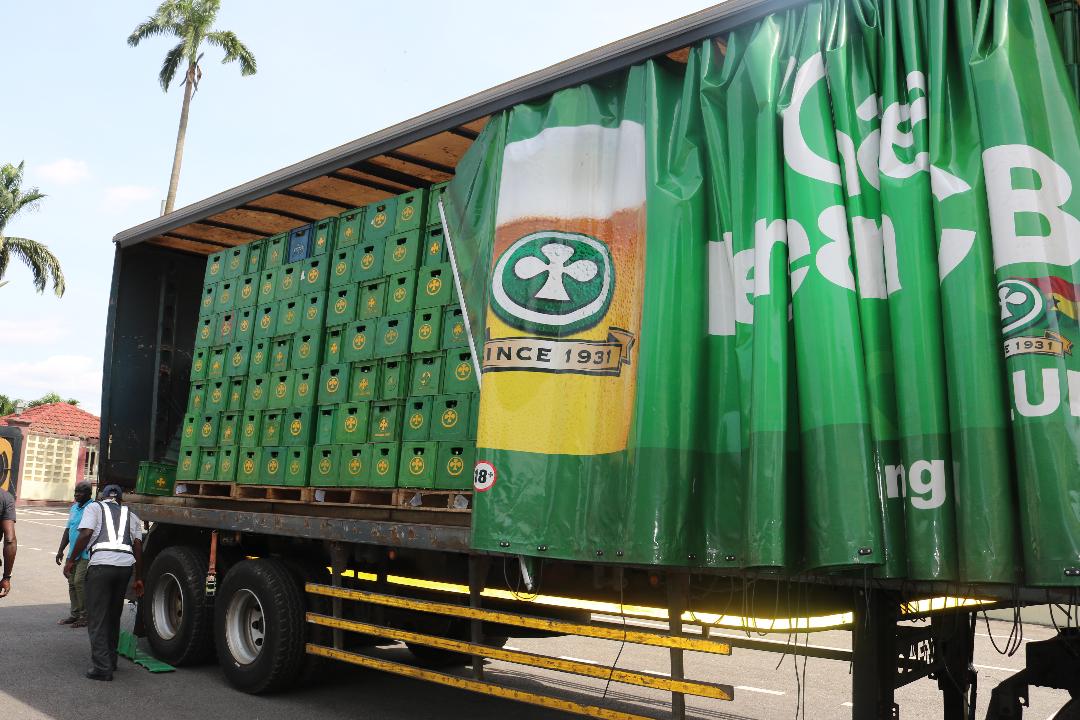
Accra Brewery PLC (ABL) has raised concerns over proposed changes to Ghana’s beer excise duty regime, warning that the measures could increase taxes on locally produced beer, weaken investment incentives and threaten up to 2,000 jobs across the sector.
The brewery said the proposed regime could unintentionally make imported beer more competitive than products manufactured in Ghana.
It argued that such an outcome would undermine the investments local producers have made in manufacturing facilities, employees, supply networks and agricultural sourcing.
ABL estimated that the proposed changes could have a $7.5 million impact on its budget, based on its assumptions for implementation in FY27.
The company, however, said the potential consequences should be considered beyond the impact on individual breweries because of the beer industry’s broader contribution to employment and economic activity.
ABL said the beer sector supported about 52,000 jobs in 2023, equivalent to 0.4% of total employment, with approximately 98% of those jobs created outside breweries.
The proposed tax changes could consequently have repercussions for businesses and workers across the broader value chain, including farmers, distributors, retailers, transport and logistics operators, hospitality businesses and other service providers.
While expressing support for the government’s efforts to increase domestic revenue, ABL said revenue mobilisation should be pursued without weakening the local manufacturing base.
Beer tax in Ghana
The excise duty on locally manufactured beer in Ghana is set to increase from 32.5% to 40%. For beer made with high levels of locally sourced materials, including cassava-based beer, the rate will increase from 10% to 25%.
The excise duty on imported beer will remain unchanged at 47.5%. Accra Brewery Limited (ABL) has urged the government to postpone these proposed increases, warning that the changes could affect manufacturers, consumers, farmers, jobs, and future investment.
The company argues that a delay would allow more time for government, industry representatives, and other stakeholders to discuss a tax framework that raises revenue without weakening domestic production or wider economic growth.
Accra Brewery reacts
The company pointed to earlier comments by Finance Minister Dr Ato Forson that reforms would involve reviewing the existing sliding-scale excise rates for beer and stout to boost government revenue while maintaining incentives for domestic production.
ABL argued that the tax system must maintain a level playing field between locally manufactured and imported products.
“A tax framework should not inadvertently make importing a product more attractive than manufacturing that same product locally,” ABL said.
The brewery is consequently urging the government to maintain the current sliding-scale beer excise rates for FY26 and FY27 while further consultations are undertaken.
According to ABL, an evidence-based assessment should examine the effects of any new rates on domestic manufacturing, future investment, the competitiveness of local beer against imports, employment, agricultural and agro-processing linkages, and government revenue.
The company said a balanced and predictable excise regime would enable Ghana to pursue higher revenue while protecting industrial development.
“Ghana should not have to choose between revenue mobilisation and local industrial growth,” the company said.
ABL reaffirmed its commitment to expanding local production, protecting jobs and supporting communities, farmers and businesses connected to the beer value chain.